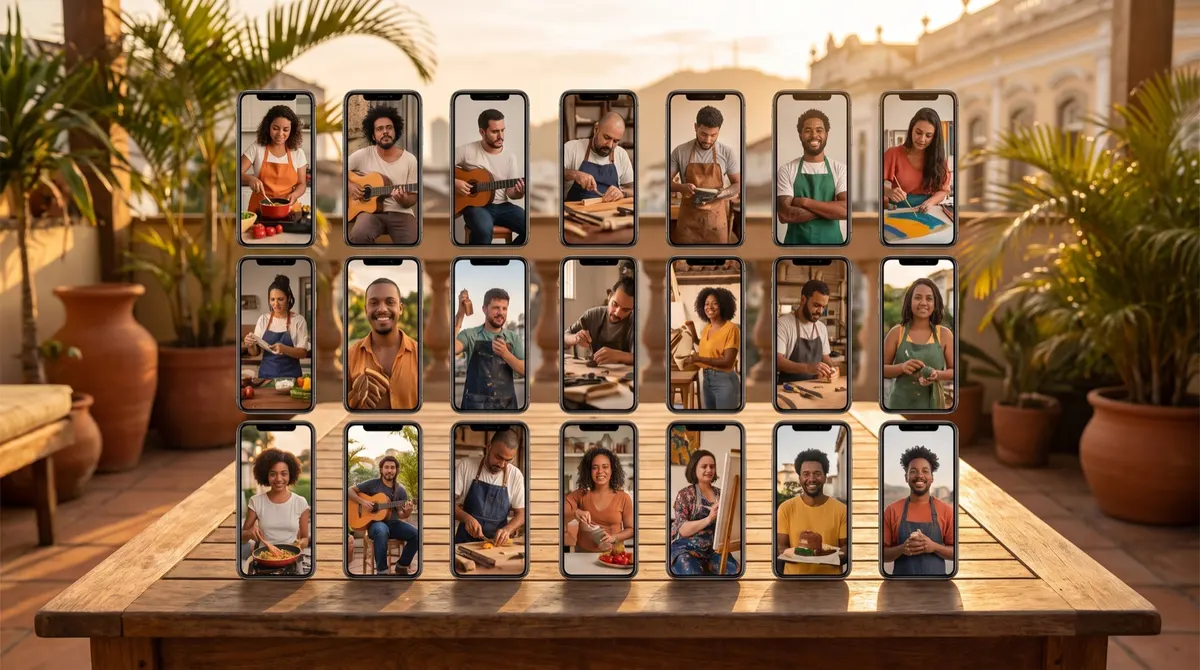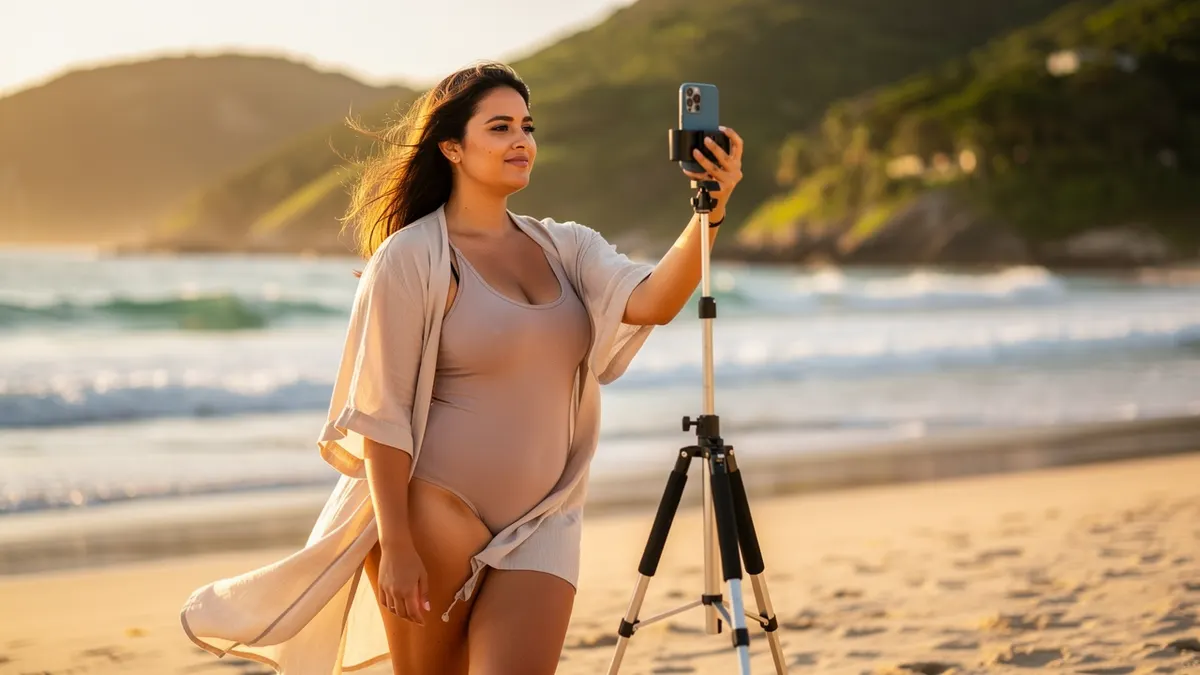
This is the category where the country is a global reference, and the one where a beautiful image helps least. What sells is proof that it holds.
What the buyer wants to see
Three things, in this order.
The cut, shown from several angles, including from behind, which most videos forget.
The movement, described in the box.
And a person whose body resembles hers. That is the point that decides the purchase more than the price: people buy when they can picture themselves.
Add the technical detail everybody looks for and nobody shows: the lining, the stitching, the strength of the elastic, how the colour behaves after several swims.
The calendar is rigid
It follows the season, and it waits for nobody.
Demand starts in the southern spring and peaks during the summer, which puts preparation in mid-winter. Campaigns are therefore shot several months ahead, when it is cool and the light is not that of the season.
Two practical consequences. You have to film where the light resembles that of the broadcast period, or accept an indoor shoot with a neutral background. And you have to buy rights covering the whole season, otherwise the campaign stops at the best moment.
The formats that work
Four, and they complement each other.
Trying on several pieces in a row, with the size worn stated.
The movement test, described above.
The comparison between two cuts of the same model, which answers the most frequent question in the comments.
And real use, outside the studio: the beach, the pool, the journey, what you put on top to go home.
That last format is the most profitable for the brand, because it also sells everything that goes with the swimsuit.
What the brand has to get right
Four points, all concrete.
Real diversity of bodies
Not symbolic. A single different silhouette in the middle of a homogeneous campaign is noticed as a ticked box, and the audience says so.
Sending the right size
That is the most frequent and most expensive mistake. A swimsuit that is too small or too big makes the video unusable, and the shoot has to be redone.
Defining the location
Public beach, private pool, studio: each has its own constraints of permission, noise and light. The choice is made beforehand, not on the day.
Explicit image rights
That is the sensitive point of the category. Filming a body in a swimsuit does not authorise any use whatsoever: the duration, the channels, paid advertising, outdoor display and re-crops must be written down. The obligations applicable to image rights, advertising disclosures and claims depend on your situation and are checked with a lawyer, before the shoot.
Add a rule of caution about the wording: claims about slimming, correcting the silhouette or the effect on the body are claims, and they commit the brand.
What the buyer is trying to verify
| Doubt | The shot that answers it | What must be said |
|---|---|---|
| How it holds in water | A shot after the swim | Whether the fabric turns sheer |
| The real cut | A full turn, without posing | The size worn and the body shape |
| Drying | The same item ten minutes later | The observed time |
What is agreed with the brand before the shoot
The location, the presence of other people, the accepted level of exposure and the exact use of the images, in writing.
What is refused without hesitation
A shoot with no written agreement, an undisclosed body retouch, and any posting on an account not named in the contract.
What sets a good campaign apart
One indicator, measured afterwards.
The return rate. A campaign that sells a lot and sees half the pieces come back costs more than a more modest campaign that is honest about sizing.
It is also the strongest commercial argument a creator has in this category: offering videos that reduce returns, not only videos that generate clicks.
Sources
Checked on 4 September 2026. Thresholds and rates change: where this guide and the official source disagree, the official source is right.