A spec sheet does not sell a device. What sells is the setup, the first use, and the certainty of not getting it wrong.
The creator's hesitation is the information
That is the opposite of what most briefs ask for.
Somebody installing a device for the first time hesitates, looks for the right cable, reads the manual, gets it wrong once. That moment is exactly what the buyer wants to see, because they are wondering whether they will manage.
A video where everything works first time, with confident movements, reassures less than a video where somebody struggles for thirty seconds and then succeeds.
So keep the useful dead time, and cut only what teaches nothing.
The first five minutes of real use
That is the most useful and least filmed sequence.
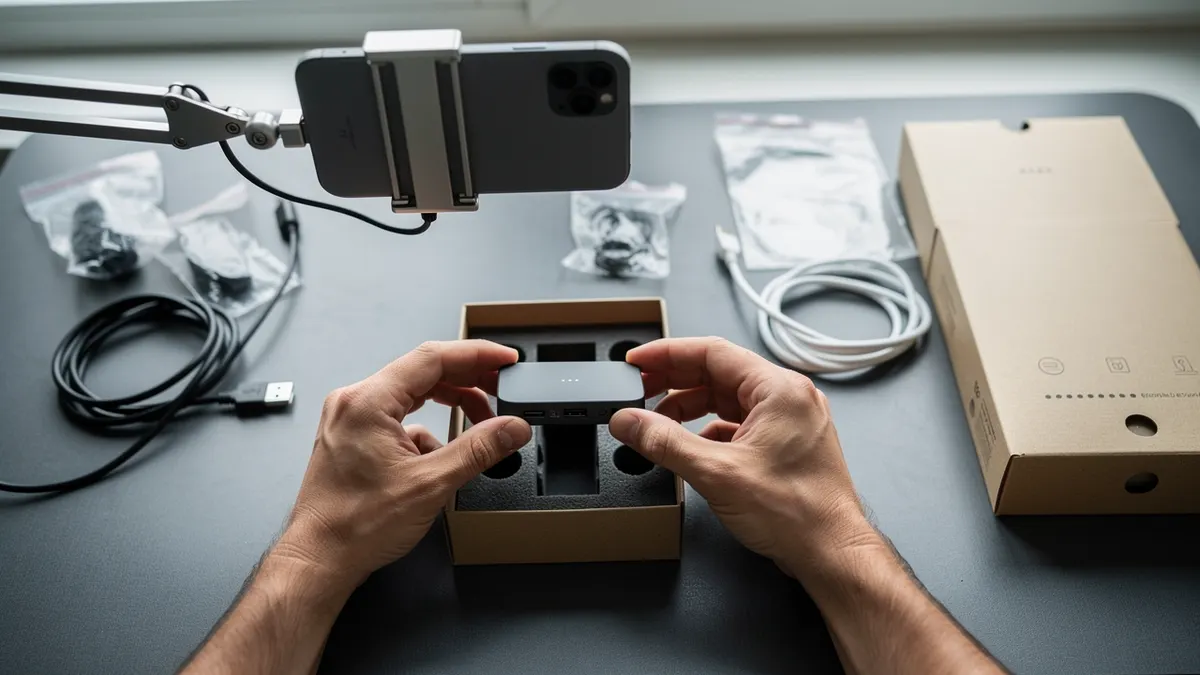
The unboxing, the start-up, the connection, the first use. Those five minutes contain every objection: the missing cable, the app to install, the account to create, the update that takes time.
Two rules. Film them in one continuous take when possible, because a cut makes people suspect a hidden problem. And state the real duration, not the edited one: saying the setup takes twenty minutes is an argument, letting people believe it takes two creates returns.
Pick a non-expert creator
That is the point that changes the result.
A specialist creator knows the product, skips the obvious steps and uses vocabulary the buyer does not share. An ordinary creator discovers at the same time as the viewer, and asks the right questions because they genuinely have them.
The casting criterion therefore becomes: somebody who resembles the customer, not somebody who resembles a reviewer.
Add one exception: for a professional or complex technical product, expertise becomes necessary again, and then precision is what is being bought.
The local context matters
Four points recur in the comments in this category.
Power and connection, with the socket type and the question of protection against voltage variation.
Compatibility with the services and applications actually used here.
After-sales service: who repairs it, where, and in what timescale.
And the guarantee, which is not the same depending on whether the device comes from a local seller or from an import.
Film those elements rather than asserting them: the documentation in the box, the serial number, the guarantee card.
Keep promises verifiable
That is the line not to cross.
The stated battery life, the speed, the range, water resistance, compatibility: these are claims that commit the brand and that must be provable.
What may be said depends on the product and on your situation, and is checked with the brand and with a lawyer, before the shoot. The practical rule is simple: show the test instead of quoting the figure. A filmed measurement beats a recited value.
What can honestly be compared on camera
| What you compare | How to show it | What to avoid |
|---|---|---|
| Battery life | The percentage filmed at two moments | A duration claimed with no proof |
| Speed | The same task on both devices | An edit that cuts out the wait |
| Sound | A raw recording, untreated | A track added in the edit |
What makes a comparison usable
The same settings on both devices, the same room, the same hour, and a mention of what could not be made identical.
What is always disclosed
The partnership, the loaned device and the real testing period. A three-hour test is not announced as a month of use.
What the brand must supply
Three things, otherwise the video will be imprecise.
The exact reference of the model filmed, in writing, because ranges look alike.
The list of what is in the box, to prevent the creator announcing an accessory that is not there.
And the list of authorised claims, with their sources. That document protects everybody and speeds up approval.