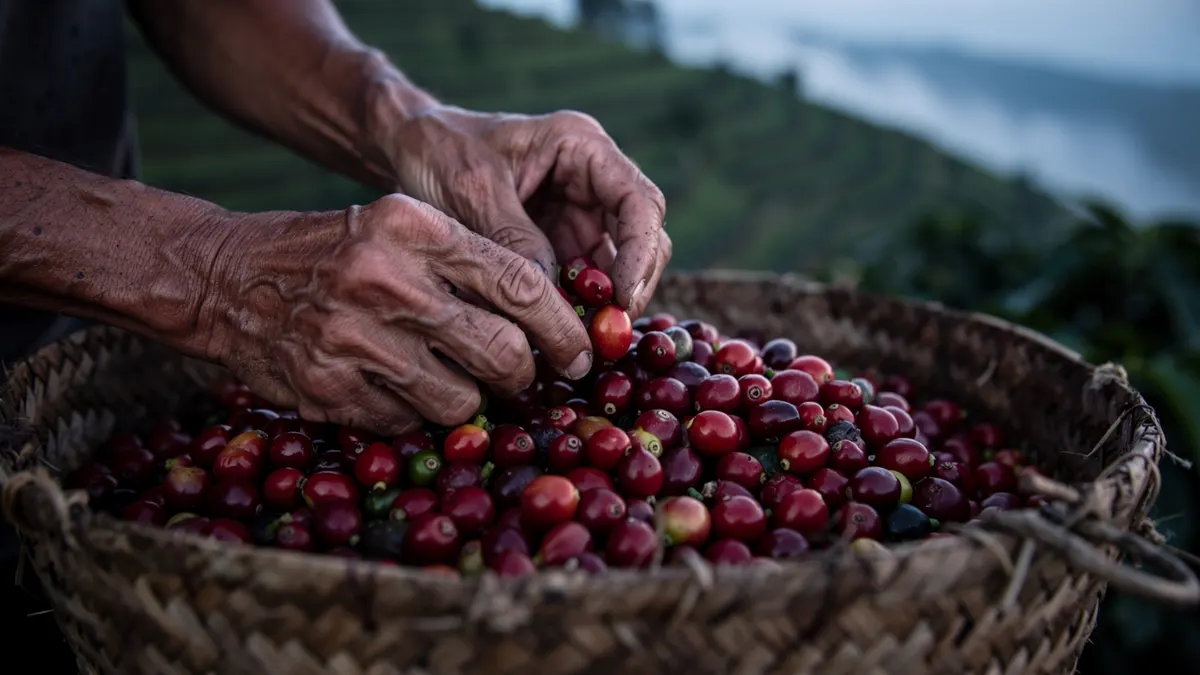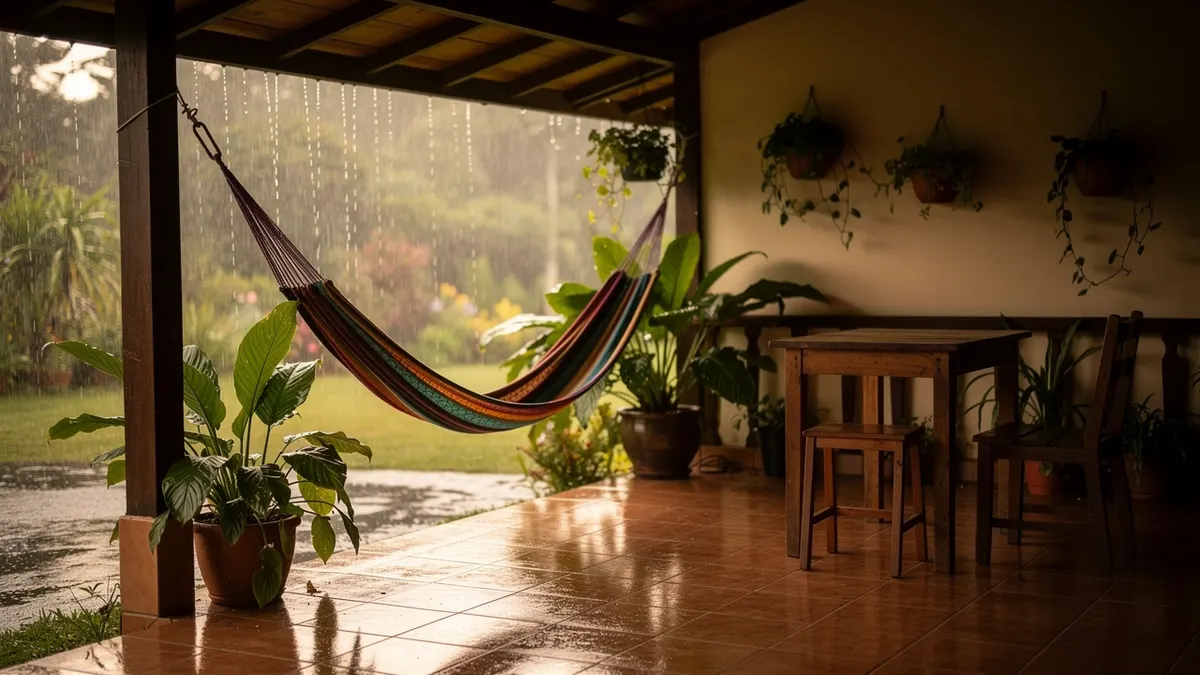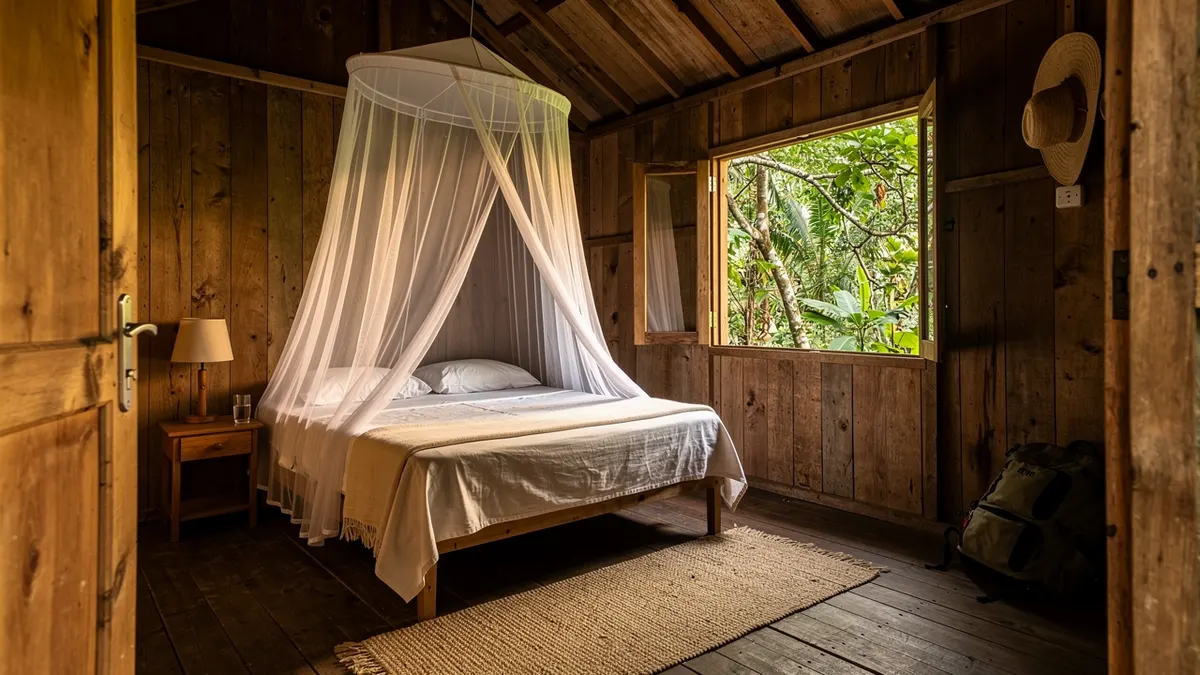
A place to stay sells on images the traveller believes. Here, wildlife is the first argument, and the first trap.
What the traveller really wants to see
Three things, and none of them is a drone shot.
The room in its real light, filmed from the door then from the bed, without a wide angle that doubles the floor area. The actual journey from the airport or the main road, with its stated duration. And the morning meal, as it is served on an ordinary day.
Add the sound. Somebody hesitating over a booking wants to know what they will hear at five in the morning: the forest, the road, the air conditioning. Thirty seconds of raw sound answer a question ten photos leave open.
Which creators to hire
Not the most followed, the most self-sufficient.
The useful criterion is the ability to film handheld while walking, in humidity, without a crew. A stay gives you a few hours of usable light per day, and somebody who needs a tripod and two assistants loses half of it.
The second criterion is language. Your clients do not all come from the same country: somebody who delivers the same sequences with two voices, or with clean subtitles in two languages, is worth two suppliers.
The third is the equipment: protected body, plenty of batteries, and the habit of backing up every evening. A card lost at the end of a stay cannot be recovered.
How to buy content that lasts
By removing from the frame everything that ages.
Displayed prices, seasonal decorations, uniforms about to change, neighbouring signs and phones on screen date a video within a year. A room, a dish and a path, on the other hand, do not age.
Ask for the rushes too, not only the edit. That is the difference between a file usable for one season and a library you will re-cut three times.
And set the duration and the territory in writing, including for paid advertising and for display in agencies. The framework applicable to images of identifiable people, to staff filmed and to other guests present depends on your situation and is checked with a lawyer, before the shoot.
The brief that produces good material
One page, five lines.
The list of required shots, in the order of the stay. The forbidden shots, including those involving wildlife. The format and the number of files expected. The delivery date. And the person to contact on site.
Add what the creator may decide alone. A brief that locks everything down produces a brochure; a brief that leaves two or three free choices produces images people watch.
What is filmed on site and what can be redone
| Shot | On site | Redoable back home |
|---|---|---|
| The arrival and the view | Impossible to replay | No |
| The room and the breakfast | To film the first morning | No |
| The voice-over | Optional | Yes |
What you ask the venue
Permission to film in common areas, a slot with no guests, the consent of any staff appearing, and verification of the information quoted.
What is not promised
Weather, availability, a rate or the sighting of a wild animal. Those change between the shoot and the release, and a false claim commits the brand.
The calendar
It is set by the booking, not by the trip.
Your clients book several months ahead. A campaign running during the high season arrives after the decision: you have to film a season before you broadcast.
The right time to shoot is therefore the quiet period, when the teams are available and the places empty. The right time to broadcast is when the person is still comparing two destinations.