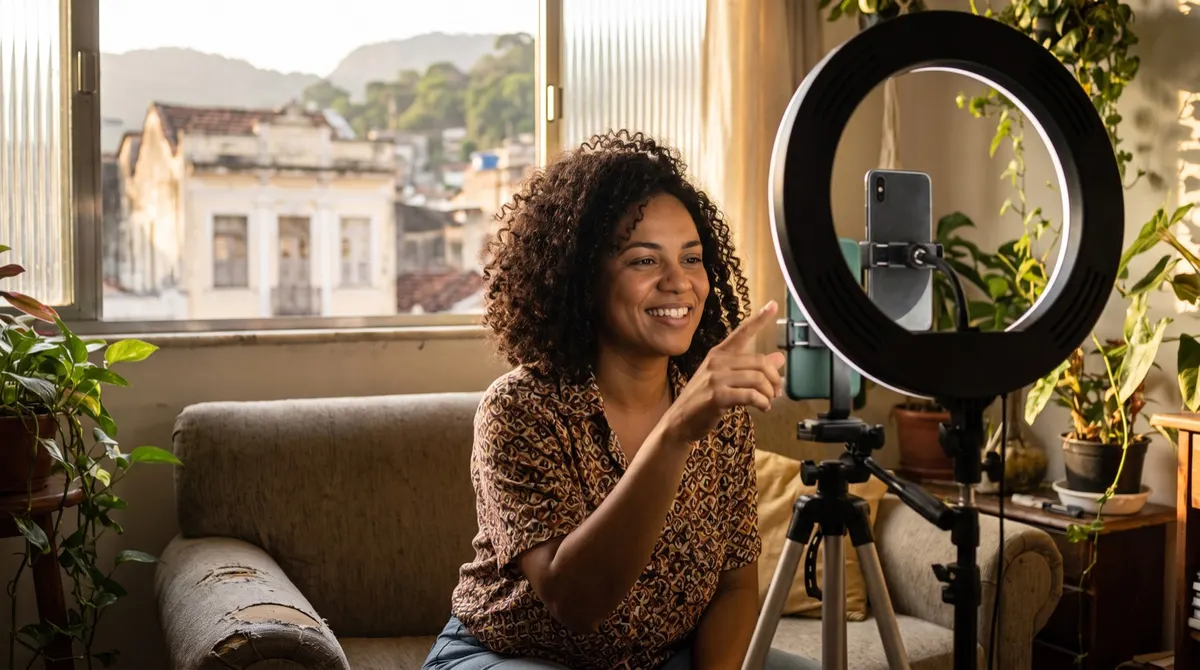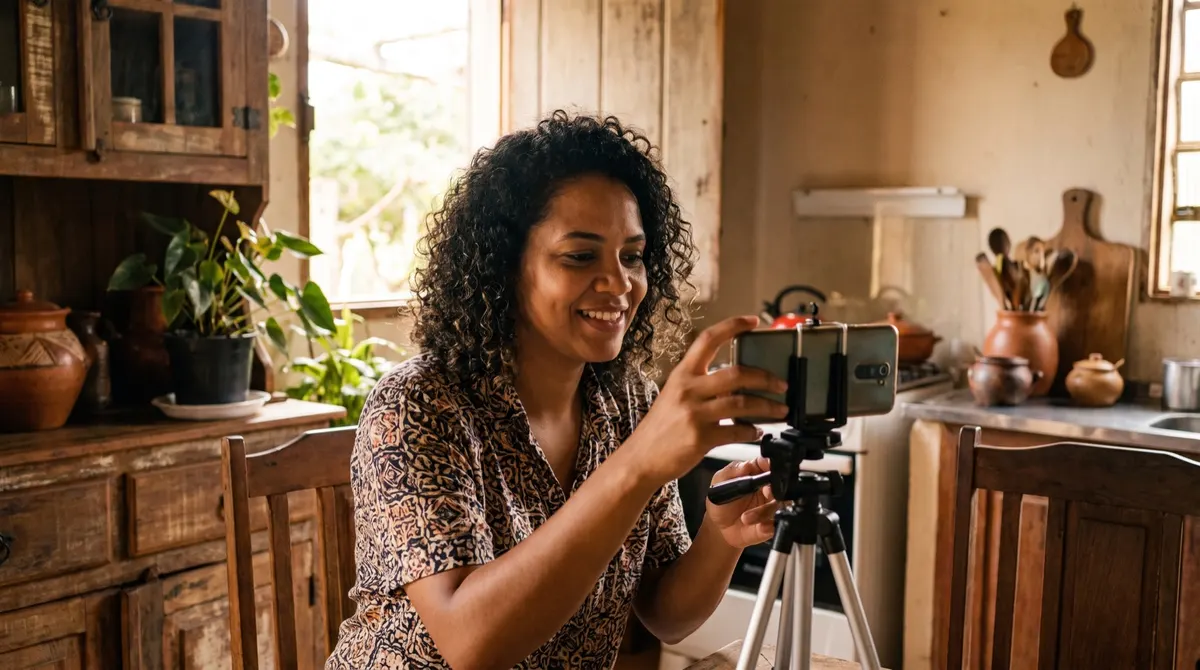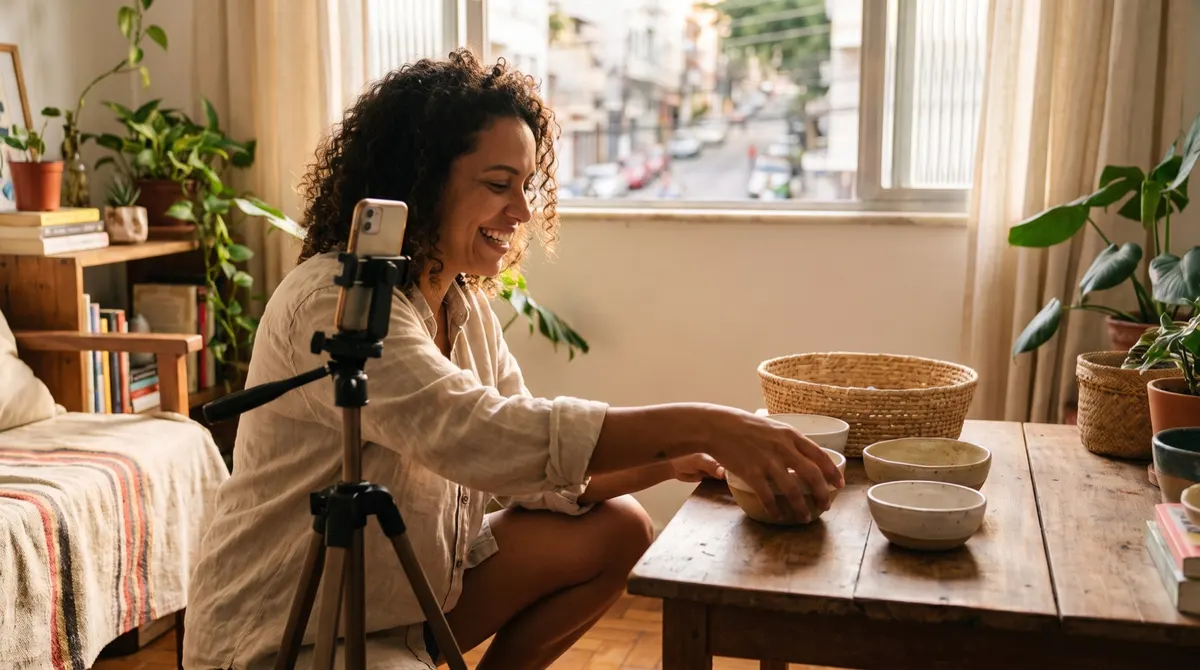
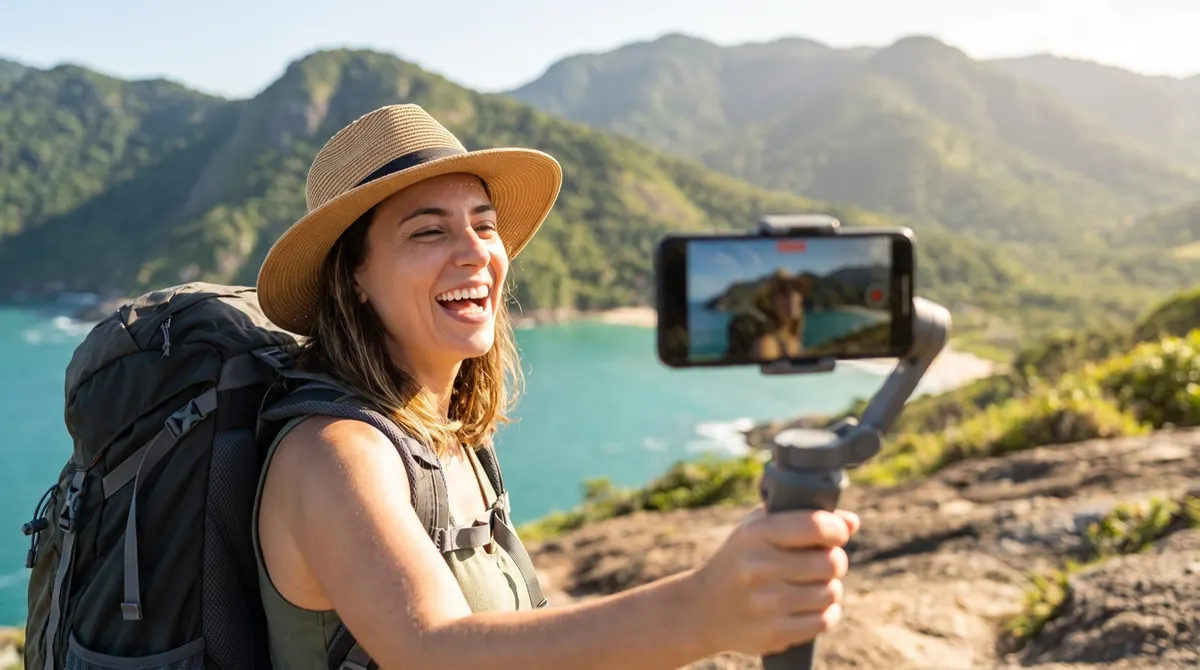
Travel as a UGC niche in Brazil, the content hotels and tourism brands want, and how creators produce it.
Why travel brands in Brazil buy UGC
Seven reasons specific to this market.
The country is huge, and domestic travel dominates international travel by far.
Professional photos have become suspect from being identical from one venue to the next.
Seasonality is strong, which forces content to be renewed several times a year.
Reviews weigh enormously in the decision, and video extends them.
Travel is planned as a family or a group, so content circulates in private messages.
Price per person and payment method often decide, which a video can address.
And independent venues have neither a studio nor a photo budget, which makes the format accessible.
The travel formats that really sell
Seven formats, from the most useful to the most decorative.
The complete journey to the door, dealt with above.
Arrival and settling in, filmed with no cut, from reception to the room.
The room shown as it is found, before anything is tidied.
The bathroom, with the water pressure and the heating time.
Breakfast filmed at the real hour, not at opening time.
A typical day around the venue, with the distances stated.
And the sunset, a decorative format useful only if it is dated and located.
The journey, the bathroom and the arrival
Six concrete checks travellers expect.
The real walking time, timed and stated.
The state of the path, particularly with a suitcase or a pushchair.
Street noise at bedtime, filmed with the window open.
Water pressure and temperature, the most asked question after location.
The air conditioning, its noise and its real effectiveness.
And the connection, tested where you actually sit, not in the lobby.
How creators deliver usable content
Seven production rules specific to this niche.
Filming horizontally as well as vertically, since venues have websites and screens.
Avoiding any dated element, festival sign, seasonal decoration, unless that is the subject.
Filming with no other recognisable guests, or with their written agreement.
Stating the season and the year, which extends the content's life.
Delivering short separate shots, rather than one long edit.
Recording the voice separately, to allow a version in another language.
And delivering a version with no burnt-in text, indispensable for advertising.
What a venue has to give the creator
Six elements that avoid half the problems.
Access to filmable spaces, with the hours when they are empty.
Written agreement from staff visible on camera.
The information not to show: occupied rooms, badges, reception screens.
Official distances and measured travel times.
The mandatory mentions attached to the venue's category.
And the name of somebody reachable throughout the shooting stay.
The licence and usage rights, simply explained
Seven points to settle in writing.
The exact use: website, social networks, paid advertising, booking platforms.
The duration, often long in this niche, to be priced accordingly.
The territory, since the content may serve foreign markets.
The possibility of translating or subtitling, to be authorised explicitly.
The fate of unedited rushes, much sought after by venues.
A ban on transferring to a third party, notably a booking platform, without a new agreement.
And the case of the venue being sold, frequent in tourism, which has to be provided for.
What you cannot promise
Five precautions, to be validated with a lawyer and with the competent authority before release.
Prices and availability change, and are not stated in a video meant to last.
Classifications and labels are quoted as they were awarded.
Statements about the safety of a neighbourhood are to be set aside.
Cancellation conditions are repeated word for word from the site.
And the disclosure that the stay was offered is made in the required form.
Getting started as a travel creator in Brazil
Seven concrete steps.
Starting with venues in your own city, where travel costs nothing.
Producing three utility videos before any atmosphere video.
Systematically documenting distances, which nobody does.
Offering a batch per venue rather than an isolated video.
Invoicing travel separately, without including it in the production price.
Refusing offered stays as the only payment, unless the calculation is explicit.
And building a library of location shots, reusable for several clients in the same region.
What gets a travel video refused
Six frequent grounds for return in this niche.
Another recognisable guest on camera, with no written agreement.
A room number or a badge visible for a second.
A shot filmed in a space where filming is not allowed, spa or gym during opening hours.
Music recorded on site, whose rights have not been checked.
A price or a promotion visible on screen, which dates the video within weeks.
And a night shot that is too dark, unusable in advertising after recompression.
What is filmed on site and what can be redone
| Shot | On site | Redoable later |
|---|---|---|
| The arrival and the first look | Impossible to replay | No |
| The lodging and the breakfast | To film the first morning | No |
| The voice and the commentary | Optional on site | Yes |
What is asked before coming
Permission to film in common areas, a slot with no other guests, the consent of visible staff, and the property's position on crowd shots.
What is never promised
Weather, a rate, an availability or a rating. These change between the shoot and the release, and an outdated claim commits the brand long after publication.
The Brazilian tourism calendar
Five markers for scheduling production.
School holidays, which decide the booking peaks.
Long weekends, highly structuring for domestic travel.
The rainy season of the region concerned, which changes everything on screen.
Festival periods, to be filmed or avoided according to positioning.
And the usual booking lead time, which indicates how many weeks before the peak to release.
One last marker: in Brazil a travel video showing the path, the hot water and the street noise sells better than a sunset video. The traveller does not doubt the beauty of the place, they doubt what the photo does not show.
Sources
- Portal do Empreendedor (MEI), Brazilian government
- Receita Federal, Brazilian tax authority
- Simples Nacional, official portal
Checked on 4 September 2026. Thresholds and rates change: where this guide and the official source disagree, the official source is right.