They are two different purchases: here is what you buy in each case, what it costs, and which one is still useful the following month.
What remains after thirty days
The most concrete difference between the two purchases.
An influencer post has lived: it produced its effect within forty-eight hours, it stays online but no longer works, and you cannot run it again.
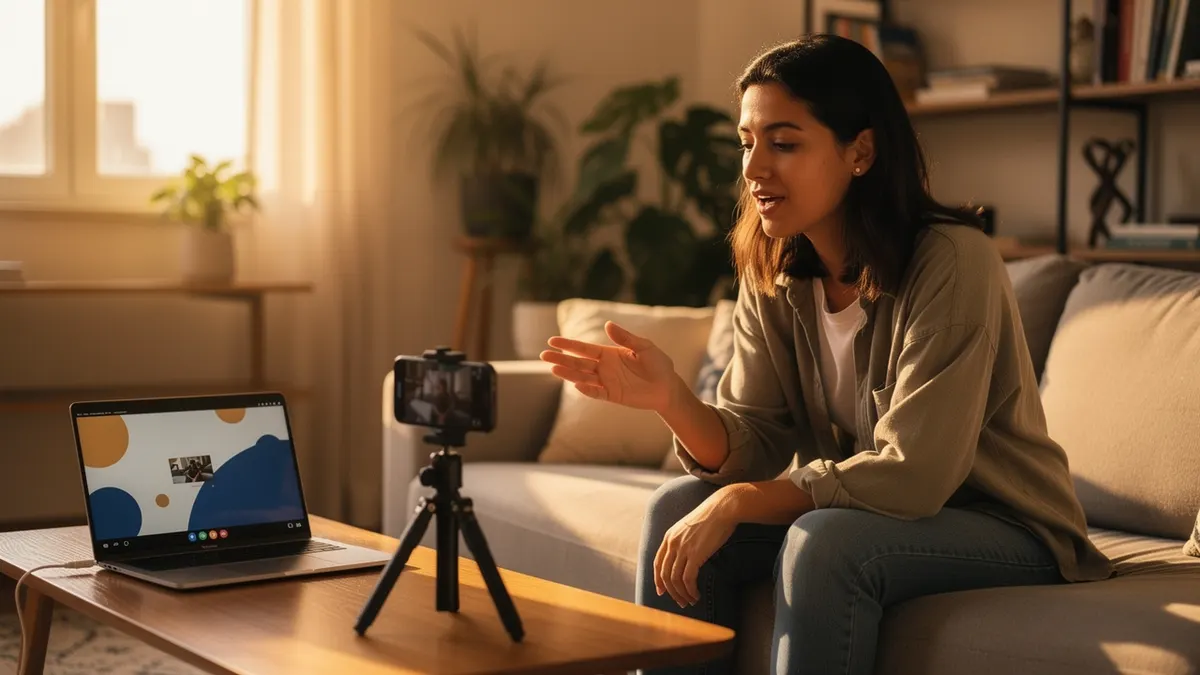
A creator video is a file: it stays usable for the whole duration of the rights, in advertising, on the product page, in an email, in store.
One simple consequence: after a year, one has left a trace, the other has left a library.
What you buy in each case
Two kinds of purchase, never to be confused.
In influence, you buy an audience and a moment: the person speaks to their followers, with their credibility, on their account, and the price depends on the size of that audience.
In creator video, you buy a production and rights: the video runs from your accounts or your ads, and the price depends on the work and the extent of use, not on the follower count.
What changes in the price
Three gaps, and they are structural.
An influencer post is paid once for a single distribution.
A creator video is paid once and rerun as much as the rights allow.
And the cost per distribution inverts over time: expensive at the start for creator video, it becomes trivial after six months, while influence costs the same price at every new post.
Which to choose
Four situations, and the answer is clear in each.
You are launching an unknown product and need fast awareness: influence.
You have an advertising budget and are looking for material to run: creator video.
You have to feed a product page, a website, a shop: creator video, without hesitation.
You want the endorsement of somebody your audience knows: influence, and pay for it as such.
When the two combine
The most profitable formula, and it is negotiated in one sentence.
Buy from the same person the post from their account and the usage rights to the file for your advertising.
Three details to write down: the duration of the rights, the authorised channels, and the fact that the post stays online for an agreed period.
One pricing rule: those two elements are invoiced separately. A brand obtaining advertising rights without paying for them simply negotiated badly the first time, and the creator will notice on the second.
Two services, two prices
| Point | Posting on your own account | Delivering to the brand |
|---|---|---|
| What is sold | An audience and an endorsement | A file |
| What is measured | Views, clicks, sales | The ad's view-through rate |
| The mandatory disclosure | On the post | Carried by the brand |
What changes in the negotiation
A post commits the creator's name before their audience, a delivery commits a file. Selling both as a block always underprices the post.
What must appear in both cases
The partnership disclosure as soon as any consideration exists, including a gifted product. The rule applies to an exchange with no money too, to be confirmed with a lawyer.
Where to start
Two steps, in this order.
Start with creator video: it costs less, it produces reusable material, and it teaches you which message works on your product.
Then add influence, once you know which angle works: you will know what to ask the person for, instead of paying for an audience to carry a message you have not tested.