Pet products are the one category where the main performer cannot be told what to do. A dog will eat the food or turn away from it. A cat will use the bed or sit next to it, deliberately, for a fortnight.
That is not an obstacle to work around. It is the source of the category's unusual credibility, and the brands that understand it get content nothing else in retail can match.
You cannot direct the talent, so brief the days instead
Most briefs in this category are written as shot lists: the dog runs to the bowl, the dog eats enthusiastically, the owner smiles. Those are three things a dog has not agreed to.
What the brief should ask for instead
Ask for outcomes over a period, not moments in an afternoon. Two weeks of ordinary use, filmed whenever it happens, with a minimum number of usable clips rather than a storyboard.
Pay for the fortnight rather than the shoot. It is the only way to get the shot where the animal actually does the thing, and it is cheaper than three reshoots chasing a moment that was never going to be produced on demand.
The two-week rule
Anything an animal has to get used to needs two weeks: a new food, a bed, a harness, a water fountain, a carrier. Film day one and you have a suspicious animal. Film day fourteen and you have the truth, and the truth in this category is usually good.
The buyer is not the user
The person spending the money is the human, and the human is not buying the same thing the animal is using.
The owner is buying reassurance, convenience and a small amount of guilt relief. Is it good for them, will it make a mess, will it smell, will it survive a chewer, is it worth this much, am I a bad owner for not having bought it already.
Answer those, in that order, and the animal in the frame does the rest of the work.
| What the brief usually asks for | What the owner is watching for |
|---|---|
| The pet loving the product on cue | Whether the reaction looks unforced |
| A tidy kitchen and a perfect bowl | How much mess it actually makes |
| A close-up of packaging | The size of it next to a normal dog |
| A happy owner smiling to camera | An owner saying one honest drawback |
| A puppy, because puppies perform | An older or larger animal, because that is what most people have |
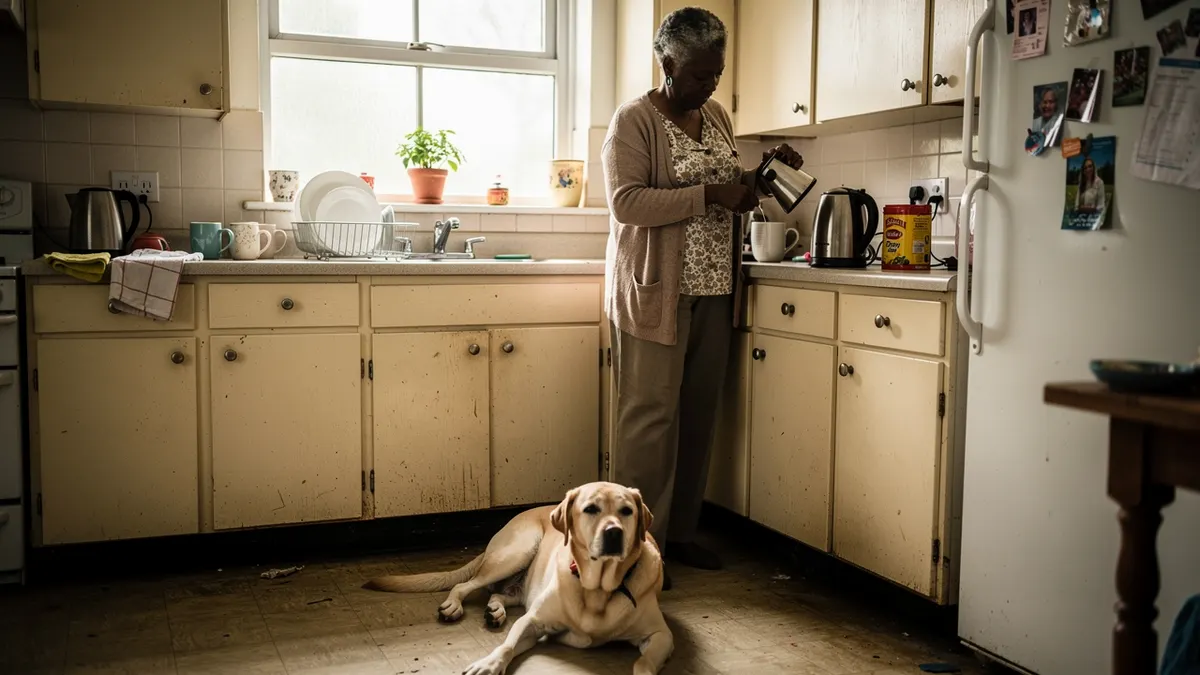
The last row is the most commonly wasted budget in the category. Puppies and kittens get views from people who do not own one. An eight-year-old labrador with a stiff back leg gets orders from people who own an eight-year-old labrador.
Filming an animal is a scheduling problem
The practical constraints are not creative ones. Animals perform in the first ten minutes and then stop caring. Meal times decide when food content is possible at all. A strange room makes a cat useless for a whole day.
So the workable model is somebody filming their own animal in their own house, over time, rather than a shoot with a hired pet in a studio. That is also the content owners believe, because they recognise their own kitchen in it.
What still needs a professional
The product shot, the packaging, the safety information, anything with a claim attached. Split the work: the owner's fortnight produces the belief, the paid piece produces the clarity.
What pet owners are actually watching for
They are watching the animal's body, not the caption. Ears, tail, whether it approaches or hesitates, whether the owner is holding it in place, whether the second attempt was cut out.
This audience is unusually literate about that, which is why a mildly disappointing honest video outperforms a perfect staged one. Show the cat ignoring the bed on day one and using it on day ten and you have made the strongest advertisement available to you, without saying a word.