Two years ago, whether a creator used artificial intelligence was a private matter about software. It has become a question that appears in briefs, in contracts and in the paperwork a brand keeps in case it is challenged.
The reason is not squeamishness. A brand is responsible for what its advertising claims, platforms label synthetic media, and a brand that cannot say how a video was made cannot answer a question about it. So they ask you.
The question has moved from the edit to the contract
What brands now ask you to declare
The usual form is a short declaration: whether any part of the video was generated rather than filmed, whether any voice in it is synthetic, whether any person shown does not exist, and whether the product is shown as it actually is.
Answer it honestly and specifically. The declaration is not a trap and it is not a judgement about your craft. It is the brand collecting the facts it needs to defend the advertisement, and a vague answer is worth less to them than an inconvenient one.
The creators who get into difficulty are not the ones using the tools. They are the ones who said no when the answer was partly.
Three uses, and only one is really contentious
Tools that speed up work nobody sees
Transcription, rough cuts, caption timing, colour matching, background noise removal, translation drafts, script tidying, research. None of this changes what the viewer sees as real, and no reasonable brief objects to it.
You do not need to declare that you used a spell checker, and this is the same category of thing. Say so if asked; do not volunteer a list.
Generated material inside the frame
A background that never existed, an object added to a shelf, a room extended, a stain removed, a product placed in a scene it was never in.
This is where honesty starts to matter commercially, because it interacts with what the advertisement is claiming. Extending a ceiling is decoration. Making a small jar look large, or a thin sauce look thick, is a claim about the product, and it is the brand who answers for it.
The workable rule is simple. If the change would alter what a buyer expects to receive, it is a claim, not a finish.
A synthetic version of you
Your face, your voice, or both, generated rather than recorded. This is the one that has changed the shape of creator contracts, and it is the one most creators sign without noticing.
Your likeness is now a separate right
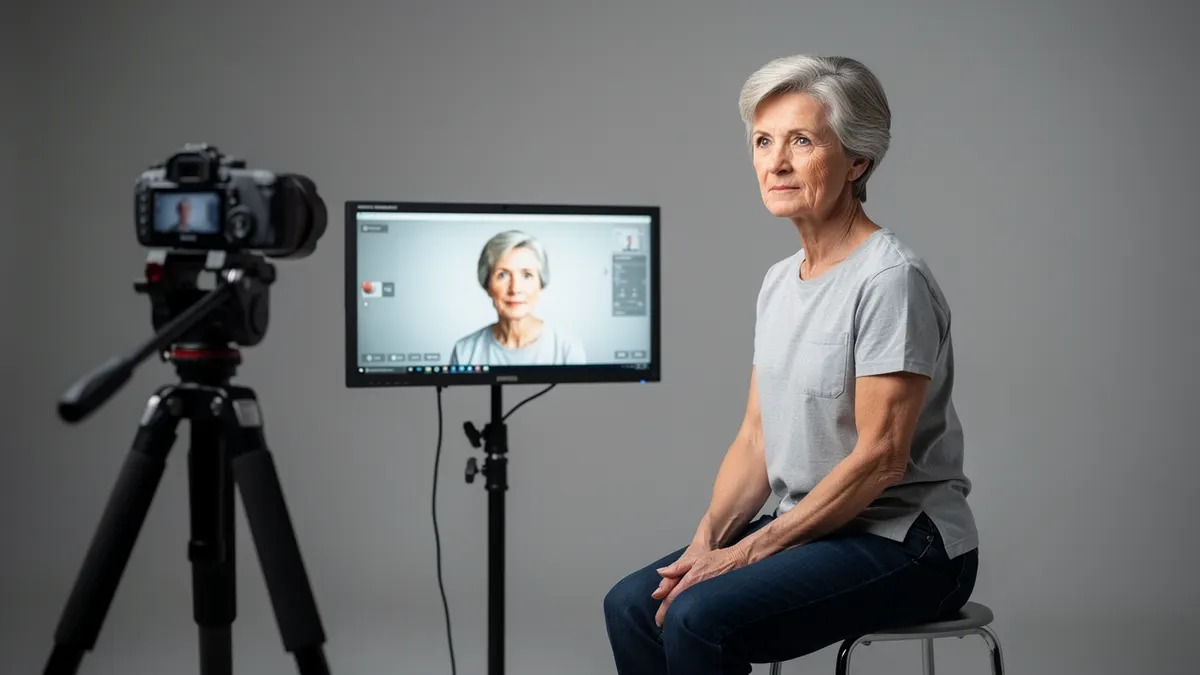
Once a brand has enough footage of you, a version of you can be produced without you: the same face saying a different script, the same voice reading new copy, a new advertisement in a market you have never worked in, forever, at no marginal cost.
That is not a hypothetical. It is a service brands are actively sold, and the permission for it is often buried inside a broad clause about editing and derivative works.
The clause to insist on
| What a broad contract allows | What to agree instead |
|---|---|
| Any modification of the deliverables | Edits for length, format and captions |
| Derivative works of any kind | No new sentence put in your mouth |
| Use of your image and voice | No synthetic recreation of face or voice |
| Perpetual, unlimited | A period, a territory, a purpose |
| Silent on training | Your material may not be used to train a model |
The third and fifth rows are the two to fight for. Everything else in a content contract is negotiable in degrees; those two are the difference between selling work and selling yourself.
You do not need aggressive drafting. One clear sentence does it: the client may not generate, synthesise or recreate the creator's face or voice, and may not use the material to train a model, without a separate written agreement.
Brands agree to this far more readily than creators expect, because most of them have no intention of doing it and simply used a template. The ones who resist have told you something useful.
Disclosure: what the audience actually needs to know
There are two separate questions here and creators conflate them.
The first is commercial. If you were paid, or received something, that has to be clear to the viewer whatever tools you used. The advertising rules on this have not changed, the mention has to be obvious rather than buried, and no amount of AI in the workflow alters it.
The second is about the reality of what is shown. An audience that discovers a scene never happened feels misled in a way that damages the creator far more than the brand, because the account is yours and the trust was yours.
The practical line most people find defensible: nobody needs to be told about tools that helped you work, and everybody should be told when what appears to be a real person, a real place or a real result is not.
Say it plainly and briefly, in the video or in the caption. The audience punishes concealment, not use.
What to put in your own terms
You will be asked what your position is, so decide it once and write it down.
A short paragraph in your own terms of business is enough: what you use tools for, what you do not generate, that any generated element will be flagged to the client before delivery, and that your face and voice are not licensed for synthetic recreation.
That paragraph does three things. It answers the brand's compliance question without a meeting. It stops a client assuming the broadest possible permission. And it tells a serious buyer that you have thought about the thing they are worried about, which in this market is itself a reason to be hired.
Sources
Checked on 4 September 2026. Thresholds and rates change: where this guide and the official source disagree, the official source is right.