Drinks brands are among the best paying clients a British creator can have. They are also the ones most likely to reject a finished video for a reason the creator never saw coming, because the UK code on alcohol advertising restricts things that have nothing to do with the product.
It is not mainly about what you say. It is about who appears, who is watching, and what the drink is shown to cause.
The code is about the person in the frame
The rule that catches everyone: nobody who looks under 25
An alcohol advertisement must not feature anyone who is, or seems to be, under twenty-five in a significant role. That is a stricter line than the legal drinking age, and it is deliberately stricter, because the test is how old somebody looks rather than how old they are.
For a creator this has three consequences. If you look under twenty-five, you cannot be the person holding the drink, whatever your passport says. If a friend in the shot looks young, the shot is unusable. And a brand will ask you to confirm this in writing, so decide before you accept the job rather than after you have filmed.
Who else is in the shot matters as much as you do
Backgrounds are where campaigns die. A busy bar behind you contains people whose ages you cannot verify, and a face in focus behind your shoulder is not incidental once a complaint is made.
Film in the quiet hour, film with a shallow depth of field, or film with a small group you have actually asked. That is a production decision to take before you arrive, because it cannot be fixed in the edit.
What alcohol is not allowed to do in your video
The code stops drink being shown as the cause of things people want. This is the part creators find counterintuitive, because it rules out most of the emotional beats that make social video work.
| The shot the brief describes | Why it fails |
|---|---|
| The drink arrives and the party comes alive | Alcohol shown creating social success |
| A shy person has one and gets confident | Alcohol shown removing inhibition |
| Two people flirt over a cocktail | Alcohol linked to sexual success |
| Someone downs it, then a reaction shot | Encouraging immoderate drinking |
| It has been a day, I have earned this | Alcohol as a reward or a way to cope |
| A hangover cure, or good for your heart | Therapeutic or health claim |
| Drinking before something physical or dangerous | Alcohol linked to daring or risk |
None of that is about the brand's taste. It is about the association, and the association is judged on the whole video, including the caption, the music and the joke at the end.
The rule that survives all the others
Drinking has to be shown as ordinary, moderate and incidental to whatever else is happening. If the drink is the reason the good thing happened, rewrite it. If it is simply present while the good thing happens, you are usually fine.
The audience rule is the one creators actually break
The other half of the code has nothing to do with content. Alcohol advertising must not be directed at people under eighteen, and it must not appear in media where a disproportionate share of the audience is under eighteen.
Your own numbers decide whether you can take the work
That means your audience demographics are part of your eligibility, and most creators have never looked at them in this light. Open your analytics, find the under-18 share, and know the number before you pitch a drinks brand.
If a meaningful part of your audience is under eighteen, you are not a fit for alcohol work, and telling the brand so is worth far more than the fee: it is the kind of honesty that gets you the next brief in a different category.
Age gates help, and they do not fix everything
Platform age gating and audience targeting are expected, and a brand will usually require them. They are not a defence for content that appeals to under-eighteens in its own right.
Cartoon styling, characters, sweet-shop colours, formats built around school-age trends, references that only make sense to a teenager: those attract scrutiny whatever the targeting says, because the question is whether the advertisement appeals to under-eighteens, not whether it was served to them.
What still works inside the rules
The constraint is real and the category is still one of the most rewarding to work in, because what remains is genuinely interesting.
Craft, place and process
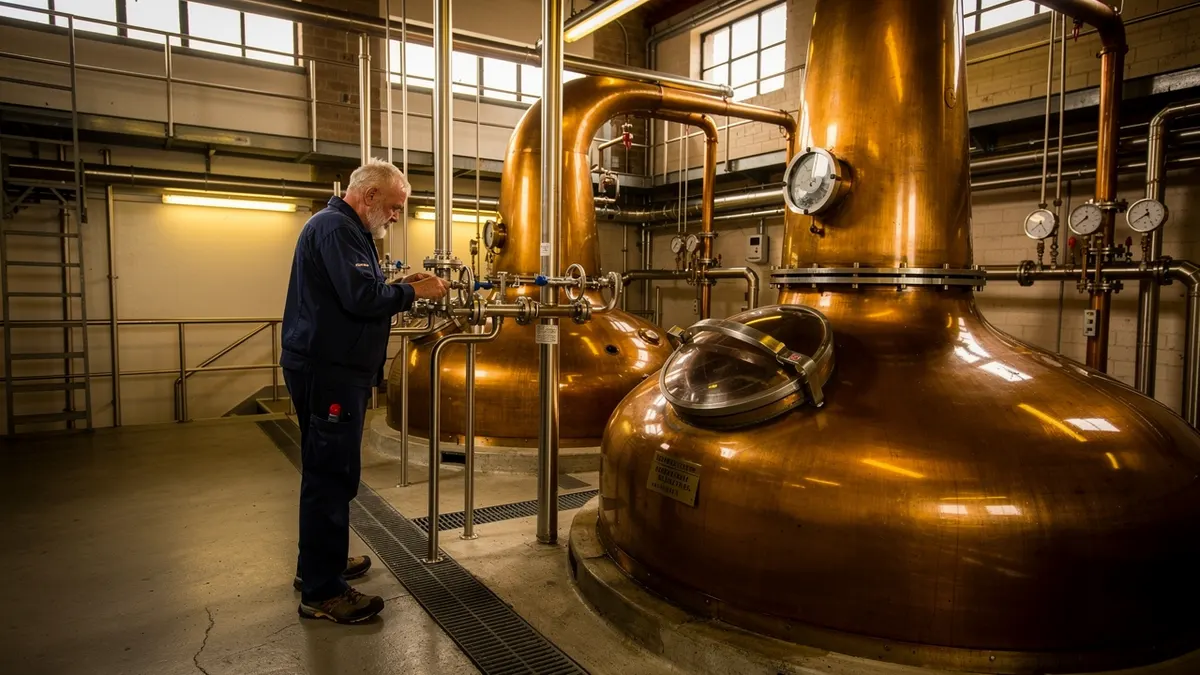
Where it is made, who makes it, why it tastes the way it does, what the water is like, what the barrels were before. British distilleries, breweries and vineyards have more filmable process than almost any other product category, and none of it touches the code.
Serving, food and the half that is not drinking
How to serve it properly, what to eat with it, what glass, what temperature, how to make the non-alcoholic version of the same thing. Low and no alcohol is the fastest growing part of the category and it removes the sharpest constraints entirely.
The person who knows things
A distiller, a brewer, a bartender explaining one specific thing well is the format that performs best and travels furthest in this category, and it is compliant almost by construction.
The paperwork side of an alcohol brief
Expect more of it than in other categories, and read it rather than skimming.
You will normally be asked to confirm your age, to confirm that everyone appearing is over twenty-five in appearance, to state your audience split, to apply age gating, to use specific responsible drinking wording, and to submit the edit before publication.
Take the pre-approval seriously and send the edit early. In this category a rejection is not a note, it is a reshoot, and the brands that pay best are the ones with the most careful legal teams.
Keep a record of the approved version. If a post is challenged a year later, the brand will ask you what was signed off, and being the creator who can answer that in one message is how you stay on the roster.
When a brand asks for something the code refuses
It happens, and usually not from bad faith: a marketing manager writes the brief and legal never sees it, or an overseas team uses a script that was cleared somewhere with different rules.
Say it once, in writing, before you film. Explain which line is the problem and offer an alternative that gets the same feeling: the toast without the reaction shot, the party that was already good before the drink arrived, the moment of craft instead of the moment of relief.
Creators who do that keep the client. Creators who film it anyway and let the brand discover the problem at approval stage lose two days and the relationship.
Sources
Checked on 4 September 2026. Thresholds and rates change: where this guide and the official source disagree, the official source is right.