Reselling clothes online in Britain has quietly become one of the most common ways a creator makes money, and most people doing it are running a channel when they should be running a shop.
The difference is not aesthetic. A channel posts when it has something nice. A shop opens at a stated time, has stock, and closes.
The drop is the format
An account that posts individual items whenever they are photographed teaches nobody to come back. An account that lists at eight on a Sunday, every Sunday, builds a queue.
Why the fixed time does the work
A stated time turns browsing into an appointment. It also solves the seller's real problem, which is not audience but pace: photographing forty items in one session and listing them together takes a fraction of the time of doing four items on six evenings.
Announce the drop, show a handful of pieces beforehand, then post the whole rail at once. Everything that sells in the first ten minutes tells you what to buy next.
The flaw shot sells more than the styling
The instinct is to hide the mark on the hem. The mark is what makes the rest of the description believable.
A close shot of the flaw, named plainly, does three things: it prevents the return, it stops the message asking about condition, and it tells a buyer who has been burnt before that you are not the seller who burnt them.
| What sellers usually film | What actually sells the item |
|---|---|
| The item styled on a hanger | The item on a body, moving |
| Bright filtered colour | The colour under a window, unfiltered |
| Size 12 | Chest, waist, length, in centimetres |
| A general vibe video | The label, the seam, the fabric close up |
| Nothing about condition | The flaw, named, in close up |
Why size 12 loses you money
A size label from 1994 means nothing today, and a size label from a fast fashion brand means nothing next to another one. Every experienced resale buyer scrolls straight past the size and looks for the measurements.
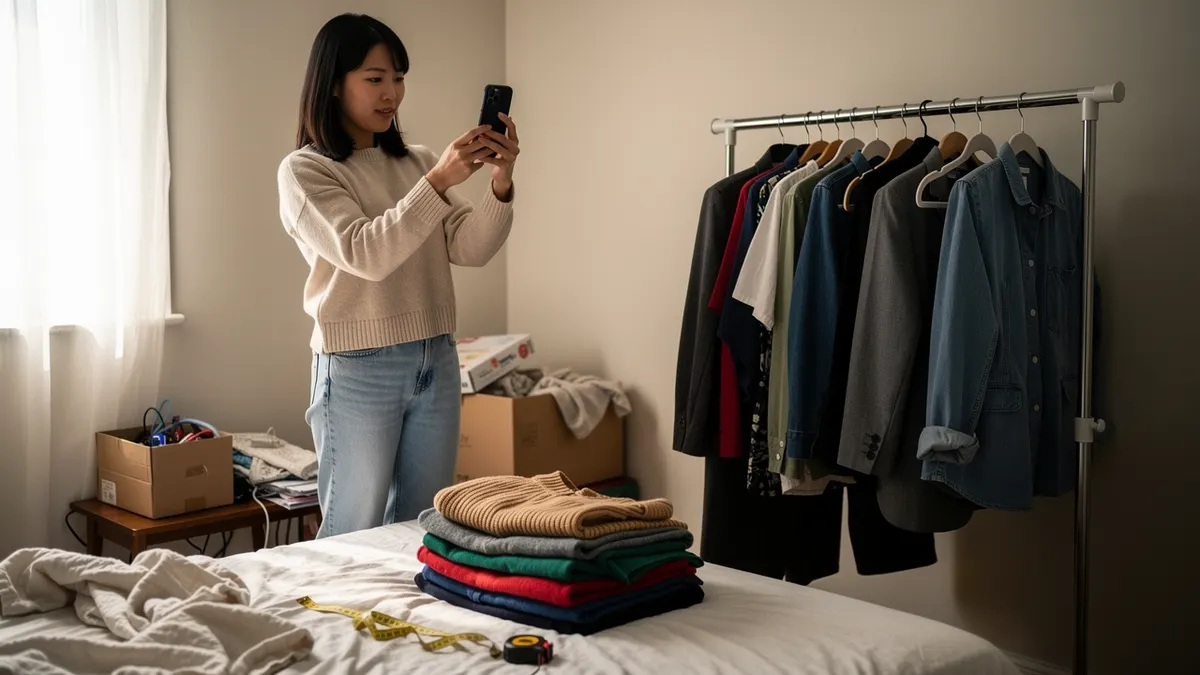
Filming a tape measure across the chest and along the sleeve takes eight seconds per item, removes most of your returns, and is the single clearest signal that you know what you are doing.
Where the video goes
The listing photograph sells the item to somebody already looking for it. The video does a different job: it brings people to the drop and it makes the pieces feel like a shop rather than a wardrobe clear-out.
Keep them separate. Short pieces on social for the rhythm and the finds, plain honest photographs and measurements on the listing itself, and a video only on the listing where movement genuinely matters, which for clothing is drape, weight and how a fabric falls.
One tax question worth answering early
There is a real difference between clearing out your own wardrobe and buying stock to sell at a profit, and it is the second one that HMRC treats as trading.
If you are sourcing to resell, you are running a business, and the sooner you keep records of what you paid and what you sold it for, the less painful the first return is. It is a fifteen minute question with an accountant and it removes a fear that stops a lot of sellers growing.
The one video worth putting on the listing itself
A photograph cannot show weight. Hold the garment up and let it fall once, in front of a plain wall, for four seconds.
That single movement answers whether a jacket is heavy wool or thin acrylic, whether a dress hangs or clings, whether a knit has stretched. It is the only thing a buyer genuinely cannot judge from stills, and it is the reason a listing with one four-second clip beats a listing with twelve photographs.
Sources
Checked on 4 September 2026. Thresholds and rates change: where this guide and the official source disagree, the official source is right.