A brief asks for your child and the fee is good. The decision is not about the fee, it is about a person nobody could consult and who will have an opinion.
Two different requests under one sentence
A child in frame
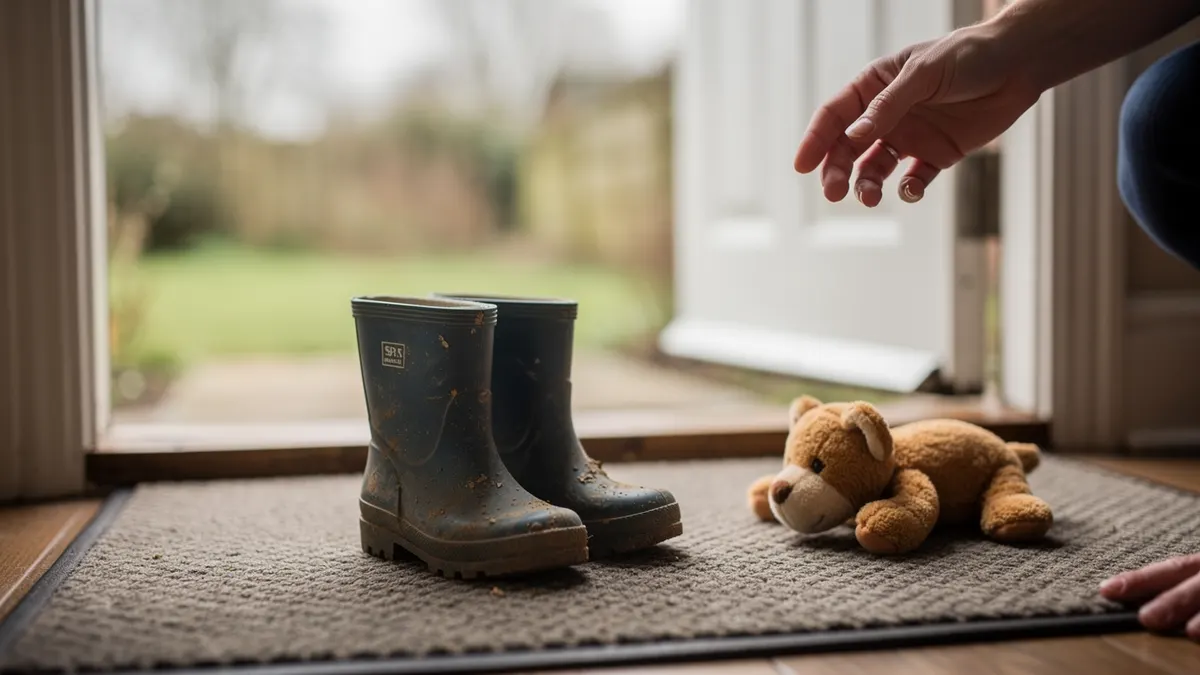
The brand wants a credible scene: a lively kitchen, a toy lying around, somebody passing by. The child is not the subject, they are the context. That request is handled like any question of setting, with one difference: the setting has no future life.
A child carrying the video
Here the child is the message. They are what people watch, their reaction is what sells, and their face is what will run for the whole campaign. The fee is higher for a precise reason: it is no longer your work being bought, it is theirs.
The number of takes, and what it implies
Six practical consequences of that criterion.
A single take demands no direction, fifteen takes demand it.
The more takes there are, the longer the child has to concentrate, which becomes work.
The shoot lengthens, often beyond what a young child can bear.
Interruption becomes likely, and has to be accepted without discussion.
Tiredness shows on screen, and the brand asks for another session.
And the payment has to be proportionate to that real time, not to your own service rate.
Three points to write down, and they are not the usual three
Seven elements to put in writing before accepting.
The number of takes and the total time the child is present.
The exact distribution channels, with those that are excluded.
The licence duration, with a firm end date.
The right of withdrawal, its execution time and the person responsible on the brand side.
A ban on transferring the video to a third party without a new agreement.
A ban on using the face for another campaign or another product.
And the child's payment, separate from yours, with its destination.
What no clause gives back
Six limits to know before signing.
A distributed file can be saved by anybody, and a clause does not undo a copy.
Withdrawal applies to the brand's channels, not to what has circulated elsewhere.
A campaign stops, but the files stay on internal servers.
A search engine sometimes keeps traces long after removal.
The child, become a teenager, will discover those videos and will have an opinion nobody was able to collect.
And that opinion is the one element the contract does not cover, whatever its amount.
What the United Kingdom adds on top
What advertising rules expect
The framework applicable to advertising involving children is strict and is checked with the competent authority and with a lawyer. It concerns in particular the content of the message, what an advert may ask of a child, and how the advertising nature is disclosed. Those rules apply whether the video is distributed by the brand or by you.
Other people's children
Filming somebody else's child adds a whole layer: written agreement from the legal guardian, information of the other parent where the situation requires it, and verification that this agreement covers the same channels and the same duration as yours. A child passing in the background in a public place is a different question, also to be checked.
How to shoot if you accept
Seven shooting rules that protect the child and improve the result.
Filming at home, in a place the child knows.
Limiting the session to a short duration, decided in advance and announced.
Stopping as soon as the child asks, with no negotiation and no promises.
Avoiding any identifying element: uniform, name on an object, recognisable facade.
Never having a text written by the brand recited.
Filming hands or backs where that is enough, which is more often than people think.
And showing the edit to the child before delivery, explaining where the video will run.
Refusing without losing the client
Seven formulations that preserve the relationship.
Saying no to the child's presence, yes to the rest of the assignment.
Offering a version where only hands appear.
Offering an adult instead, if the role allows.
Explaining that the constraint comes from the distribution period, not from the fee.
Offering a short licence duration as a compromise, when the brand insists.
Replying quickly, since a fast refusal beats three days of hesitation.
And staying available for other briefs, which most brands understand perfectly.
What is filmed, and what is not
| On screen | Possible under conditions | To rule out |
|---|---|---|
| A child's hands on an object | With written consent | An identifiable face without consent |
| A wide shot from behind | Generally accepted | A recognisable uniform or school |
| A child's voice | With written consent | A first name and an exact age |
What is gathered before the shoot
Written consent from both parents, a short shooting duration, the ability to stop at any moment, and the complete absence of data identifying where the child lives.
What stays true even with every consent
Consent can be withdrawn. Setting out in the contract what happens if the parents change their mind avoids the one dispute this kind of shoot regularly produces, to be confirmed with a lawyer.
What can be offered instead
Five alternatives that often satisfy the original request.
A child's hands, which give scale without showing the face.
An adult voice off camera describing the scene.
A shot from behind, widely used and rarely refused.
A child's object in the setting, which is enough to establish context.
And a video shot afterwards, without the child, showing the result rather than the use.
One last marker: in the United Kingdom the question is not whether it is allowed, but who will carry the decision in ten years. The contract protects the campaign for six weeks; the person filmed lives with the video far longer, and that is the only calculation that really counts.