
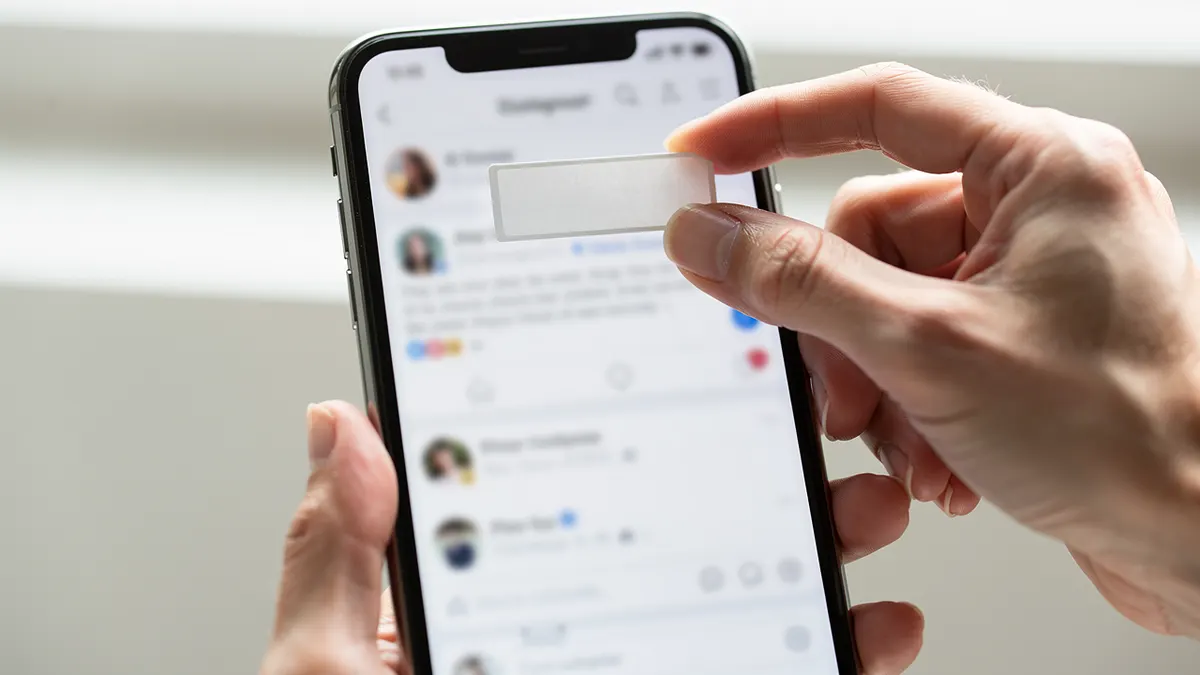
The advertising label is your problem, not the brand's. Most creators think it depends on what they said about the product; it depends on what they received, and the obligation is personal.
The rule follows the payment
What counts as having received something
Seven situations that trigger the obligation, to be confirmed with the competent authority.
A payment in money, the obvious case.
A gifted product, even unrequested.
A free service, a stay, a meal, a treatment.
A commission on the sales generated.
A paid personal discount code.
A loan of equipment that is not returned.
And an indirect benefit, an invitation, a trip, privileged access.
What does not count
A product you bought yourself, with no link to the brand, does not fall under the same obligation. The border is narrower than it looks: a refund, a creator-only discount or a prior commercial relationship can move it, and the question is checked rather than guessed.
Who answers when it goes wrong
A brand's instruction is not a defence
That is the decisive point of this article: the disclosure obligation concerns you personally, as the person publishing. A brand can ask you not to label, its legal department can put it in writing, that does not move the obligation to them. In doubt, the useful answer is to label, and to say so plainly to the brand.
Where creators actually get caught
Stories, reshares and the link in the bio
Those are the usual blind spots. A correctly labelled main post does not cover ephemeral formats, later reshares, or an affiliate link left on a profile for months. Each medium is handled on its own.
The wordings that do not hold
Six wordings to avoid, all too weak or ambiguous.
A simple thank you to the brand.
An obscure abbreviation buried in a list of keywords.
A label placed below the fold, requiring a tap to expand.
A wording in small type over an image.
A spoken-only label, in a video often watched without sound.
And a sentence describing a collaboration without saying it is a commercial communication.
What changes with the medium
Seven cases to handle separately.
The main post, the simplest case.
Ephemeral formats, which need their own label.
A later reshare, which starts over on its own account.
An affiliate link left prominently on a profile.
A video taken up by the brand on its own accounts.
Paid advertising built on your content.
And a compilation of several collaborations in one video.
How to answer a brand that refuses the label
Six useful sentences, in order.
Recalling that the obligation is personal, without dramatising.
Offering a precise, short, neutral wording.
Showing an example post where it does not get in the way.
Explaining that performance does not suffer.
Offering to place the label in the edit rather than as a permanent burn-in.
And declining the assignment if the brand maintains its request.
What to agree with the brand before publishing
Five points, written once.
The exact wording of the label.
The media it will appear on.
The language it is written in.
What happens if the brand reshares the post.
And the person to alert if a correction becomes necessary.
Make it invisible, not discreet
That is the reversal that settles the problem for good: a clear label, placed at the start, stops being noticed after two posts. The audience gets used to it immediately, and it costs nothing in performance as long as it is upfront. What draws attention is a hidden label that somebody eventually finds.
What to check before publishing
Six checks, two minutes in total.
The label is visible without expanding the text.
It appears in the first seconds of the video.
It is legible on a phone screen, with no sound.
It is on every format published, not only the main one.
It is written in the language of the target audience.
And it stays in place if the post is reshared by the brand.
What the label does not replace
Five separate obligations, which remain whatever happens.
The accuracy of what you claim about the product.
Compliance with the rules specific to the category.
The consent of people visible on camera.
The rights to the music and images used.
And the terms of the platform you publish on.
Where and how the disclosure appears
| Medium | Where it goes | Its form |
|---|---|---|
| A short video | In the first second | Legible on-screen text |
| A post with a caption | At the head of the caption | Before the text, not after |
| A story | On the image itself | Not hidden by the interface |
What triggers the obligation
A payment, a gifted product, an affiliate code, or any other benefit. The sincerity of the content changes nothing: it is the consideration received that creates the duty to inform.
What is never enough
A disclosure at the end of a caption, a hashtag buried in a list, or a sentence spoken too fast. The test is legibility for someone watching once, without pausing.
What to keep
Five items to hold on to, on your side.
A capture of the post as it appeared.
The exchange describing the consideration received.
The publication date and any removal date.
The contract or written agreement with the brand.
And the instructions received, including those you did not follow.
One last marker: the label protects the person publishing first. It costs two seconds of video and removes the only genuinely costly situation, the one where you have to explain afterwards why it was not there.
Sources
Checked on 27 August 2026. Thresholds and rates change: where this guide and the official source disagree, the official source is right.