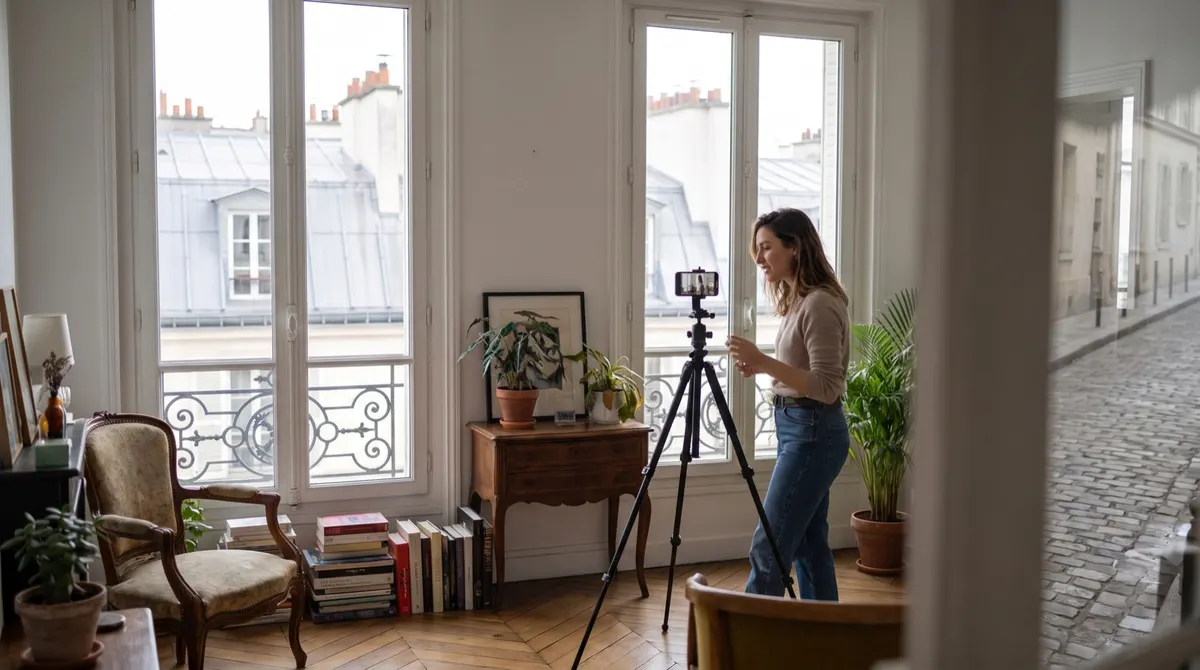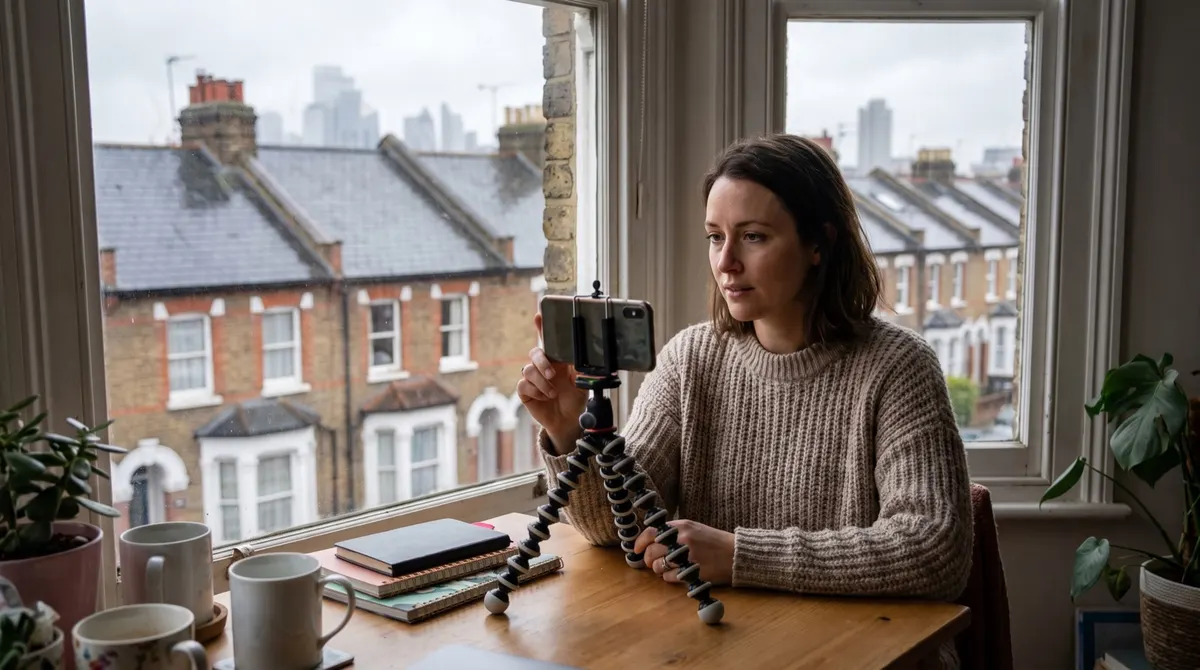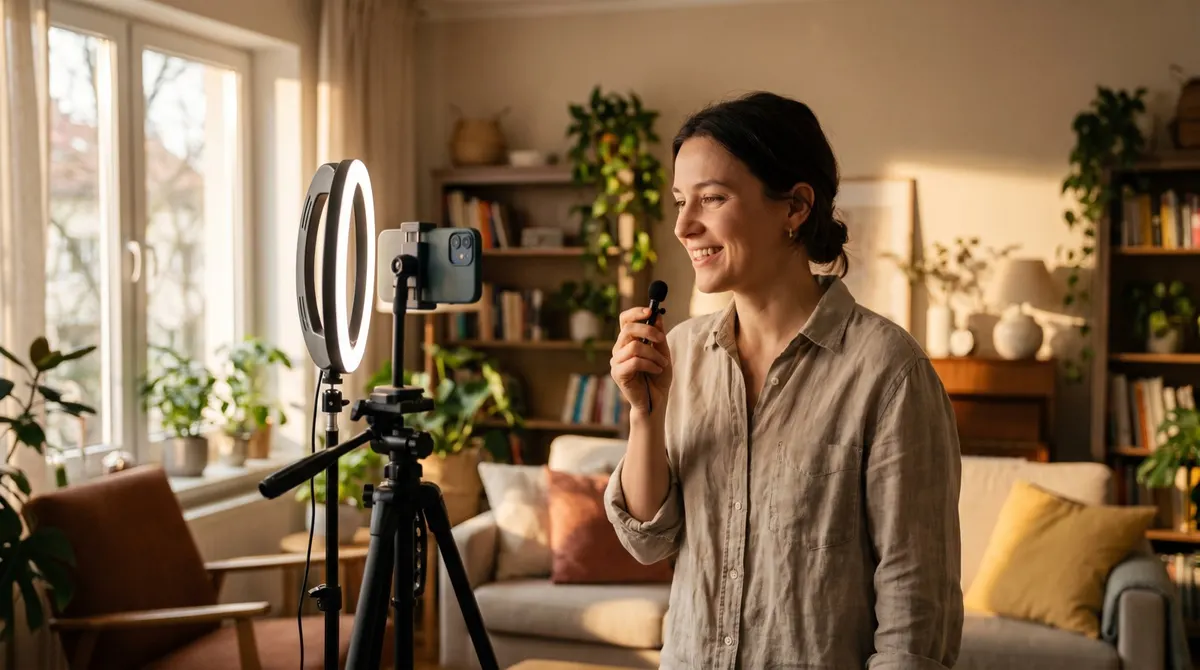
A creator of brand content is paid to film credible product videos that brands publish or sponsor, with no followers required. Here is the role and how to start.
What somebody in this trade actually does
Seven tasks, in the order they arise.
Receiving a brief and asking the missing questions.
Receiving the product and genuinely testing it.
Writing or adapting a short script.
Shooting, often alone, in their own setting.
Editing, adding subtitles and exporting several formats.
Delivering on time, with clean file naming.
And correcting once, as the quote provides.
What is different from an influencer
The price
It is built on the work supplied and the rights granted, not on the size of an audience. Two different logics, two ways of negotiating.
The entry ticket
There practically is none: three decent videos are enough to start, whereas an audience is built over years.
The volume
A brand buys one post from an influencer; it buys ten, twenty or fifty videos a quarter from creators. So the trade is steady rather than event-based.
And compared with an actor or a model
The difference lies in credibility and autonomy. An actor performs a written text, on a set, with a crew. Here, the person is performer, camera operator and editor at once, and the result has to look like a video a customer could have filmed. Naturalness is not a style, it is the specification.
Do you need followers
No, and it is the most asked question. A brand buying files looks at what you can film, not at who follows you. An audience only becomes useful if you also sell distribution, which is another trade and another contract.
What daily life looks like
Six elements of an ordinary week.
Two or three short shoots, often at home.
Half a day of editing per video, at the start.
Approval rounds, longer than the shoot.
Written outreach, regular even when the diary is full.
Paperwork, invoices, quotes, chasing.
And file housekeeping, underestimated by everybody.
Which formats and niches are hiring
Seven categories that order continuously.
Everyday products, food and household.
Cosmetics and skincare.
Apps and online services.
Products for babies and children, with strict rules.
Pet supplies, often less competitive.
DIY and garden products.
And local services, which are discovering the format.
The questions beginners ask
Six recurring questions, with the short answer.
Do you have to show your face: no, but it opens up more orders.
Do you need a registered status: yes, before the first invoice.
Do you need a camera: no, a recent phone is enough.
Do you need several languages: it is a pricing advantage, not a condition.
Do you have to live in a big city: no, except for on-site shoots.
And should you accept products in exchange: only alongside a payment.
Which skills really count
Seven skills, with technique coming last.
Understanding a brief and spotting what is missing.
Speaking naturally in front of a camera.
Meeting a deadline, the most profitable skill.
Getting the sound right before the picture.
Editing cleanly, with no effects.
Writing a short, clear message to a client.
And knowing how to decline a request outside the scope.
What it pays, and what the price depends on
Seven factors, from the most decisive to the least.
The number of videos ordered at once.
The rights granted, often half the price.
The number of formats delivered.
The complexity of the shoot, setting, product, preparation.
The turnaround requested, urgency is chargeable.
The number of corrections included.
And the category, some requiring extra checks.
What to write into a quote
Seven lines are enough.
The number of videos and their length.
The delivery formats.
The production price and the rights price, separated.
The duration, territory and media of the licence.
The number of corrections included.
The delivery date and the payment due date.
And what is not included, in black and white.
The traps of starting out
Six mistakes that cost the first months.
Accepting an unlimited licence for a first assignment.
Working for free against a promise of exposure.
Delivering the source files before full payment.
Charging a price that does not cover your costs.
Accepting a vague brief so as not to seem difficult.
And neglecting sound, the one flaw that eliminates you for certain.
How to move on after a year
Six possible directions, all already taken by others.
Specialising in one or two categories.
Moving from single videos to quarterly blocks.
Adding translation or a second language.
Offering editing from supplied rushes.
Coordinating other creators for larger volumes.
And selling directly to agencies, which order in series.
What to buy, and in what order
Six purchases, from the most useful to the most incidental.
A microphone, before anything else.
A stable support for the phone.
A soft light, for days with no sun.
Reliable storage for the rushes.
Editing software you genuinely master.
And a better camera, last of all.
What this trade is, and what it is not
| It is not | It is |
|---|---|
| An influencer paid for reach | Someone producing videos for a brand |
| A customer giving an opinion | A paid contractor |
| A studio videographer | Someone filming in real conditions |
What they concretely sell
Usable files and the rights that come with them. The brand then distributes on its own channels, within the exact limits of the media, territory and term purchased.
What makes the trade accessible
No followers required, no expensive equipment, no mandatory training. What is judged is sound quality, image clarity and meeting the stated deadline.
How to get started
Six steps, in this order.
Filming three videos with products you own.
Writing a rate card, separating production and rights.
Creating a profile on a specialised marketplace.
Writing to ten brands you are already a customer of.
Accepting a small first order, to learn the full cycle.
And replacing your demonstration videos with real orders.
One last marker: this trade rewards consistency more than talent. Somebody who delivers cleanly, on time, with decent sound, gets more orders than a more gifted person who replies three days later.