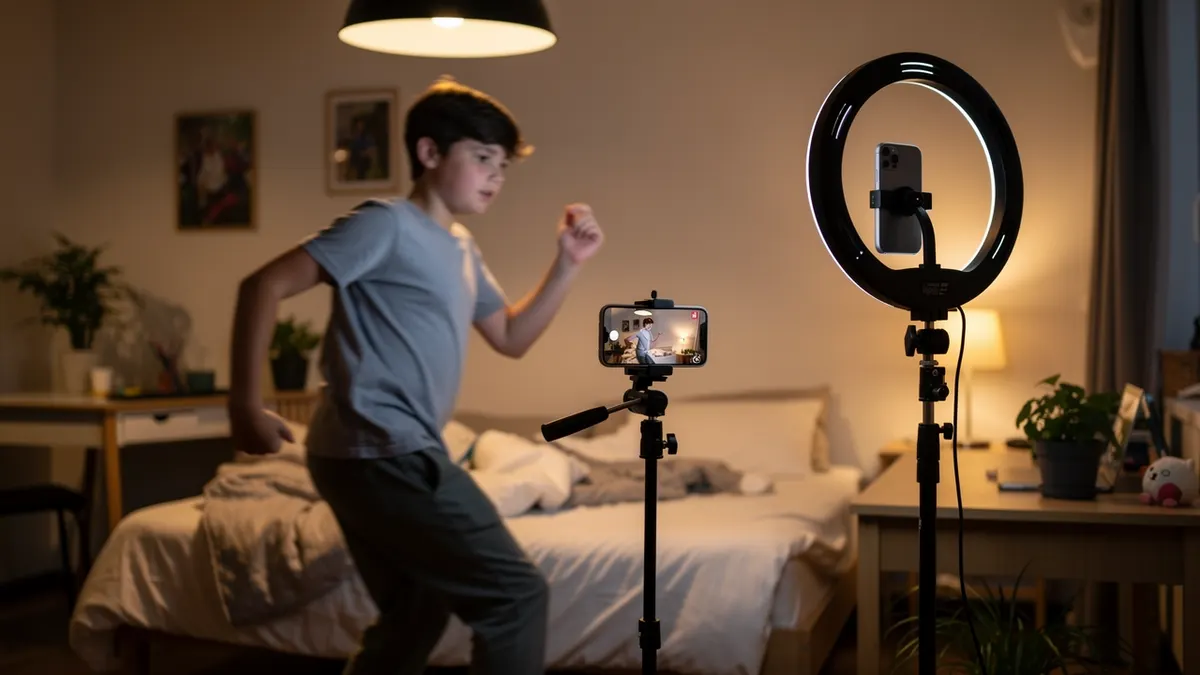
Trends expire in a few days and brands approve in weeks. Here is how to use one without delivering something already dead.
The approval delay is the variable
Three figures explaining everything.
The useful life of a viral format is counted in days, sometimes in hours on sound-based formats.
The delay between order and delivery of a video rarely exceeds a week.
But the delay between delivery and going live depends on the brand's internal circuit, and that is where everything is lost.
One organisational consequence: a campaign wanting to use trends has to have a short, written approval circuit. Without that, it will produce videos always a season late, whatever the creator's talent.
The trend is the packaging, not the message
Three reasons never to invert the two.
A trend gives a format of attention: a pace, a structure, an expectation the viewer recognises.
It says nothing about your product: if the video only works with the reference, it sells nothing.
And it ages badly: in six months the video will be dated, whereas a clear argument stays usable.
The test that settles it: remove the reference to the trend, and look at what is left. If nothing is left, the video is an exercise in style. If an argument is left, the trend did its job.
Care over what is copied
Four points of caution, all checkable before the shoot.
The music: a popular sound is not royalty-free, and its use in paid advertising follows different rules from organic use. That is checked with a lawyer.
A competing brand's format: taking it too literally invites reproach, and mostly serves the copied brand.
The people filmed in the original trend: their image is not reusable.
And the tone: humour working on a personal feed can become inappropriate when a brand picks it up.
One practical consequence: take the structure, never the content. The edit, the pace and the idea are reusable, the material is not.
What to deliver in addition
Three deliverables making the order useful even if the trend dies.
A version with no music and no reference, edited on the same structure, usable in advertising for months.
The rushes of the useful shots, allowing the video to be re-edited differently.
And a long version of the argument, with no effect, intended for the product listing or the website.
That triple delivery changes the nature of the offer: the brand is no longer buying a bet on a trend, it is buying a shoot producing three uses. That is what justifies a higher price.
What you take from a trend, and what you leave
| Element | Reusable | To leave |
|---|---|---|
| The edit structure | Yes | No |
| The pace and the cuts | Yes | No |
| The original music | Rarely, rights to check | Often |
| The wording, word for word | No | Always |
What decides whether a trend suits the brand
The subject, not the popularity. A trend with no link to the product shows immediately, and the viewer remembers the trend, not the brand.
What is checked before publishing
The music rights, the advertising disclosure, and whether the trend is still alive. A trend picked up three weeks late makes the brand look old.
Which brands it works with
Three profiles, and three opposite signals.
It works with a brand having one person responsible for social, allowed to publish without a meeting.
It works with a brand accepting not to approve everything, in exchange for a written list of prohibitions.
It works with a brand already present on the format, which understands the pace.
It does not work with three-level approval, with a sector where every sentence has to be approved by a lawyer, or with a brand discovering the format.
One last marker, honest to state to the client from the first exchange: on this ground, speed is worth more than perfection. A correct video published inside the window beats an excellent video published three weeks later, and that is the only rule that never changes.
Sources
Checked on 26 August 2026. Thresholds and rates change: where this guide and the official source disagree, the official source is right.