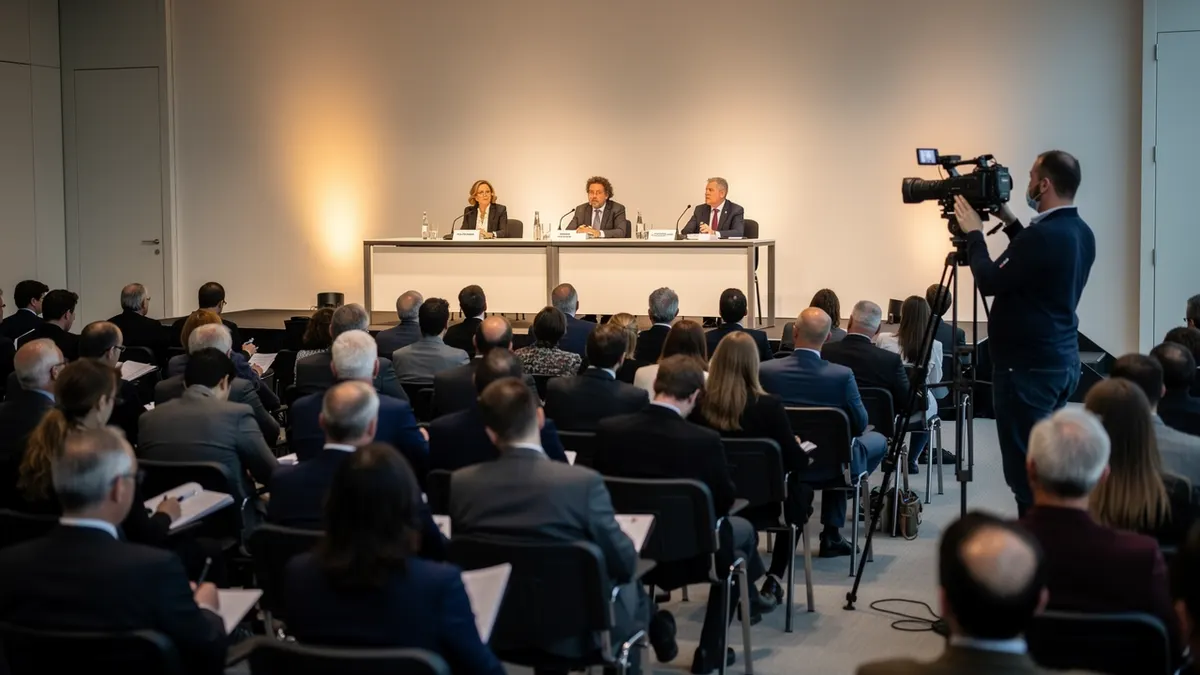
Belgium has a dense layer of professional services: accountancy practices, law firms, tax advisers, consultants, notaries and the specialists who serve companies around Brussels and every provincial city.
They all have the same problem with video. There is no product to film, the office looks like every other office, and the two devices everyone else uses, the customer story and the before and after, are usually closed to them.
You sell judgment, and judgment does not photograph
A client is not choosing between two sets of skills. They are choosing who they would rather have on the phone when something goes wrong, and that decision is made on a feeling about a person.
What actually proves it
One thing: someone answering a real question correctly, on camera, in a way the viewer understands.
That is not a compromise. It is the strongest asset the profession has, because a competitor cannot copy it. Anyone can claim expertise on a website; very few people can explain a difficult thing simply while being filmed, and the ones who can are visibly worth calling.
Confidentiality closes the usual playbook
Client stories, case studies and results are the backbone of most B2B content, and here they are either restricted by professional rules or simply impossible without a client's consent that is awkward to ask for.
Check the position with your professional body rather than guessing, because it varies by profession and it changes what you can say about advertising, comparison and results.
What to film instead
Questions. Every practice receives the same twenty questions a year, and every one of them is a video that a prospective client is searching for right now.
That content has three advantages: it needs no permission, it demonstrates exactly the judgment being sold, and it is useful even to people who never become clients, which is how a name travels.
| Content that is usually closed | Content that is usually open |
|---|---|
| A named client's situation | The question that situation is an example of |
| Results and figures obtained | How a decision is approached |
| A comparison with a competitor | What people get wrong about a rule |
| Testimonials, in some professions | A partner explaining a change plainly |
| Anything a client has not approved | Your own process and how you work |
The format that works
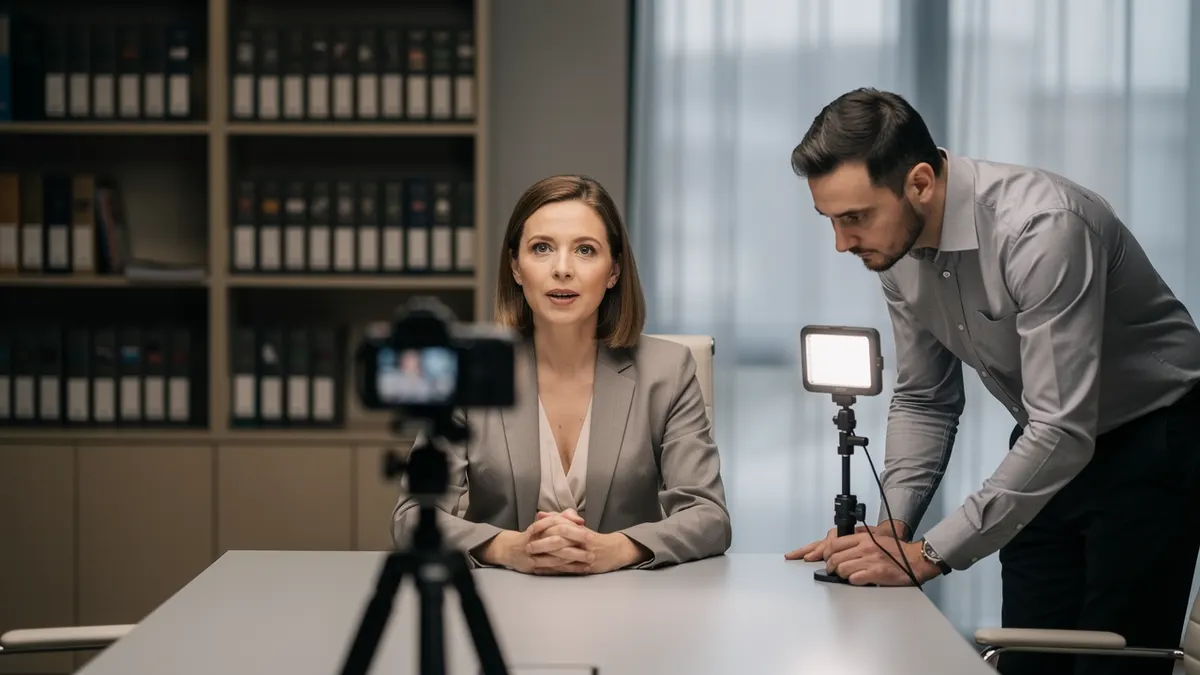
Ninety seconds, one question, one person, no set. Filmed in a real office, in a series of eight or ten, in a single afternoon.
The discipline of the answer
The discipline is in the answer. Say the answer first, then the nuance, then when it does not apply. Professionals instinctively do the opposite, building the context for sixty seconds before arriving at anything, and that is what makes so much of this content unwatchable.
The second discipline is the language. If a sentence contains a term the viewer would have to look up, it fails, and the rewrite is not a simplification of the idea but of the wording.
Who should speak, and why it is not the senior partner
The instinct is to put the most senior person on camera. It is usually wrong.
The person who should speak is the one who answers that question all day: the manager who explains the same thing to twelve clients a month, the young lawyer who handles the file, the adviser everyone in the office forwards the call to. They speak in the language the client uses, because they use it daily.
The senior partner should appear once, briefly, saying something only they can say. That combination reads as a firm with depth rather than a firm with one name.
There is also an internal benefit that firms discover afterwards. A recorded answer stops being explained from scratch every month, it becomes what a colleague sends before a meeting, and it turns into onboarding material for the next hire.