Toys, children's food, schools, family products and paediatric services all buy video, and creators who film well with adults often struggle the first time a child is in the frame.
The difficulty is almost never technical. It is that a child does not perform on a schedule, that the person who consented is not the person being filmed, and that footage of a child outlives the campaign it was made for.
Not a lighting problem, a time and consent problem
An adult can be asked for one more take. A four-year-old cannot, and pushing produces exactly the footage nobody wants: a child complying, visibly tired, doing something that is no longer play.
Everything about how you plan the day follows from that. Short, early, one location, no wardrobe changes, and a genuine willingness to stop.
What to settle before the day
Consent from the people who hold it
Written permission from the parents or guardians, before anything is filmed, naming what will be shot, where it will appear and for how long. Ask whether both parents need to agree, because in separated families that is a real question and it is far better asked in advance.
Agree also what happens to raw footage that is not used, and say plainly that it will be deleted rather than kept for future projects.
If the situation is unusual, or if a school, a nursery or an institution is involved, take proper professional advice on the legal framework before committing. This is one of the few areas where a creator should not improvise from a forum answer.
The right to withdraw later
A child of six will be sixteen. Agree in writing that the family can ask for the material to be taken down later, and tell the brand about that clause before signing, not after.
Brands rarely refuse it, and the ones that do are telling you something useful about how they intend to use the footage.
The real day is forty minutes
Plan the shoot around the child's rhythm, not the shot list.
| What you plan | What actually happens |
|---|---|
| Three hours on location | Forty usable minutes, in two bursts |
| Ten scripted actions | Two that work, one you did not expect |
| Perfect framing | The best shot is the one where nobody was ready |
| A full lighting setup | A window, because gear frightens small children |
| Retakes until it is right | One retake, then move on or lose them |
How to get those forty minutes
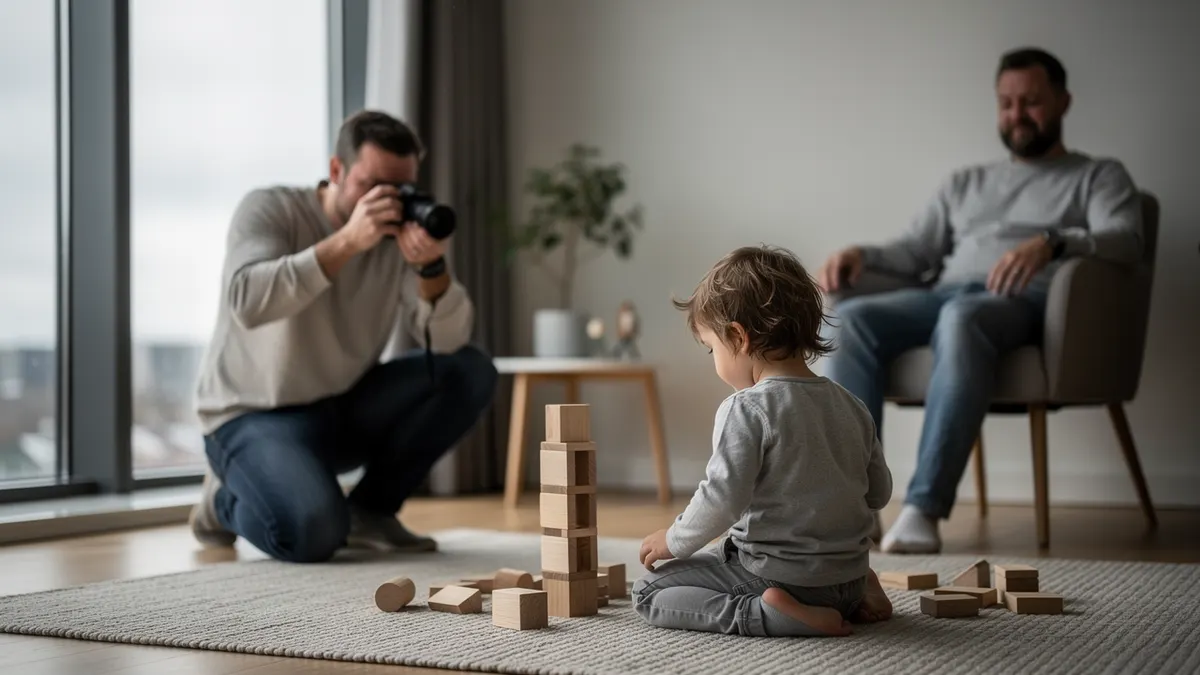
Film in a place the child already knows. Let them handle the product before you record anything. Keep the crew to one person if you possibly can, and let a parent stay in the room but out of frame.
Then shoot the boring safety material first, the hands, the product, the room, so that when the child is at their best you are free to just follow them.
What not to film, even if asked
Bath time, changing, medical situations, distress, and anything a teenager would be humiliated to find later. A brand may ask for it because it looks tender in a mood board, and the answer is a calm no with an alternative.
Also avoid identifying details that outlive a campaign: a school uniform with a name, a street sign outside the house, a full name on a bedroom door. It costs nothing to move the camera thirty centimetres.
The last rule is the simplest. If the child stops enjoying it, the shoot is over, and you say so before the parent has to.