From November to February, a creator working in Belgium films under a white ceiling. The sun does not appear for days at a time, everything outside is evenly lit and slightly flat, and the light goes at four in the afternoon.
Most people treat this as a season to survive. That is half wrong, and the half that is wrong is the expensive half, because it sends creators shopping for equipment when the actual constraint is on the calendar.
The sky is a softbox the size of the sky
An overcast day is the light that portrait photographers spend money to imitate. A cloud layer takes a hard point source and spreads it across the entire dome above you, which is precisely what a diffuser does, at a scale no equipment can match.
What that buys you for free
No harsh shadow under a nose or a chin. No blown-out highlight on a jar of cream or a phone screen. No blotches of sun and shade moving across a shop window between two takes. Skin looks even, packaging keeps its colour, and white products stay white instead of turning into a bright shape with no detail.
It is also stable. On a sunny day the light changes every time a cloud passes and every twenty minutes as the sun moves, and a sequence shot over an hour will not cut together. Under a grey ceiling, the shot you take at eleven matches the one you take at noon.
The one thing it genuinely lacks
Direction. Light coming from everywhere at once produces no shadow, and without shadow there is no shape: a face flattens, a textured fabric stops reading as texture, and a bottle loses the edge that separates it from the background.
This is the whole defect. It is not brightness, it is not colour, it is the absence of a dark side.
Give the shadow back with something black
The instinct is to add another light. The fix is usually to remove light from one side instead, and it costs nothing.
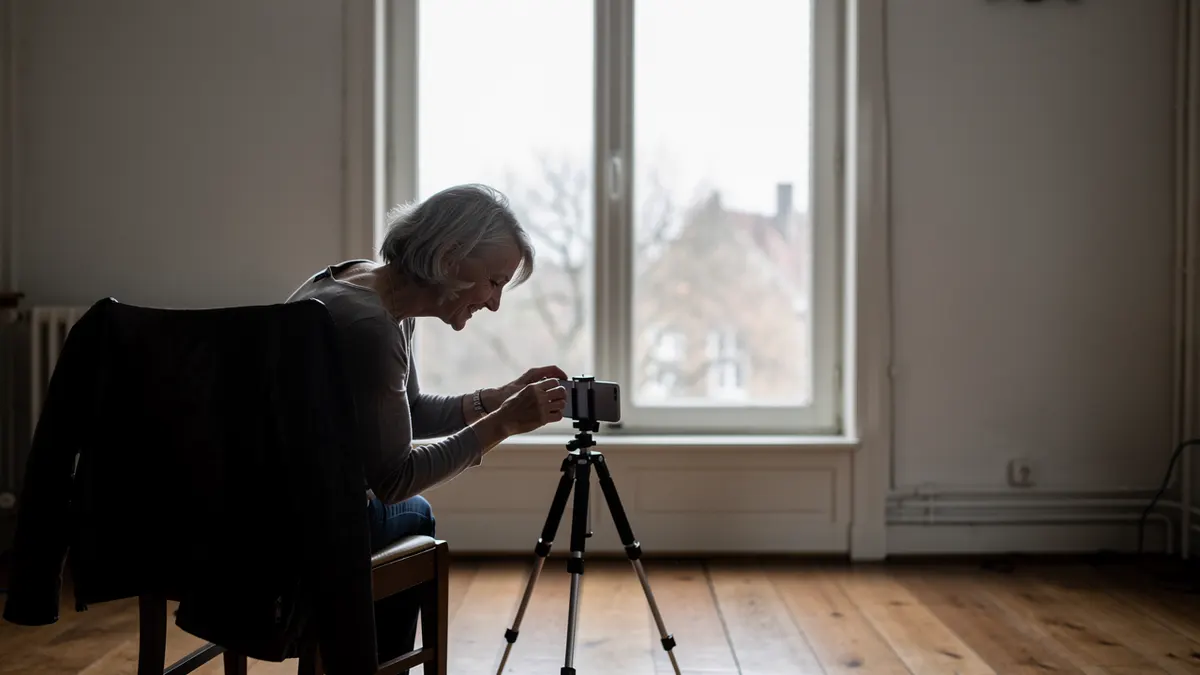
Stand your subject near a window and put something large and dark on the opposite side: a black jacket over a chair, a folded dark blanket, an open black umbrella, a piece of foam board. The side facing it stops receiving reflected light, a soft shadow appears, and the face or the product suddenly has a shape.
Why this beats adding a lamp
A lamp fights the sky. To create a visible shadow with a light, you have to be brighter than the entire window, which means a big unit, a stand, a cable and a corner of the room you no longer have. A black surface wins the same shadow by subtraction, weighs nothing, and never has a colour that disagrees with the window.
The second free trick: get closer to the window
Light falls off quickly. Two metres from the window your subject is lit almost as much from behind as from the front. Fifty centimetres from the glass, the window becomes a directional source, the far side of the face drops away naturally, and you have contrast without owning anything.
Where it does go wrong: mixed light
The real technical trap of the season is not the grey, it is what happens when the grey meets the room's own lamps.
Daylight under cloud is blue. Most indoor bulbs are yellow or, in shops and offices, a green-tinted white. Put both on one face and no white balance setting can fix it, because the two halves of the frame need different settings at the same time.
| What you are under | How it reads on camera | The move that works |
|---|---|---|
| Window light alone | Cool, clean, slightly flat | Nothing, this is your best case |
| Window plus warm bulbs | One side blue, one side orange | Switch the bulbs off, even if the room looks dark to your eye |
| Ceiling panels in a shop | Flat, faintly green, from above | Move next to a window and turn your back to the panels |
| Window plus your own panel | Fine if you match it to the window | Set your panel cool, near daylight, not warm |
| Late afternoon indoors | Dropping fast, still cool | Stop shooting faces, shoot cutaways and detail |
The second row is the one that costs footage. A living room at three in the afternoon in December feels dark, so the client turns on the lamps to help, and the shot becomes unusable in a way that only shows up on the edit. Turning them off feels wrong in the room and looks right on camera.
The constraint that actually matters is the length of the day
Everything above is about quality, and quality is not the problem. The problem is that usable daylight in a Belgian December runs from roughly nine in the morning to roughly four in the afternoon, and the good window inside that is shorter still.
That is five or six workable hours, not eight. In June it is fifteen. Same job, same client, half the day.
What it does to a shoot day
A three-location day that works easily in May does not fit in December, and the piece that gets crushed is always the last location, which is the one you rushed. Two locations is the honest winter number, and the second one should be the indoor one.
It also moves the start. A ten o'clock start in summer is relaxed; in December it costs you a fifth of the light. Winter days start early, and the client needs to be told that when the date is agreed, not the evening before.
What it does to your calendar
The natural consequence is that indoor work belongs in winter and outdoor work belongs in the long months. If you have any control over scheduling, push the street shots, the market stalls and the terrace scenes to March and later, and fill November through February with shop interiors, kitchens, offices and anything you can light yourself.
That is not a workaround. It is the shape of the year in a northern country, and creators who plan around it stop losing a whole afternoon to a sky that closed at half past three.
What to actually buy for the dark months
If the season pushes you to spend, spend on the two things that address the clock rather than the sky.
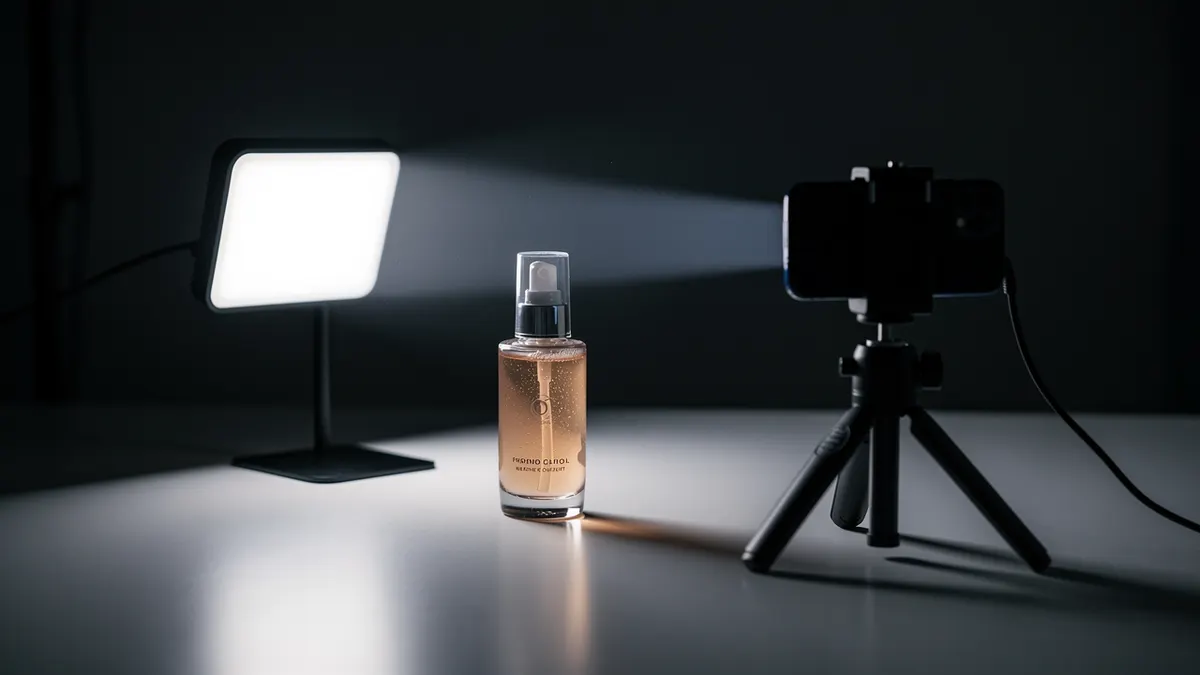
A light you can carry and run on battery. Not because the daylight is bad, but because you will finish after dark more often, and because a shop interior at five o'clock is a different job from the same shop at eleven. One compact panel, set near daylight colour, is enough for the work.
Something to kill a bad room lamp. A roll of dark tape, a cloth, or the willingness to ask a client to flip a switch. This is not equipment, it is a habit, and it repairs more footage than any purchase.
What not to buy: a second and third light to overpower a window. That is the reflex, it costs the most, and it solves a problem you do not have.