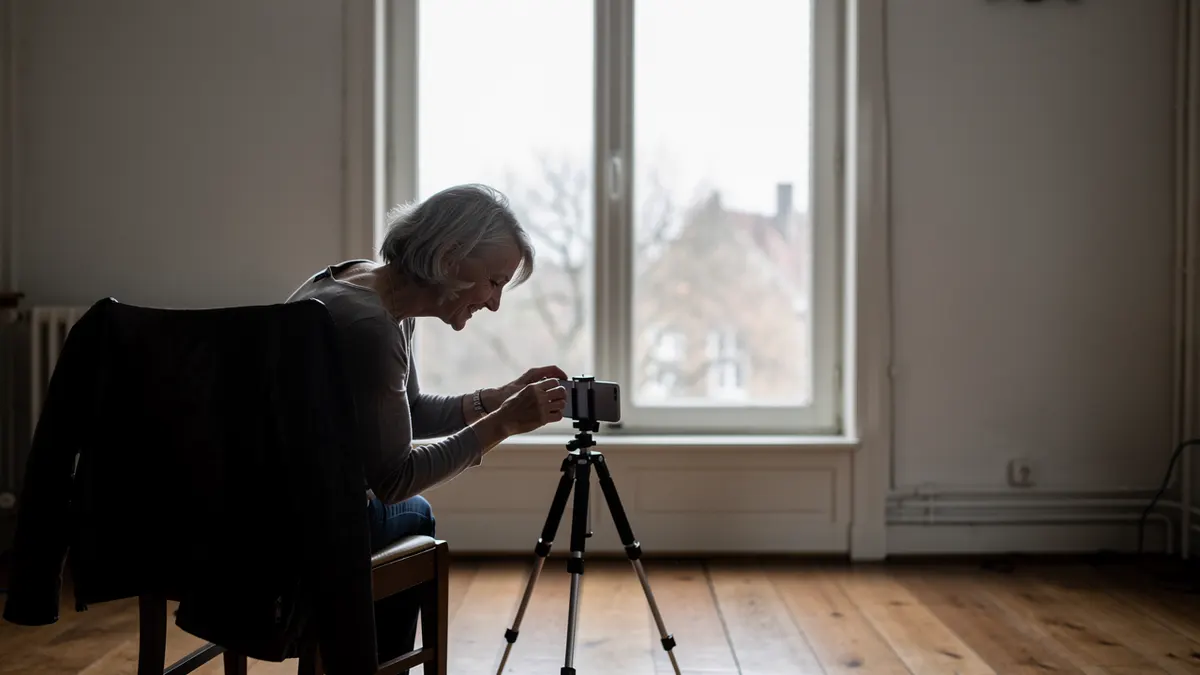

Almost every creator starts at home and stays there longer than expected. A window, a table, a wall: for a large share of the work, that is genuinely enough.
Then a brief arrives that home cannot serve. A product that needs a kitchen you do not have, a piece that needs height, a client who wants something that does not look like a flat, or simply a neighbour drilling for three days.
When a flat is still enough
Renting is a cost, and most of the time the honest answer is that you do not need to yet. A corner with a window, a plain wall and a door you can close handles product, unboxing, a talking head and most of what clients actually order.
The day it stops working is specific, and you will recognise it: a client needs a second person in frame, or a set you cannot leave standing between two shoot days, or a background that must not look like somebody's living room. Until one of those three arrives, the money is better spent on almost anything else.
The four options, and what each really costs
A rented studio hour
The obvious answer and the one people overestimate. In Belgium the distances are short enough that a studio within an hour exists almost everywhere, and a half day is often cheaper than a creator expects.
What it actually costs is the travel with equipment at both ends and the pressure of a clock. A studio booking makes a slow shoot expensive, so it suits work that is already planned rather than work that is being figured out.
A meeting room
Underused and frequently the best value. Coworking spaces rent rooms by the hour, they are quiet, they have plain walls and decent daylight, and nobody minds a camera.
They are wrong for anything that needs to look domestic and right for anything that needs to look neutral or professional, which is more of the work than most creators assume.
The client's own space
Free, appropriate and usually the best answer for a product that belongs in a specific setting. The cost is coordination: their hours, their staff, their permission, and a day that is not yours to control.
| The option | What it is good for | What it really costs |
|---|---|---|
| Home | Most product and talking pieces | Nothing, until it limits the brief |
| A studio hour | Planned shoots with a shot list | Travel with gear, and the clock |
| A meeting room | Neutral, professional, quiet | Very little, and it looks like an office |
| The client's space | Anything that belongs in context | Their schedule instead of yours |
| A short let | Domestic scenes you cannot stage at home | The rule nobody reads, below |
The short-let trap
Renting a flat for a day to shoot in looks like the perfect answer: it is domestic, it is cheap, and it is available.
The problem is that commercial filming is frequently not permitted in short-term rentals, either by the platform, the owner or the building's own rules. A creator who books one, shoots a paid deliverable and delivers it has usually broken something in that chain without knowing.
What is allowed depends entirely on the listing, the contract and the building, so the only safe version is to ask the owner directly and get a yes in writing. Plenty of owners say yes. The ones who would have said no are exactly the ones who make it a problem later.
What to check before paying for anything
Three things, in this order.
The sound. A beautiful room next to a tram line or under a flight path is unusable, and no photograph of a space tells you this. Ask, or visit at the hour you plan to shoot.
The light at your hour. A space that is glorious at noon can be dark at four, which in this country is most of the working day for half the year.
And the access. Stairs, a narrow lift, a door code, parking. Carrying equipment up three flights twice is the difference between a good day and a bad one, and it never appears in the price.