Choosing a niche is the decision that raises a rate most, and the one most creators postpone. You accept everything at the start, and a year later you are still being compared on price because nothing distinguishes your profile.
In Argentina one practical criterion should come before all the others, and it is almost always forgotten.
Choose a niche you can physically reach
A creator only improves on what they shoot, and they can only shoot what is within reach. But access to products is not the same across categories.
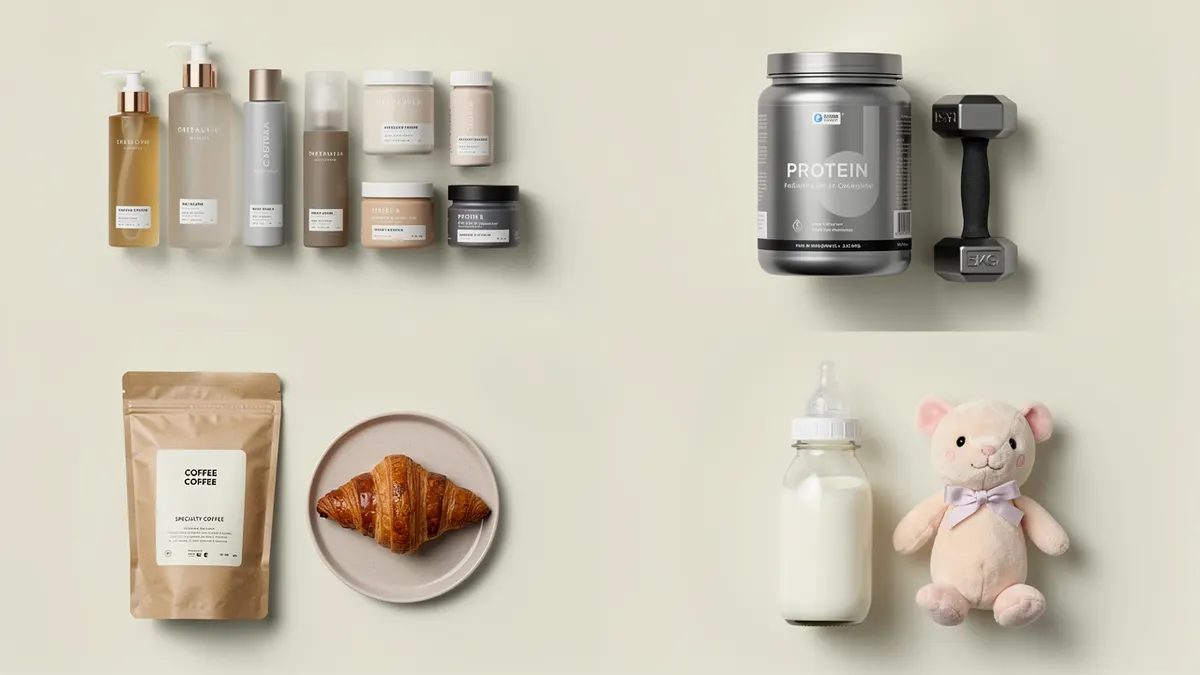
Some are immediately accessible: food, everyday care products, local services, hospitality, everything bought around the corner. You can film six pieces this weekend without waiting for a client.
Others are far less so: imported equipment, recent electronics, categories where a single product costs more than a job. You can only enter them with a client, and no client comes without a portfolio.
Hence the order: start with a niche you can reach, build the portfolio, and open the harder categories later, when a brand supplies the product.
The three criteria, in order
Access. What you have just read. It comes first, because it determines how fast you will have something to show.
Demand. Look at what is actually commissioned around you: food, care, home, local services and online retail consume video continuously. A fascinating niche with no buyer is a hobby.
What you know. This is not about passion but vocabulary. In a category you practise, you know what matters, which detail to show, which question arises. It shows in the first piece, and it cannot be learnt from a brief.
Two niches, never ten
Two fields is enough to be credible and enough not to depend on a single market. Ten fields is a profile appearing in no search, because whoever is looking filters by precise category.
The good combination often pairs an accessible niche with a better paying one. The first feeds the portfolio and the quiet months, the second raises the average rate.
What raises a price within a niche
Vocabulary, first. Being able to name a gesture, an ingredient, a part, a setting puts you immediately among those who know.
Then the objections. In every category there are three or four questions that block the purchase. A creator who addresses them without being asked delivers a video that converts, and a brand that gets this stops comparing rates.
Finally, the ability to show a flaw. Saying who the product is not for builds a credibility enthusiasm never reaches, and it is a niche skill: you have to know enough to know where the limits are.
When to change niche
When you are bored, when demand falls, or when a neighbouring category pays better for the same skill.
Do it gradually: add three pieces in the new niche before announcing anything, and keep the old one until the second produces its first orders. A change announced without proof starts you from zero.
Which niches cost more work than they pay
Six warning signs before deciding.
The sector demands legal approval for every sentence.
The products cannot be shown at home.
The brands buy only once a year.
The shoot requires a second person.
The footage needs access to a restricted place.
And the client compares you to a production company.
How to compare two niches
| Criterion | Niche A | Niche B |
|---|---|---|
| Number of active brands | Count them on a platform | Count them the same way |
| Campaign frequency | Seasonal or continuous | Seasonal or continuous |
| Constraints on wording | Light or regulated | Light or regulated |
What can be tested in two weeks
One sample filmed, ten brands contacted, the reply rate noted, the most frequent question written down.
What makes you drop a niche
No reply out of ten sends, only product-for-content offers, or an approval that drags for weeks.
What should not decide
The niche of a creator you follow: their access to products and their market are not yours.
And an average rate displayed somewhere: a high rate in a category where you cannot shoot anything does not concern you yet.
Sources
Checked on 26 August 2026. Thresholds and rates change: where this guide and the official source disagree, the official source is right.