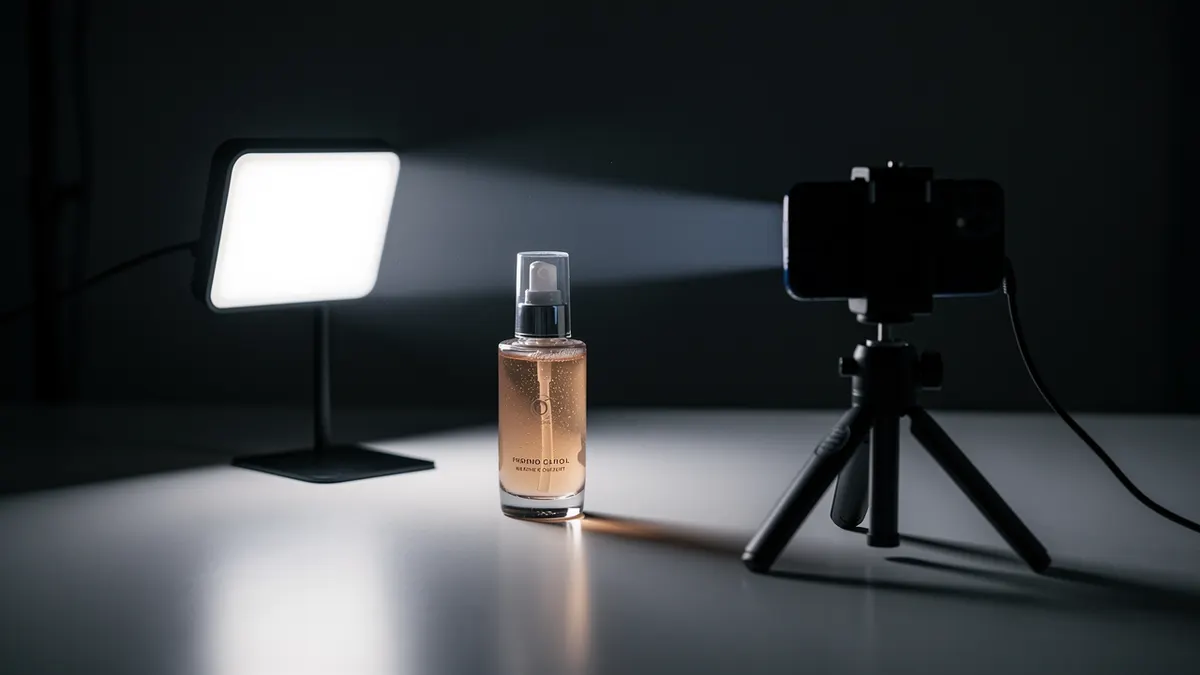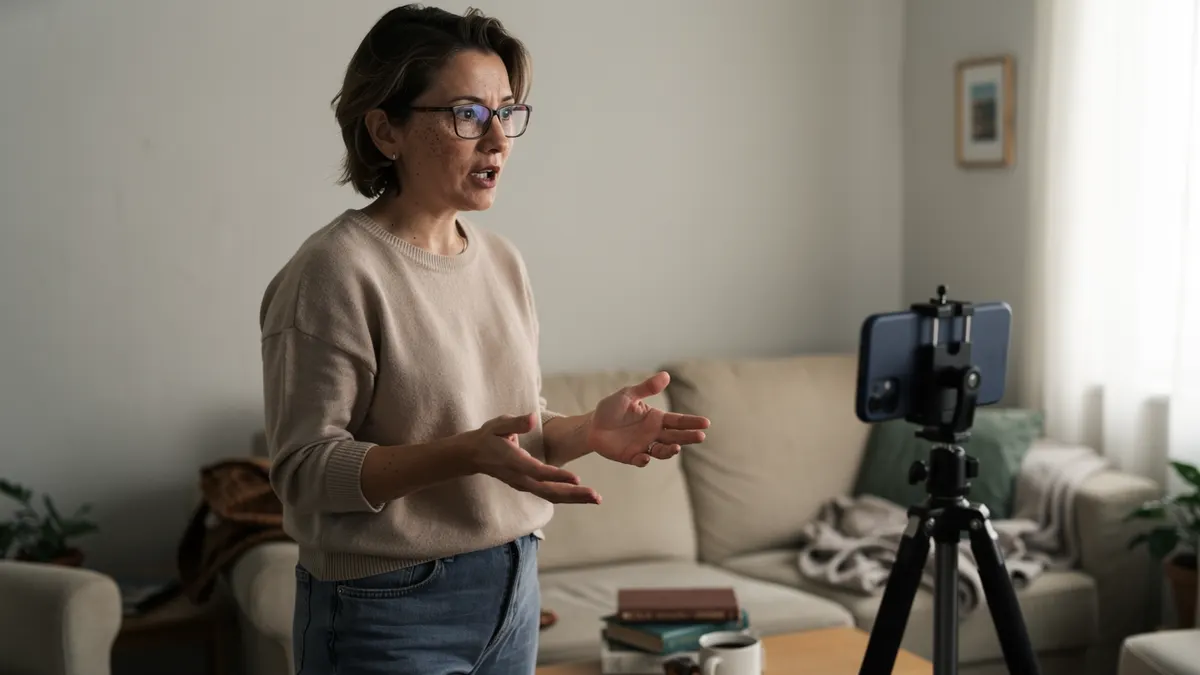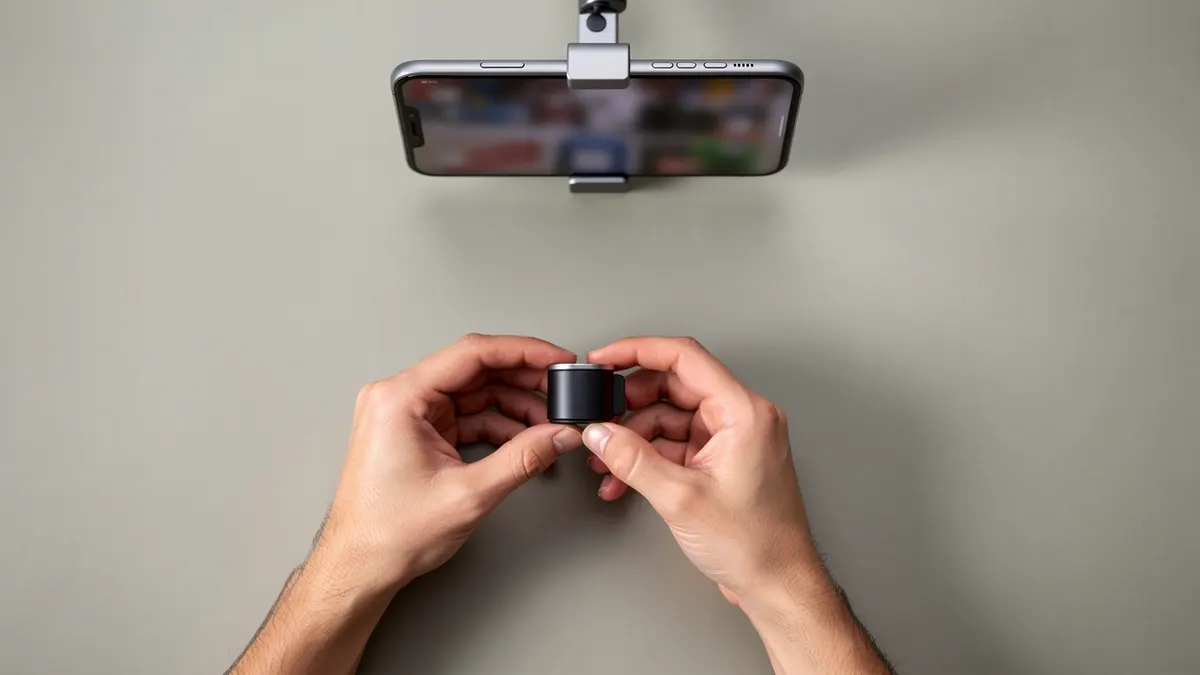
You can have a whole career in this trade without ever appearing. It simply requires understanding what holds attention when there is no face to look at.
Which formats work without a face
Almost all of them, except one.
The tutorial, the unboxing, the demonstration, the comparison, the preparation, the tidying, the answer to an objection in voice-over. All those formats are better shot close on the hands than wide on a person.
The only format requiring a face is the personal testimonial, because there the credibility comes from somebody standing behind what they say.
The hands are the leading role
They therefore have to be treated as such.
Short clean nails, no jewellery catching the light, sleeves rolled up, slow and complete movements. Never cut a gesture before it finishes: it is the most frequent and most visible fault.
Film at the right height, slightly to the side, so the hand does not hide what it is handling.
The voice replaces the face
It carries everything the face would have carried.
Clean sound therefore becomes the absolute priority: a clip-on microphone or a separate recording, never the phone's microphone two metres away. Speak more slowly than you would with the image, and leave short silences between sentences.
The tone counts more than the text: a voice explaining convinces, a voice selling drives people away.
If you do not want your voice either
It is possible, and it remains sellable.
You then deliver clean silent shots, with on-screen text supplied as a separate file, and the brand adds whatever voice it wants. Some teams even prefer that format, because it can be declined into several languages with no new shoot.
Say it clearly in your profile: it is not a limit, it is a speciality.
When brands prefer it
More often than people imagine.
In sensitive categories, when the content has to live a long time, when the video will be declined into several languages, or when the brand does not want to depend on an identifiable person whose image may change context.
It is also the most reusable format, and therefore the one that resells best from one year to the next.
What has to be agreed anyway
Rights do not disappear because you do not appear.
The agreement has to say what is delivered, on which channels, for how long and with what modifications allowed. Your hands and your voice remain elements that concern you, and their use is agreed in writing like everything else.
What can be filmed without ever showing a face
| The format | What it shows | What it requires |
|---|---|---|
| Hands in action | The gesture and the texture | A stable, very close shot |
| The overhead shot | Composition and order | A fixed mount above the table |
| Voice over footage | The explanation | A clean recording |
What replaces facial expression
Rhythm and sound. Without eye contact, attention is held by the speed of the gestures and the clarity of the audio: a well captured material sound is worth a smile on screen.
What this choice changes in negotiation
Nothing on price, a lot on comfort. Some brands prefer a face, others specifically want a neutral, reusable format, and stating it clearly in the profile avoids misdirected orders.
What it changes about your rate
Nothing, and that is a point worth defending.
This format demands more preparation, more takes and impeccable sound. It is invoiced as a full production, not as a discounted version because you cannot be seen.