Which sectors actually pay, how to choose one you can hold, and why specialising raises your rates.
The best-paying categories are the most regulated
That is the rule of this market, and it discourages most creators.
Three families pay above average: health and supplements, finance and insurance, and everything touching safety or technical compliance.
Three reasons for that.
The risk: a badly worded sentence is expensive, so the brand pays for rigour.
The scarcity: few creators accept working with a script approved word for word.
And the recurrence: those sectors produce continuously, not in campaigns.
Three requirements to accept in exchange. The script is approved before the shoot, with a lawyer, and is not changed on set. The mandatory statements are planned from the framing stage. And every published version is archived, dated, with the name of the person who approved it.
The open categories, and their downside
Three families remain accessible with no particular constraint: the home, leisure, and everyday products.
Three consequences.
Entry is easy, so competition is plentiful.
Budgets are shorter, and requests more occasional.
And differentiation happens on reliability, not on the subject.
One way through: take an open category and specialise it by situation rather than by product. Not cooking, but cooking in a two-room flat. Not sport, but sport when starting again after a long break.
The equipment criterion
That is the filter eliminating half the ideas, and it is checked in ten minutes.
Three questions.
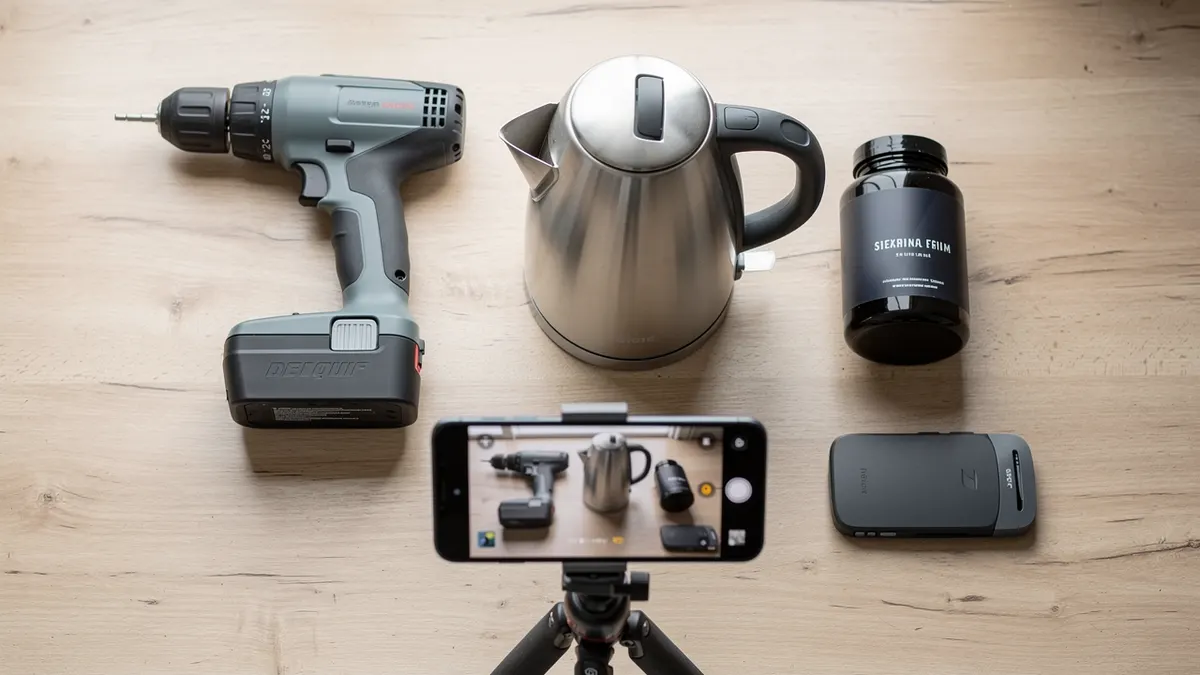
Can I shoot this category with what I already own, without buying equipment or renting a place.
Does the product arrive by post, or is travel required.
And can I deliver without depending on a season or on the weather.
A niche requiring a studio, a vehicle or regular travel is not impossible, but it demands a higher rate from the first job, otherwise it is worked at a loss.
The language criterion
That is the local point, and it weighs more than the portfolio.
Three situations.
You work in the country's language: almost the entire market is open to you.
You work in English only: you target international brands and companies selling outside the country, which is a real but narrower market.
Or you combine both, being clear about what you deliver in each.
One rule avoiding nasty surprises: never offer a version in a language you do not fully master. Approximate wording in a commercial video shows, and it is the client who carries it in front of their audience.
Two niches, not one
That is the right number, and it comes down to one simple reason.
A single niche makes you dependent on one sector that can slow down. Three or more bring you back to the generalist profile, compared on price.
Three criteria for choosing the second. A vocabulary close to the first. A different calendar, so the quiet periods do not coincide. And the same type of shoot, so as not to double your equipment.
Four signals telling you whether a niche is open
| Signal | Open niche | Saturated niche |
|---|---|---|
| Prices shown on profiles | Spread out | All aligned at the bottom |
| Number of visible creators | A handful | Whole pages |
| Brands' own content | Thin, old | Already abundant |
| Reply to messages | A few days | None |
What separates two equally reachable niches
The one where you already own the setting, the gear and the technical vocabulary wins. In this market, the exact vocabulary counts as much as image quality.
What must not decide it
Personal interest alone. Loving a subject does not create a buyer, and a passion with no active brand becomes a catalogue with no client.
When to change
Three signals, and none of them is boredom.
Requests thin out over two consecutive quarters, with no seasonal explanation.
The prices offered fall while your work has not changed.
Or you regularly turn down requests from another sector, which indicates where demand is going.
One risk-free transition method: keep the current niche, add three examples in the new one, and leave it six months. The order book itself will say which of the two deserves to stay.