What makes an image usable twelve months a year, in a country where natural light disappears for part of it.
Daylight, when there is some
That is the best source, and it needs little equipment.
Four rules that hold all year.
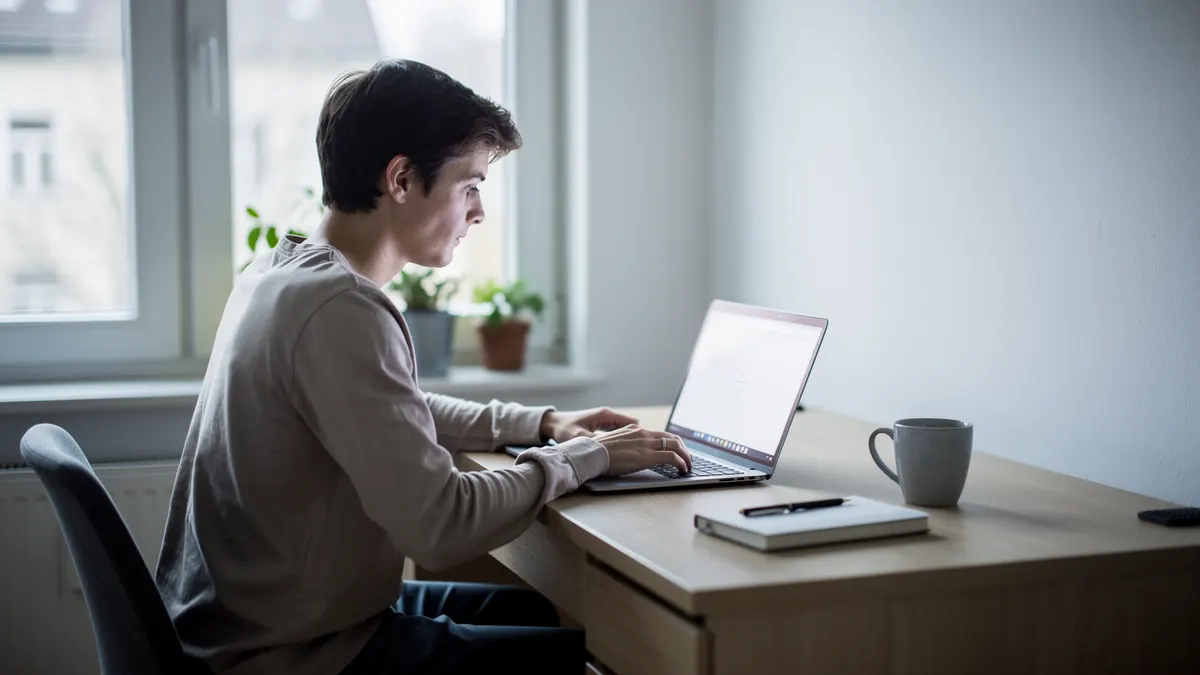
Stand at three-quarters to the window, never with your back to it.
Keep about a metre of distance: too close, one side of the face burns out.
Use the curtain or the blind as a diffuser when the sun is direct.
And note the hour and the position that worked: it is a setting to find again, not to reinvent.
One local particularity: an overcast sky gives a very soft and very constant light. That is a good shooting day, not a bad one.
The months with no light
That is the constraint from November to February, and it is planned for.
Useful light lasts a few hours and disappears before the end of the working day.
Three adaptations.
Shoot in a single session, at the best hour, several videos in a row.
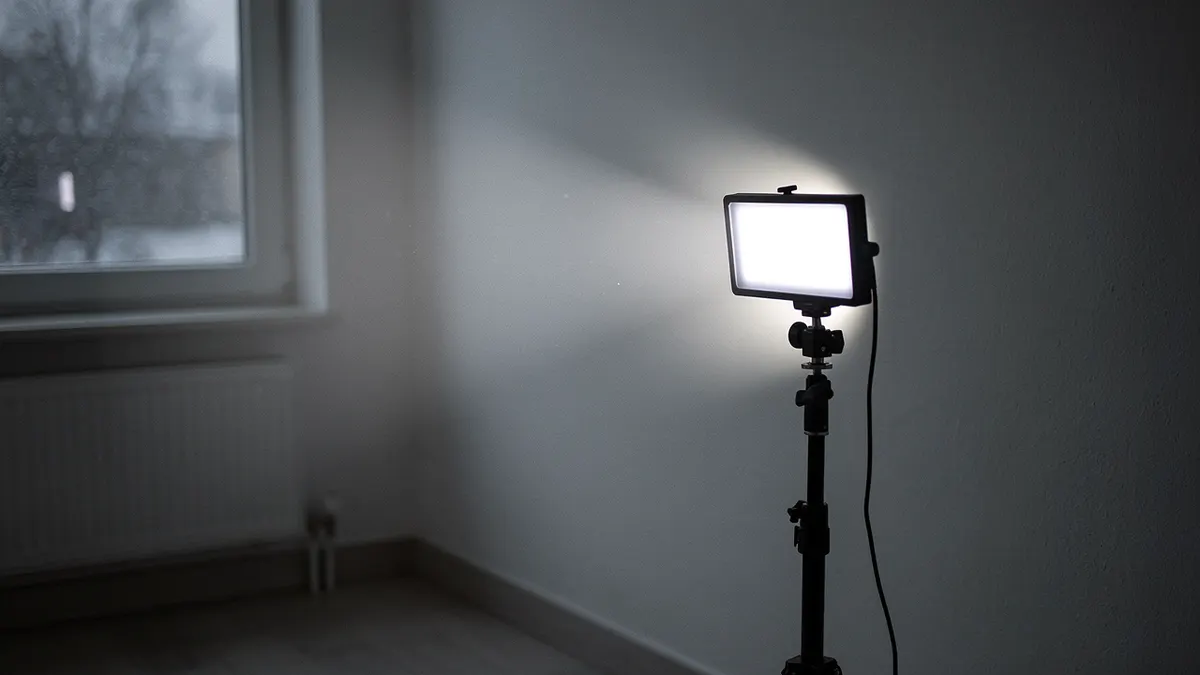
Add one single artificial source, placed on the same side as the window, with a simple diffuser.
And accept a slightly darker image: a constant, modest light is better than a beautiful one changing mid-take.
One useful expense, the only truly necessary one in the year: a panel with adjustable intensity and fixed temperature, plus a stand. That is what lets you deliver in January what you deliver in June.
What shows on camera and the eye does not notice
Four flaws, all invisible in the room.
Flicker: some bulbs produce a pulsing the camera records and the eye does not see. Film five seconds and look at the result before shooting the rest.
The reflection in glasses, which appears as soon as a source is placed too directly in front.
The shadow cast behind the head, when you are too close to the wall: a metre of distance removes it.
And the colour cast from a painted wall: a green wall throws green onto the skin.
The background counts as much as the source
Three simple rules.
A background slightly darker than the face, never a white wall lit head-on.
One object in frame, to give depth, but nothing identifiable or dated.
And at least a metre between you and the background, which is enough to separate them with no extra equipment.
What to adjust depending on the room
| Room | The typical problem | The corrective move |
|---|---|---|
| Living room | A coloured wall tinting the skin | Step away from the wall |
| Kitchen | A yellow ceiling light | A white lamp from the side |
| Office | A screen lighting from below | Turn the screen off during the take |
What is checked in ten seconds before each take
The direction of the light, the absence of a cast shadow on the background, and focus locked on the nearer eye. Three checks that avoid a reshoot.
What is reshot rather than corrected
A take that is too dark. Brightening in the edit brings out grain, and a noisy shot shows more than a simply retaken one.
Consistency is worth more than beauty
That is the point separating an isolated video from a deliverable batch.
A brand ordering five videos wants five images that resemble each other, because they will be shown together.
Three habits guaranteeing that.
A written card: position, height, distance, hour, settings.
A floor marker for the stand and for the chair.
And a ten-second test take at the start of each session, compared with the previous one.
One last, often forgotten point: if your home appears and is recognisable, or if another person enters the frame, plan for the corresponding permissions, and check with a lawyer what applies before delivering.