The question is not where the creator lives. It is where the product is and who will have it in their hands on the day of the shoot. With that single inversion, the choice between a creator from the provinces and one from the metropolitan area stops being a matter of prestige and becomes one of logistics.
Almost every discussion of this starts badly because it starts from a generality about where the market is concentrated. What actually decides is duller and more useful: how long the product takes to arrive, who pays for that shipping, and what happens if something has to be reshot.
What actually changes
| Criterion | Creator in the provinces | Creator in the metropolitan area |
|---|---|---|
| Product arrival | adds shipping days and a risk of delay | same day delivery or collected in person |
| Reshoot | another full shipping cycle | resolved within the same week |
| Availability of dates | generally freer diary | more contested diary in season |
| Location | homes, exteriors and landscapes rarely seen | urban interiors already seen a lot |
| In person coordination | remote by definition | possible if the brand wants to attend |
| Travel cost if needed | high, plus a hotel | low and same day |
The table does not say one option is better. It says the choice turns on the product cycle, and that everything else is secondary to it.
The product cycle, which is what rules
This whole decision reduces to three moments, and it is worth timing them before choosing anybody.
The outbound shipment
The leg people underestimate because they think of it as a cost rather than a deadline. The cost is usually the smaller part; the deadline is what moves the publication date.
The question is not how much shipping costs, it is how many working days it takes to that locality and with what margin of error. Two localities in the same province can have very different times, and that gap is larger than almost any other variable in this decision.
The shooting window
Between the product arriving and the material being delivered there is a window that depends on the creator's diary, not on distance. Here distance penalises nothing, and it is where the provinces often win without anybody noticing: there are more free dates.
It is worth agreeing in actual days rather than "this week", because it is the leg where misunderstandings accumulate.
The return, where there is one
If the product comes back, the full cycle counts twice and not once. That is the point turning a simple decision into a complicated one, and the one most often forgotten when building the calendar.
When the product does not come back, distance stops mattering almost entirely. When it does, it starts outweighing every other consideration.
When the provinces win
They win when the product travels well and does not have to be returned: cosmetics, shelf stable food, clothing, accessories, almost anything that fits in a box and does not break.
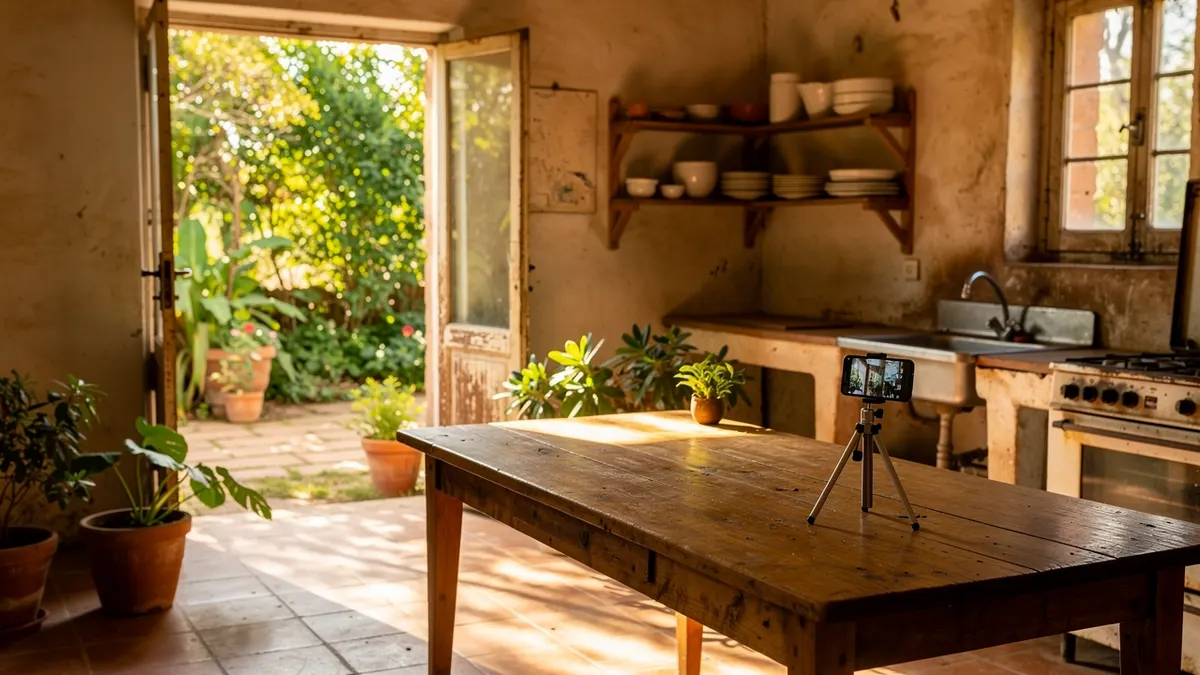
They also win when the piece needs a setting that does not exist in the city or looks fake there. A home kitchen with a yard, a road, a landscape, a workshop. That kind of location is free in the provinces and costs a whole production in the metropolitan area.
And they win in categories where the accent and the local context are part of the argument. A brand selling across the country and always showing the same kind of urban flat is talking to one part of its market and not the rest.
There is a less obvious and quite real advantage: availability. A creator with less local demand accepts dates already taken in the metropolitan area, and for a campaign on a tight calendar that is worth more than any other consideration.
When the metropolitan area wins
It wins when the product cannot travel. A large appliance, something fragile, something valuable nobody wants to send by courier, or a product that has to go back to the brand after the shoot.
It wins when a reshoot is needed and time is short. The difference is not in the shoot but in the second shoot: if the piece does not come out as expected, sorting it with a creator half an hour away is a different conversation from doing it with one a thousand kilometres away.
And it wins when somebody from the brand wants to be present. That happens more often than is admitted, especially on a first collaboration, and it is a legitimate reason even if it never appears in a brief.
How a remote shoot is organised
Almost every problem of working with somebody far away is solved before the shipment, not after.
- Send the product with tracking and a confirmed arrival date, and only then agree the shooting date. The other way round is how weeks get lost.
- Ask for a photo of the product received, the same day. It confirms it arrived complete and avoids discovering a missing part on the day of filming.
- Agree what happens if a reshoot is needed, before starting: who pays the second shipment and within what time. It is the conversation nobody has and the one always needed.
- Ask for a test shot before the full shoot. Thirty seconds of reference settle the light and the framing without spending a whole cycle.
Point three organises the relationship. It is not distrust: remotely, a reshoot costs days, and deciding who absorbs them after the fact is what breaks arrangements that were working well.
The mistake of choosing on rate
There is a belief that a creator in the provinces costs less and that this is the reason to look for one. It is a poor reason for two reasons.
First because it is not always true: a creator with real craft charges what they charge wherever they live, and the price depends more on their experience and niche than on their city. Second because, even if it were true, the difference is eaten by a round trip shipment and one reshoot cycle.
The right reason to look outside the metropolitan area is different and better: access to locations and to faces that are not in every campaign, and an available diary when you need it. If it also costs less, that is a consequence and not the argument.