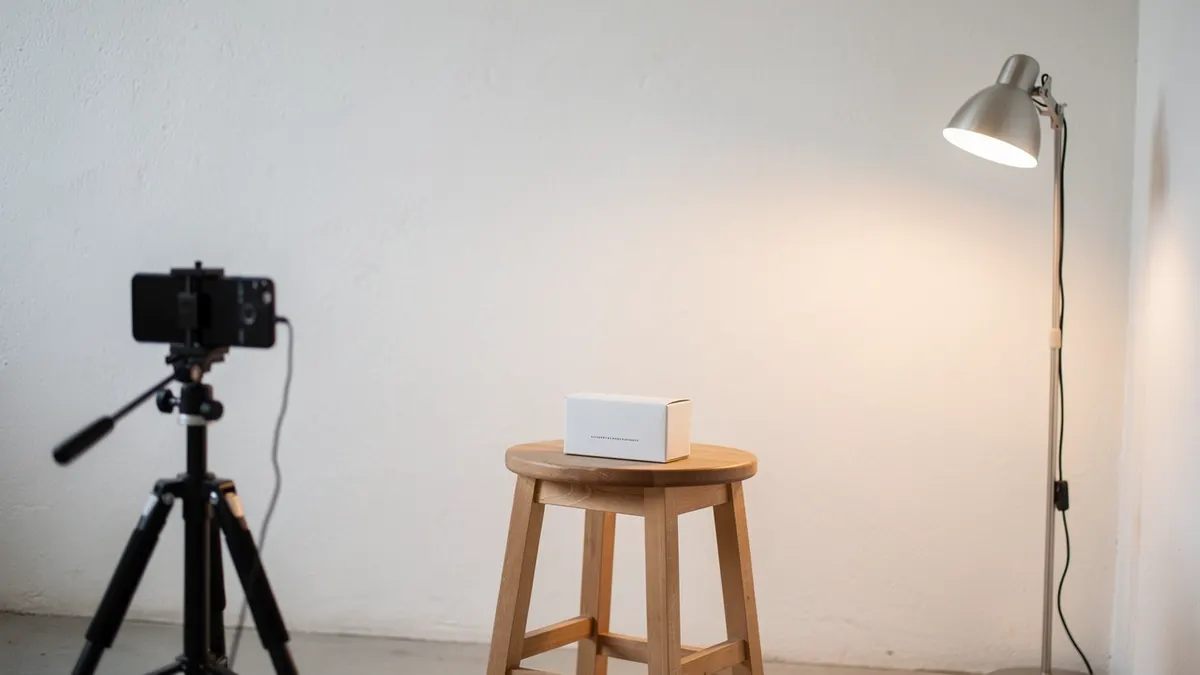
A slightly dark picture can be fixed in the edit. A room that echoes cannot, and Portuguese homes are built to produce exactly that.
The enemy is the room, not the microphone
Why Portuguese homes are difficult
Hard surfaces dominate: tiled floors, bare walls, wide windows, few textiles. Sound bounces and returns to the microphone with a slight delay, producing that bathroom impression the brand later describes as unprofessional sound. The microphone is not to blame: it faithfully records a room that echoes.
Distance beats equipment
Bringing the source closer to the microphone improves the ratio between voice and reverberation more reliably than any purchase. Halve the distance, and the room's share of the recording collapses. That is why a phone held at thirty centimetres beats a good microphone placed two metres away.
The room tone recording
Six uses for the background recorded at the start.
Filling a cut without creating artificial silence, dealt with above.
Serving as a reference for reducing hiss cleanly.
Matching two takes made at different hours.
Detecting a constant noise you had stopped hearing from living with it.
Comparing two rooms before choosing where to shoot.
And proving to the brand that the noise comes from the place and not from an editing fault.
The street, and why constant noise does not matter
What really destroys a take
A regular noise, distant traffic, a fan, air conditioning, blends into the sound backdrop and can be reduced fairly well. What destroys a take is noise that changes: a passing motorbike, a door, a dog, a siren, a child. Those events cannot be repaired, they force the sentence to be redone. The right strategy is therefore not to look for absolute silence, but for stable, low noise.
The five-minute set-up
Seven things to do before the first take.
Closing the doors of empty rooms, which send sound back.
Placing a blanket or a curtain on the wall behind you, the surface most responsible.
Moving the subject away from the room's corners, where reverberation is strongest.
Switching off the fridge, the air conditioning and the fan, remembering to switch them back on.
Putting the phone in flight mode, since a notification ruins a whole take.
Getting closer to the microphone, dealt with above.
And doing a ten-second test listened to on headphones before shooting, never after.
The rooms of a Portuguese home, ranked
Six places, from best to worst for the voice.
The bedroom with bed, curtains and wardrobe, almost always the best room.
The living room sofa, acceptable if textiles surround the subject.
The corridor, good only if it is short and cluttered.
The kitchen, difficult because of hard surfaces and appliances.
The bathroom, to be avoided systematically despite the light.
And the freshly renovated empty room, the worst of all, however beautiful.
What can be fixed and what cannot
Six problems, with their prognosis.
A level that is too low can be corrected, as long as it stays above the hiss.
Light hiss can be reduced, with the recorded background as reference.
A constant noise can be partly attenuated.
Room reverberation cannot be removed, it is mixed into the voice.
Clipping can never be repaired, since the information is lost.
And a one-off noise in the middle of a sentence forces the sentence to be redone, without exception.
The kit, in order of usefulness
Six purchases, from the most useful to the most incidental.
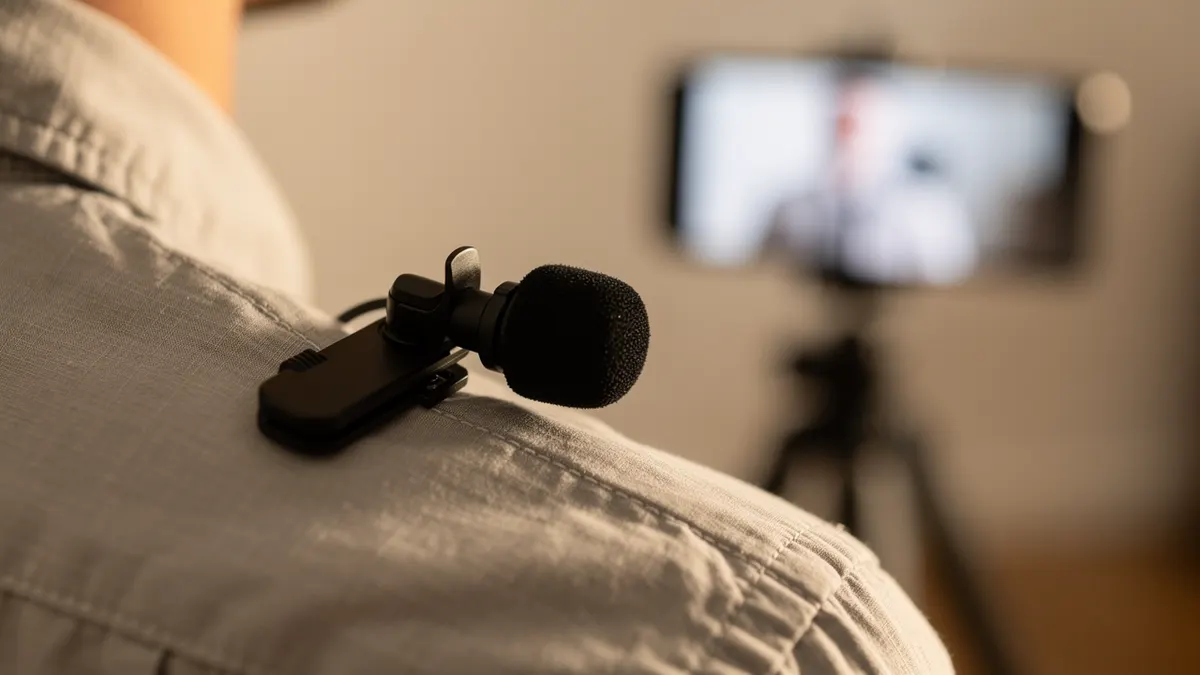
A wired lapel microphone, the most profitable purchase of all.
A wind shield, indispensable as soon as you go outside.
A tripod, which allows the right distance to be kept without fatigue.
Wired headphones, to check the sound during the take and not after.
A thick blanket, the best acoustic treatment per euro spent.
And a separate recorder, useful only if you regularly film with several people.
What degrades sound, in order of importance
| The cause | What it produces | The fix |
|---|---|---|
| Distance to the mic | A distant, hollow voice | Thirty centimetres, no more |
| An empty room | An echo you cannot remove | A rug, a curtain, a shelf |
| An appliance in the background | A permanent hum | Switch it off first, not in the edit |
What you buy first
A lavalier mic. It is the only purchase that changes the perceived quality within one take, whereas a pricier lens is barely noticeable on a phone.
What is checked before every take
Ten seconds recorded and listened to on headphones. That check takes exactly as long as it says and avoids discovering hiss or clipping once the shoot is over.
What to deliver to the brand on the sound side
Five elements that mark out a professional delivery.
An edit with a consistent voice level from start to finish.
A version without music, systematically.
The separate sound file, when the brand plans to re-edit.
A one-line note flagging an unavoidable noise and its origin.
And a second take of the key sentence, recorded in the same conditions, which saves an edit when the first one is problematic.
One last marker: in Portugal, sound decides whether the video is accepted more often than the picture does. A blanket on a wall, thirty centimetres less between mouth and microphone, and ten seconds of empty room are enough to go from an amateur result to a deliverable one, without spending a euro.