The most closely watched format of all: here is how to shoot it properly, and what makes it unusable.
The conditions to respect
Five identical settings between the two takes, with no exception.
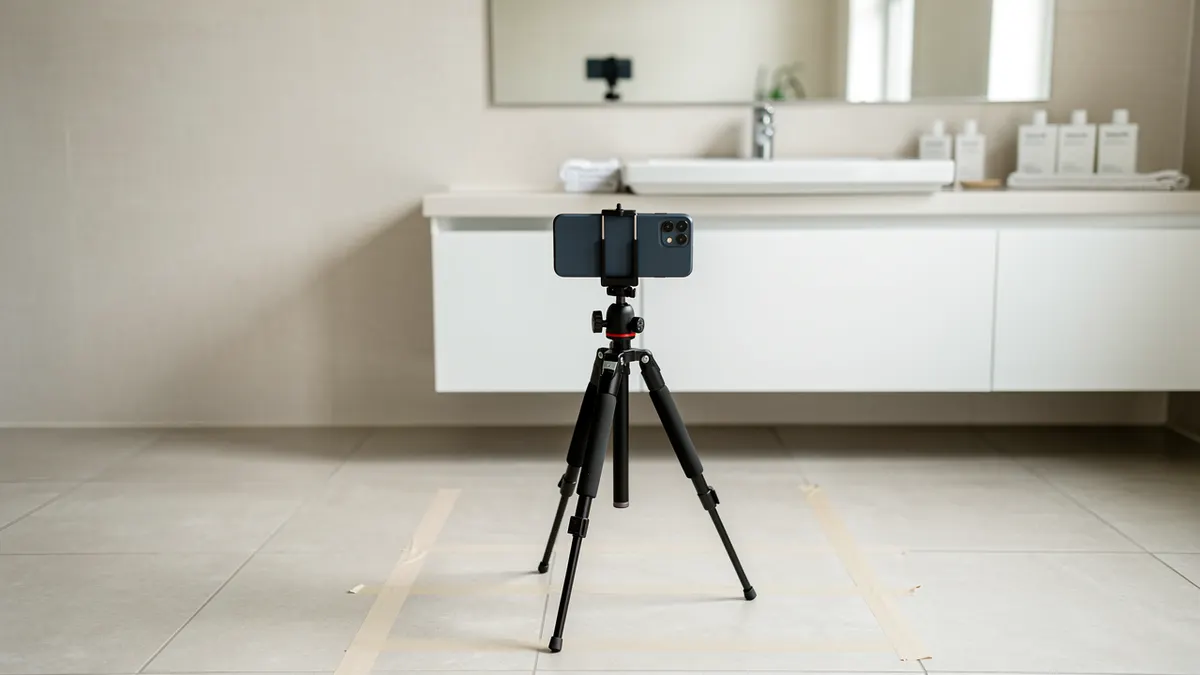
The same distance between camera and subject, measured and noted.
The same lens, without changing mode or zoom.
The same light, at the same time of day, in the same place.
The same background, the same clothes, the same hair.
And no automatic beautifying: phones smooth skin by default, and that option must be switched off in the settings before the first take.
What makes a sequence unusable
Five mistakes, all visible to the audience.
Changing the angle or the camera height between the two images.
Adding makeup, a filter, or changing the white balance.
Filming the before in shadow and the after near a window.
Changing the posture, the chin, the tension of the body.
And cutting the shot before the whole is visible: a tighter frame on the after is enough to discredit the entire video.
What to say on screen
Four pieces of information, and they protect as much as they convince.
The exact time between the two images, in days.
The real frequency of use, including the days missed.
What else changed during the period: season, diet, another product used.
And a sentence situating the scope of the result: this is an individual experience, not a guaranteed outcome.
The applicable mentions depend on the product and the claim, and are checked with a lawyer before publication.
The categories where this format works best
Four, and they are not all obvious.
Care and beauty, provided the rules above are respected.
Maintenance and cleaning, where the proof is immediate and beyond dispute.
Repair and renovation, where the result is physical.
And tidying, an underestimated format, showing a transformed space with no claim to defend.
What makes a before and after credible
| Element | What is needed | Otherwise |
|---|---|---|
| The frame | Identical, to the centimetre | A worthless comparison |
| The light | Same hour, same source | An effect caused by lighting |
| The outfit | Same clothes, same hair | A result attributed to something else |
What is noted at the first shot
The time, the tripod position, the settings and the distance. Without those four markers, the second shot never matches.
What is said alongside the image
The real duration, the frequency of use and what else changed. A result obtained with three products is not attributed to one, to be confirmed with a lawyer.
What replaces a before and after when it is impossible
Three solutions, often better than the format itself.
The continuous demonstration, with no cut, showing the action and its effect in the same take.
The three-stage follow-up, published separately: day one, one week, one month. The audience believes it more because it sees the progression, not only the end point.
And the descriptive testimonial, telling what changed in the habits rather than what shows on screen.
Those three formats have a decisive advantage: they do not rest on a visual comparison, so they cannot be accused of faking one.