A demonstration is not judged on what it explains. It is judged on what it proves.
The structure that works
Four beats, always in the same order.
The problem, shown and not announced: the stain, the mess, the broken object, the difficulty.
The product entering the frame, with no presentation, the way you take an object off a shelf.
The action, filmed in full.
And the result, held on screen long enough to be checked.
The usual mistake is to start with the product. Nobody watches a solution before recognising the problem as their own.
The point of view decides everything
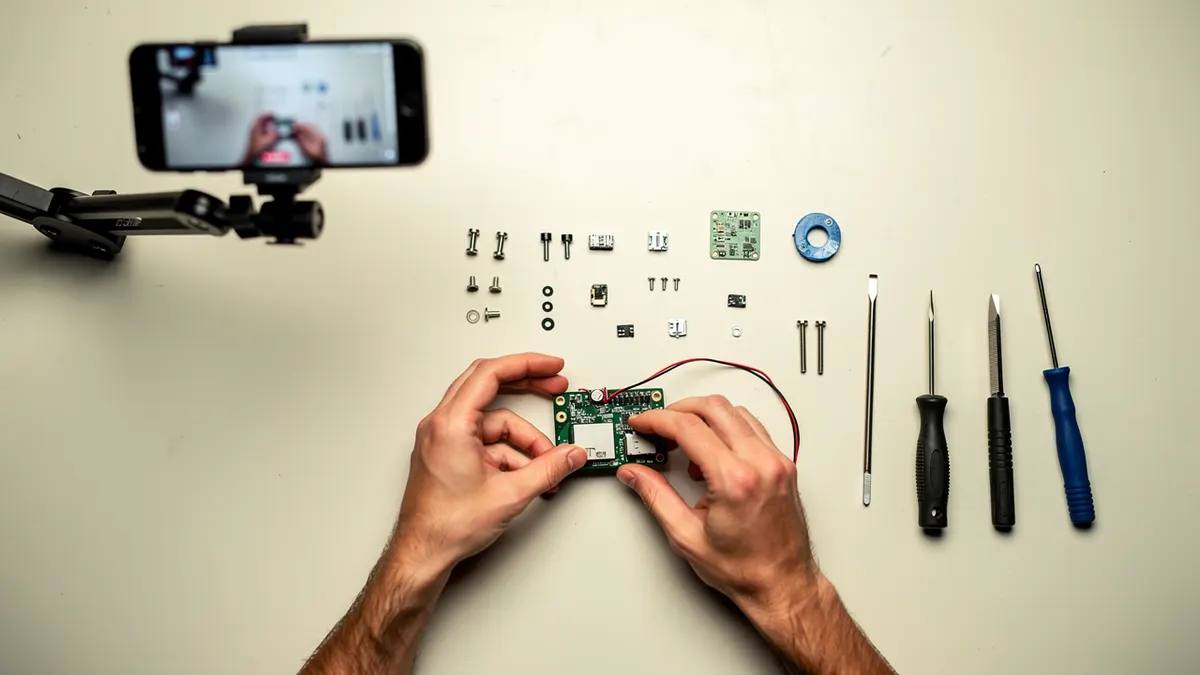
Film what the person using it sees, not what a spectator sitting opposite sees.
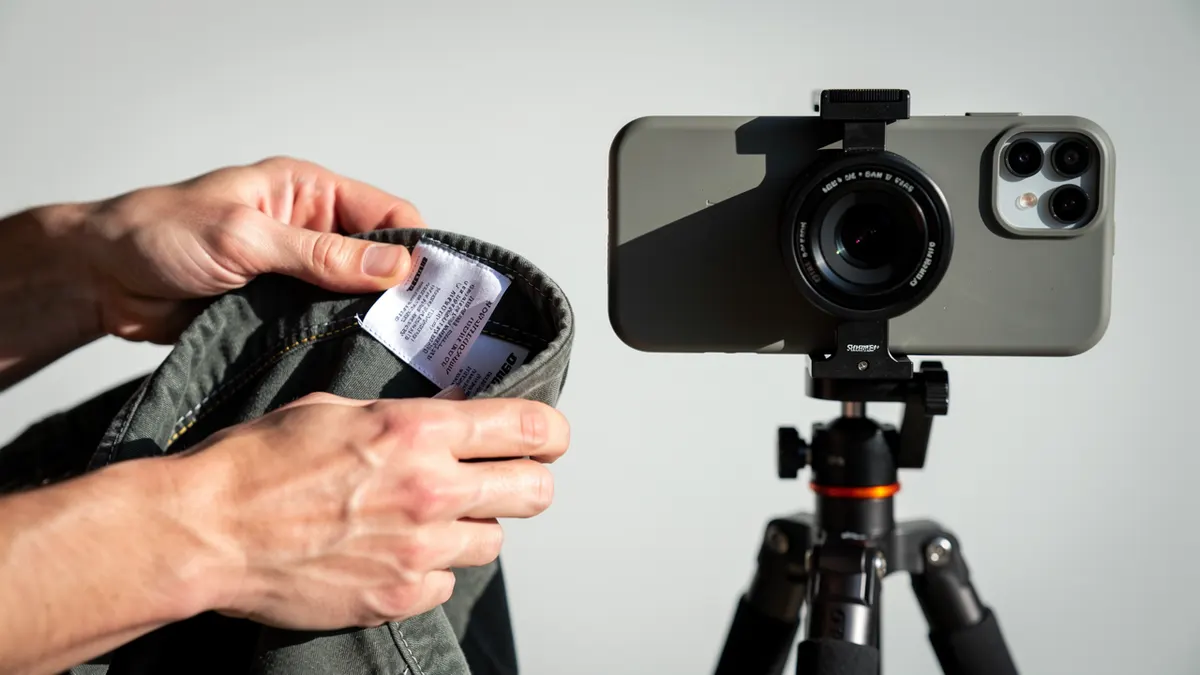
The camera placed over the shoulder, in line with the hands, produces an image the brain reads as "I could do that". The same action filmed head-on becomes a sales demonstration.
A head-on shot stays useful, but as a complement: for the reaction on the face, never for the action.
Show, do not describe
Every sentence describing what we can see can be deleted.
What remains useful to say is the invisible information: the real duration, the quantity used, what must not be done, the result after several days.
The marker: if your commentary could accompany any other product, it is not doing anything.
Watch the assertions too. Claims about results, composition, safety or efficacy bind the brand and are regulated; what may be said depends on your situation and is checked with a lawyer, before the shoot.
Fixed shot and hands in frame
Two simple, profitable rules.
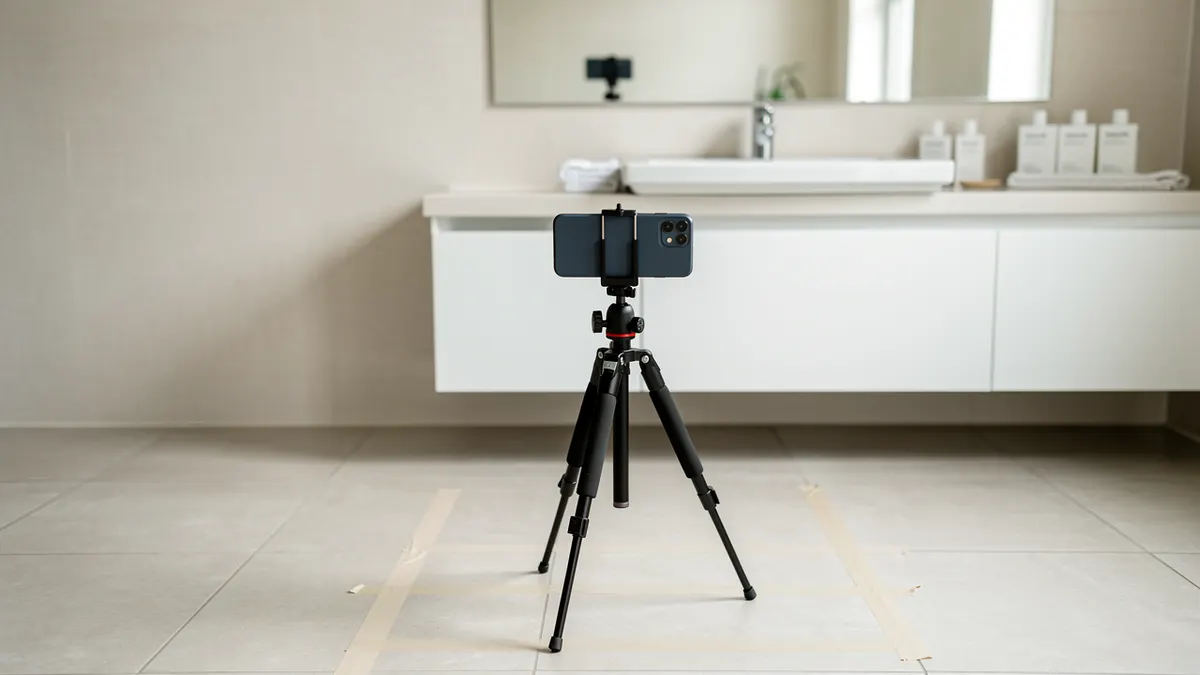
The phone set down, never held: a shaky demonstration suggests the product is hard to use.
The hands fully visible, including the hand holding the object. A hand cut off by the edge of the frame forces the viewer to guess, and they guess wrong.
Add a third point: the same distance from start to finish. A zoom in the middle of the action breaks the proof.
The order of shots in a demonstration
| Shot | What it shows | Trap |
|---|---|---|
| 1 | The problem, without the product | Solving it too fast |
| 2 | The gesture, hands in frame | Moving out of frame |
| 3 | The result, same frame as shot 1 | Changing the angle |
What is rehearsed before recording
The gesture alone, twice, with no camera. A hesitant sequence shows and forces a full reshoot.
What makes the demonstration credible
Uncut real time on the decisive moment, and an admitted limit: what the product does not do.
Length and rhythm
The right length is that of the action, not that of the format.
A ten-second action is filmed in ten seconds. A two-minute action is filmed in two minutes, then cut into a short version for advertising and a long version for the product page.
What must never be done is speeding up the footage on the part that proves. Acceleration on the result reads as cheating, even when it is not.