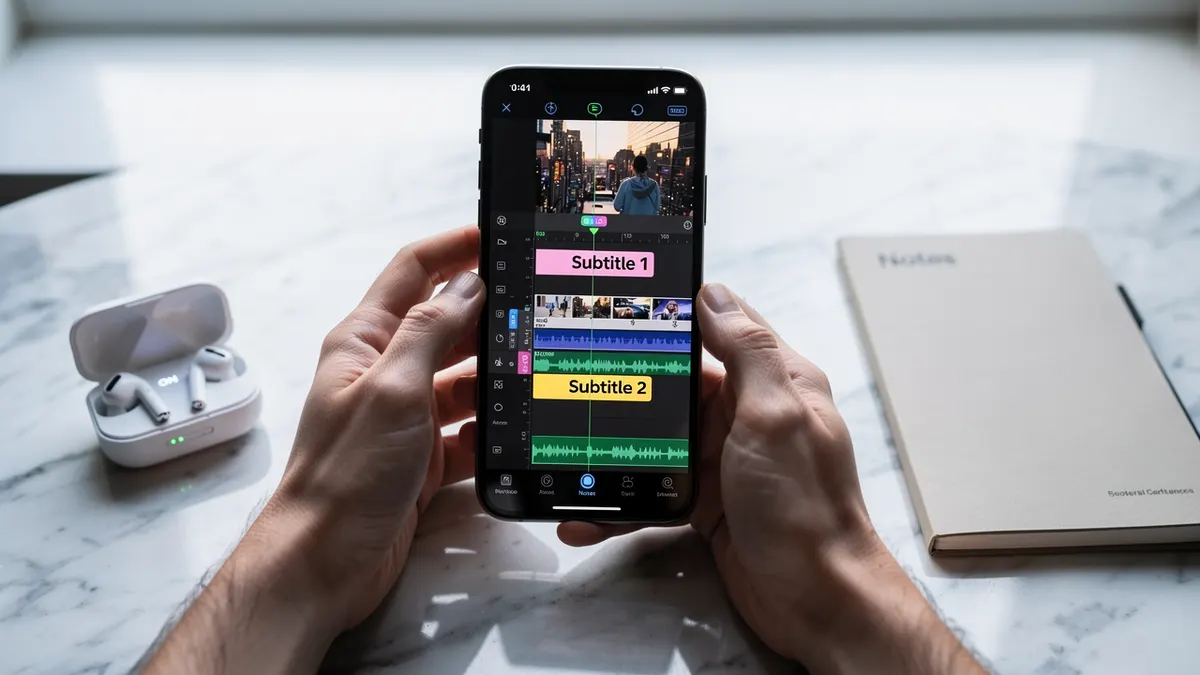
UGC editing is not trying to impress. It is trying to keep anyone from dropping off. It all happens on the phone, with no computer and no expensive licence, which counts when imported equipment is dear.
And there is one area where Argentine creators lose clients without realising: subtitles.
Automatic captions do not know how you speak
Transcription tools are trained on an average Spanish. So they consistently stumble over what makes up your everyday language.
Voseo forms travel badly: what you pronounce comes back transcribed in the standard second person, or mangled into a word that does not exist. Porteño vocabulary, diminutives, local product names and brands meet the same fate. A perfectly delivered line comes out written wrong.
The cost is not cosmetic. A large share of the audience watches with the sound off: they read the error instead of following your message, and their attention shifts from the product to the mistake. For the brand, a delivery full of typos is reason enough not to call back, even if the video is excellent otherwise.
Three formatting rules: short sentences, one idea per line, and placement in the middle third of the screen so the app interface does not cover them.
The apps worth using
A short form editing app covers almost every need: fast cuts, automatic captions to correct, templates. A lightweight alternative is enough for simple touch-ups, and the editor built into social platforms should only serve last minute adjustments.
One practical point that costs clients: export at the best available quality and deliver the original file, never a messaging link that recompresses it. A video arriving pixelated cancels all the care taken during the shoot.
Pace is the real technique
Cut every pause. Every breath, every hesitation, every dead second between sentences. A forty second piece often drops to twenty-eight once cleaned, and holds attention markedly better.
The rule that settles it: if you hesitate about cutting a second, it is one too many.
Sound before image
Level the voice so it sounds the same from start to finish. If there is music, keep it far underneath, barely there. In advertising, music that is too loud ruins more pieces than any framing error.
And use only royalty free music. A licensed track can get the brand's ad taken down, and the problem comes back to you.
What to cut out
Showy transitions, jumpy zooms, trendy effects that will look dated in two months, and above all filters that change the real colour of the product. UGC is bought because it looks true; every effect moves it away from that promise, and a filter that alters a shade can also leave the brand at odds with what the customer will receive.
What editing on a phone cannot do
Seven limits worth knowing.
Fine colour matching across several shots.
Denoising a take shot in low light.
Mixing sound with several tracks.
Exporting in an unusual format a client demands.
Working on a file longer than ten minutes.
Backing up the raw footage reliably.
And going back to a version from three weeks ago.
How long each step takes
| Step | On a phone | On a computer |
|---|---|---|
| Reviewing and cutting | 15 to 25 min | 20 to 30 min |
| Subtitles | 10 min with correction | 15 min with correction |
| Exporting a second format | 5 min | 5 min |
When the phone is enough
One video, one format, delivery the same day: mobile editing is faster than opening a project on a computer.
When you have to switch
A series that must look consistent, two subtitle languages, sound to rescue, a heavy file: the computer takes over.
Deliver versions, not a piece
Deliver the main video, two variants with a different opening, and if possible a version without burned-in captions so the brand can add them in another language.
That turns one delivery into three, justifies a higher price, and gets you called back without having to defend your rate. It is also what makes you useful to a brand running outside Argentina: the caption free version is exactly what it will ask for for Mexico or Spain.