The apps worth using, the cuts that hold attention, and why French subtitles are proofread by hand.
The apps worth using
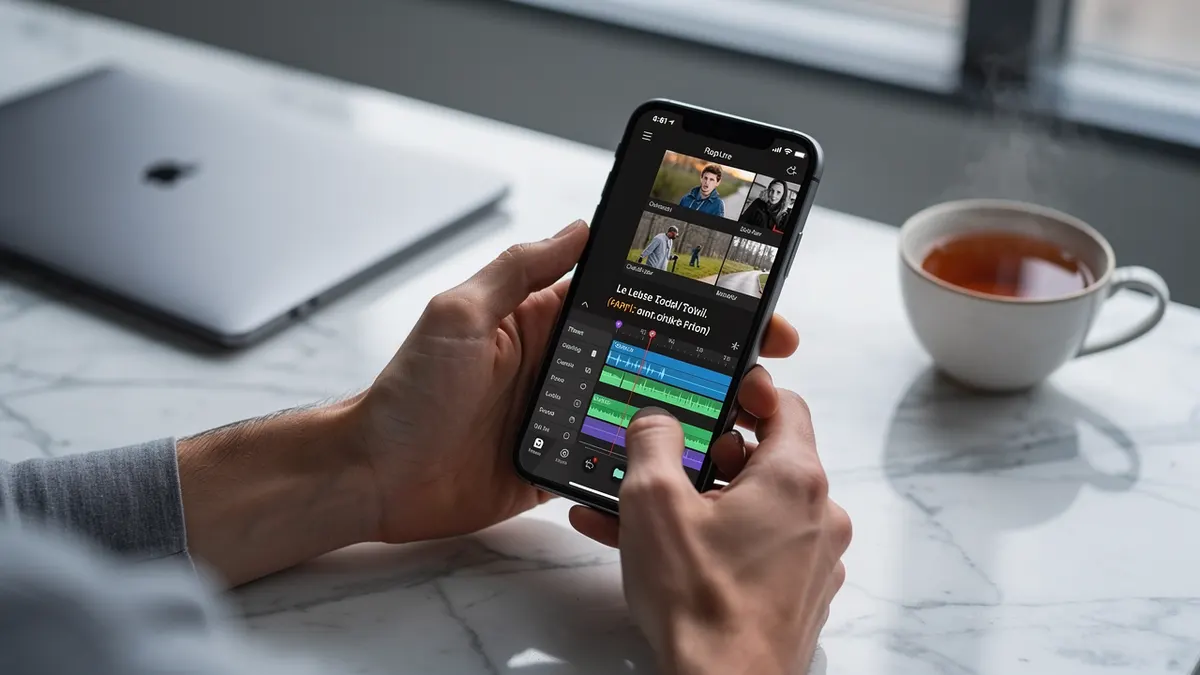
Three criteria of choice, before any names.
Export with no watermark: a video branded by the app is unsellable, whatever its content.
Manual control of subtitles: the ability to correct every word, not just to switch a transcription on.
And export in several proportions, with manual recropping: automatic recropping systematically cuts off heads or the product.
One note on cost: a subscription to an editing tool pays for itself on a single order. Delivering with a watermark costs the whole order.
Pace is the main technique
Four simple rules, doing most of the work.
Cut the silences, not the breaths: a video with no pause at all becomes exhausting.
Change shot when the idea changes, not every two seconds on principle.
Keep the first second intact: that is the shot that decides, and it is never cut.
And let the ending breathe for half a second: a clean cut on the last word feels unfinished.
One quick test before delivery: watch the video at normal speed, with no sound, holding the phone at arm's length. If you understand the subject, the pace is right.
French subtitles are proofread by hand
Four points of vigilance, in this order.
The brand name and the product name, spelled exactly as on the pack.
Figures and units: transcriptions often write them out in letters, which makes them unreadable at small size.
Plural agreements, invisible in speech.
And the line breaks: one line, one idea, never more than two lines on screen.
One often forgotten readability constraint: subtitles go high enough not to be hidden by the platform's interface, which covers the bottom of the screen.
Sound before image
Three steps changing the result more than any filter.
Normalising the voice level: a video that is too quiet gets cut off in three seconds.
Removing stray noises at the beginning and the end, where they are most audible.
And avoiding music under the voice: in this format it masks more than it helps, and it raises rights questions checked before publication.
One simple rule: if you have to choose between fixing the image and fixing the sound, fix the sound.
What to remove
Four elements almost always weakening a video.
Animated transitions: they date the video and break the pace.
Added sound effects, which give the editing away.
Decorative text, different from the subtitles, which clutters the image without informing.
And the introduction: naming the brand before showing anything loses half the audience.
What can be done on a phone without loss
| Task | Doable on mobile | What stays difficult |
|---|---|---|
| Cutting and assembling | Yes | Nothing |
| Subtitling | Yes, automatically | Proper nouns |
| Colour correction | Partly | Fine grading |
| Exporting several formats | Yes | Batch naming |
What is settled before editing
Exporting at full quality, one project per order, and clear naming from the start. Finding a file three weeks later costs more than the edit itself.
What is checked before sending
The readability of subtitles on a small screen, the absence of the editing app's logo, and the file weight against what the brand can receive.
Deliver versions, not one piece
Four files, systematically.
The edited vertical version, with burned-in subtitles.
The square version, recropped by hand.
A version with no burned-in text, for adaptations by market.
And the rushes of the useful shots, if the contract provides for it.
One last marker, valid for any creator editing on a phone: perceived quality does not come from the power of the tool, it comes from three things checkable in five minutes, normalised sound, proofread subtitles and an intact opening shot. The rest is comfort.