Here the problem is not dosing the light, it is finding any. And above all finding the same again two weeks later.
The climate decides more than the equipment
That is the difference from sunny markets.
For a large part of the year the light is weak, grey and short. In winter the usable window shrinks to a few hours around midday, and it disappears completely on rainy days.
Two consequences. Shoots have to be planned by the weather rather than the diary, which means keeping two possible slots in the week. And you have to accept investing in an artificial source earlier than elsewhere, not to look good, but to be able to work.
Overcast sky, on the other hand, is good news: it diffuses light and removes hard shadows. A grey day is a shooting day, not a lost one.
The typical flat and its traps
Three problems recur everywhere, and they can be fixed without equipment.
The ceiling light. It lights from above, hollows the eyes and gives a yellow colour. It gets switched off, always, even when the room looks dark.
Warm bulbs mixed with daylight. In the same shot they give a face that is orange on one side and blue on the other, and that cannot be recovered in the edit. You choose a single colour of source, or replace the bulbs with white ones.
And coloured walls. A green or red wall throws its colour onto the skin. A white sheet or a pale panel placed on the shadow side fixes the problem in thirty seconds.
What to buy, in order
Three purchases, and the first costs almost nothing.
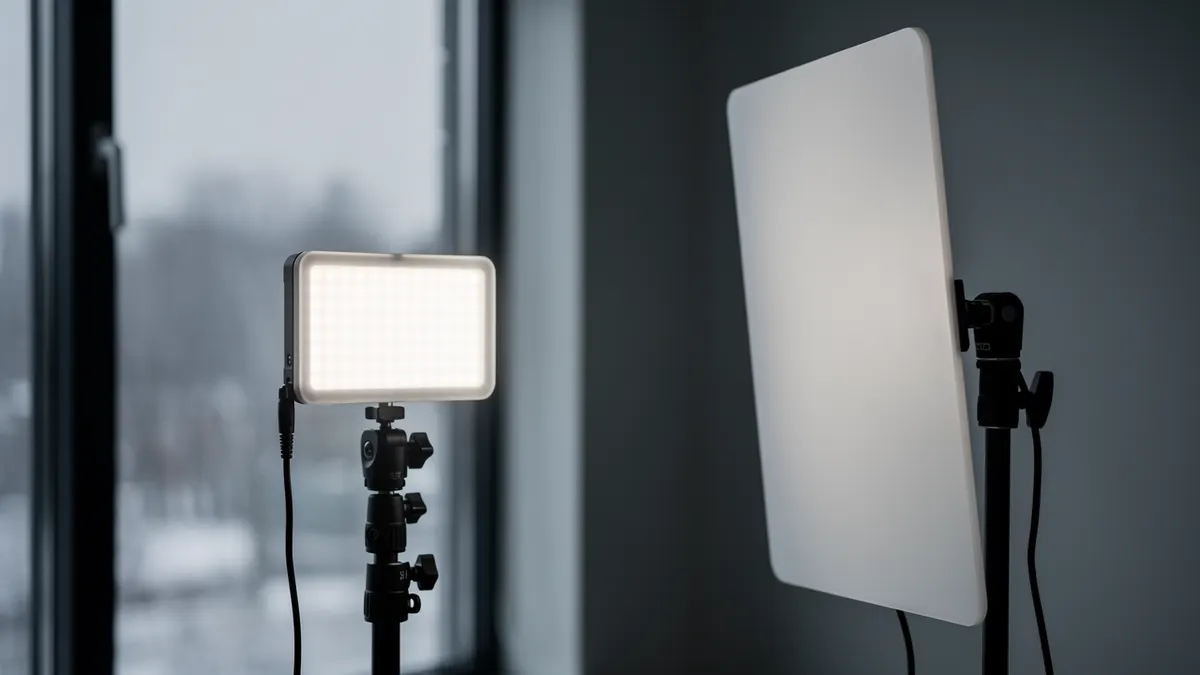
A foldable reflector panel, white on one side, silver on the other. It is the best ratio between price and visible improvement.
A continuous light, adjustable in intensity and temperature, with a diffuser. In this climate it serves half the year.
Then a second, weaker light, placed behind to separate the subject from the background.
Check that your lamps have the same temperature, and note the setting used on the sheet described above.
The check before delivering
Three verifications, five minutes.
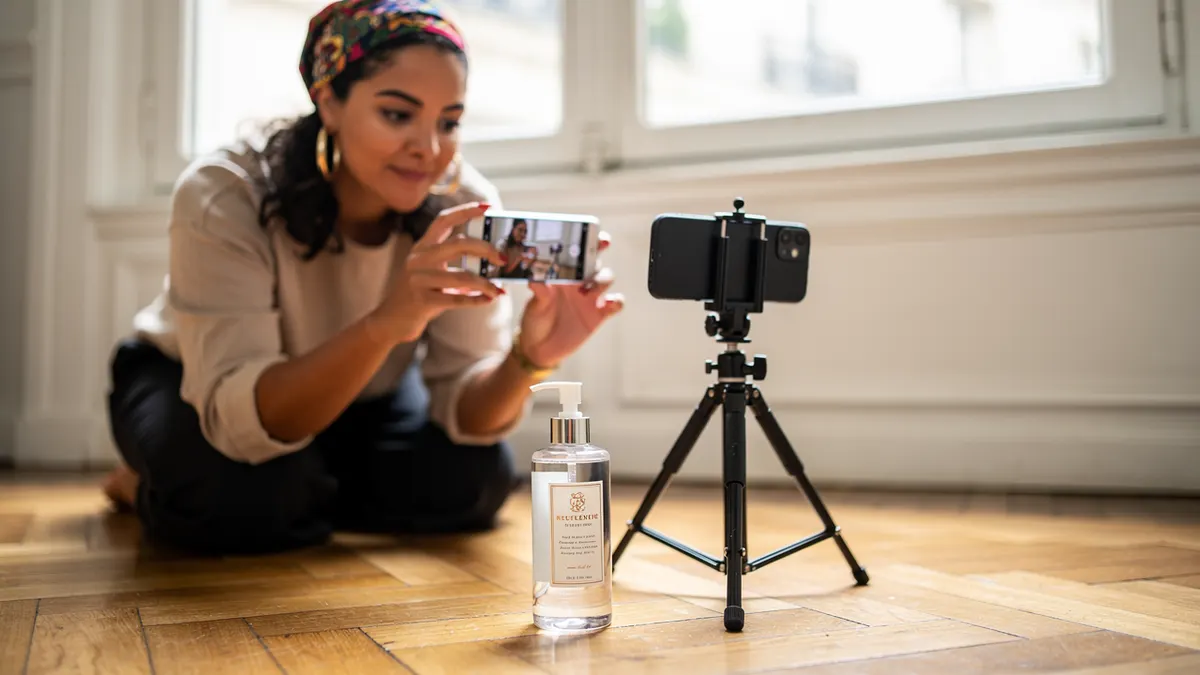
Watch the video on a phone at medium brightness, not on a computer screen turned up to maximum. That is the real viewing condition.
Check the consistency: put the first and last take of the series side by side. If the colour or the intensity has moved, the client will see it before you do.
And look at the product: an illegible label, a reflection masking a logo, a material disappearing into shadow. That is what the brand is buying, and that is what must be sharp.
What to adjust depending on the room
| Room | The typical problem | The corrective move |
|---|---|---|
| Living room | A coloured wall tinting the skin | Step away from the wall |
| Bathroom | A ceiling spotlight | A lamp set at face level |
| Office | A screen lighting from below | Turn the screen off during the take |
What is checked in ten seconds before each take
The direction of the light, the absence of a cast shadow on the background, and focus locked on the nearer eye.
What is reshot rather than corrected
A take that is too dark. Brightening in the edit brings out grain, and a noisy shot shows more than a simply retaken one.
What that changes in a quote
One practical point, often forgotten.
If you are delivering a series, state that the files are shot in the same lighting conditions, and that you keep the sheet for subsequent orders.
It is a concrete commercial argument: it tells the client that video number seven will look like number one, which very few suppliers can guarantee.
Sources
- Urssaf, official auto-entrepreneur portal
- Service Public, how to become a micro-entrepreneur
- Service Public, crossing the micro-entrepreneur turnover thresholds
Checked on 4 September 2026. Thresholds and rates change: where this guide and the official source disagree, the official source is right.