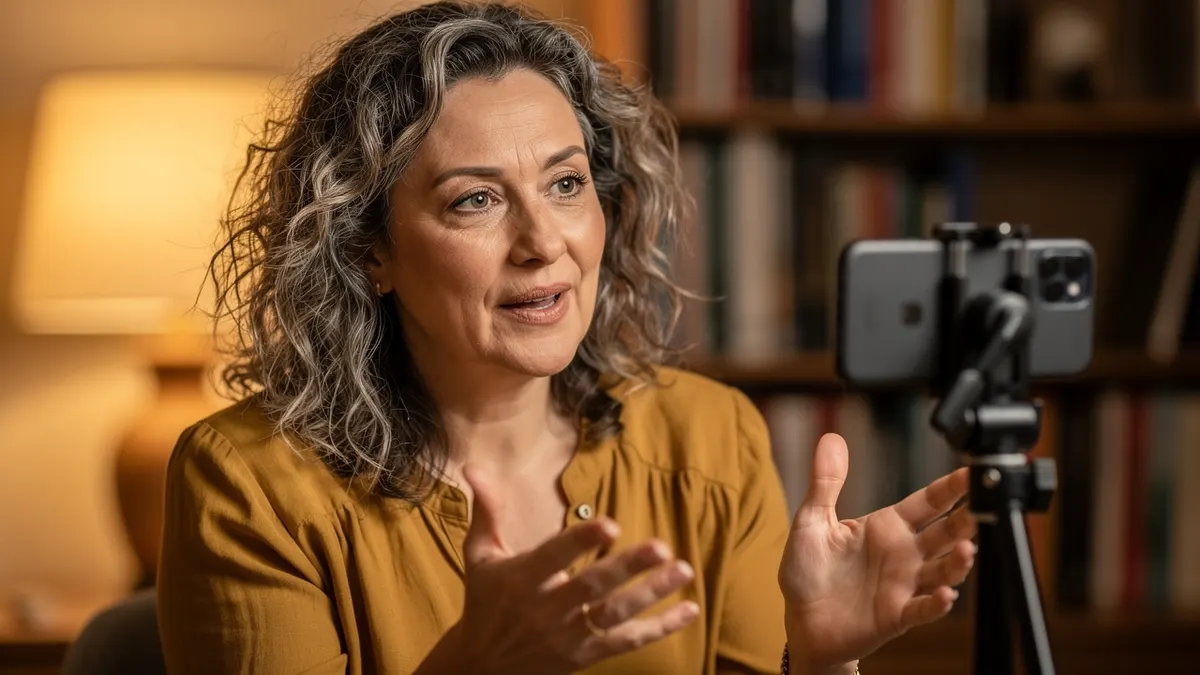
Almost nobody is comfortable in front of the lens at the start, and the stiffness that shows on screen has nothing to do with talent. It is a lack of repetitions, and it is corrected with exercises rather than by waiting for confidence to arrive.
In Spain a question comes up very early and catches many creators off guard: which language are you shooting in?
The co-official languages question
A national brand runs in Castilian. A brand working Catalonia, Galicia, the Basque Country or the Valencian Community often asks for a second version in the language of the territory, because an ad that speaks its audience's language stops being perceived as an ad from somewhere else.
For you that changes two very concrete things.
First, your profile has to say what you can deliver, and at what level. There is a difference between speaking a language day to day, reading it aloud without stumbling, and being able to improvise in it on camera. Claiming the third when you have the second leads to a failed take on shoot day.
Second, the double version is billed. It is not the same video dubbed, it is a second shoot: same setups, different script, different takes, different subtitle proofreading. A brand that discovers this line at quoting time understands it without difficulty; a brand that discovers it after signing, far less.
One side effect is worth knowing: filming in a language you master less makes you stiff. It is not shyness, it is cognitive load. The remedy is the same as for nerves, but it applies beforehand: write, read aloud several times, and only shoot once the sentences have become automatic.
Why your recorded voice surprises you
When you speak you hear yourself through bone conduction: the sound crosses the skull and arrives deeper and rounder. A microphone only picks up what travels through air, thinner and brighter.
So there is nothing strange about your voice. You are meeting the one everyone else has always heard, and the discomfort fades on its own after about twenty recordings.
Five exercises against stiffness
Address a person
Put a photo of someone you know next to the lens and talk to them. Your eyes change immediately, and the vocabulary follows.
Shoot thirty seconds a day for two weeks
Publishing nothing. It is the number of repetitions that counts, not the quality of the shot.
Enter the frame already moving
Walking, or with the product in hand. Stiffness sets in mostly when you start motionless, waiting for the right moment.
Read the script aloud first
If you stumble while reading, the sentence is badly written. Fix the text instead of practising how to say it.
Slow down one notch
Nerves speed up delivery without you noticing. A slightly slower pace reads as more assured.
How many takes are normal
Five to ten for a thirty second piece when starting out, two or three with practice.
The point is not to nail it first time, it is to avoid restarting everything at each hesitation. Stop, breathe, pick up from the previous sentence: the cut happens in the edit and nobody notices it.
What each exercise corrects
| Difficulty | Exercise | Duration |
|---|---|---|
| A shaky voice | Reading aloud for two minutes | 2 min |
| A drifting gaze | Sticking a dot beside the lens | 30 s |
| Speaking too fast | Pausing at every comma | 1 min |
What is settled before the first take
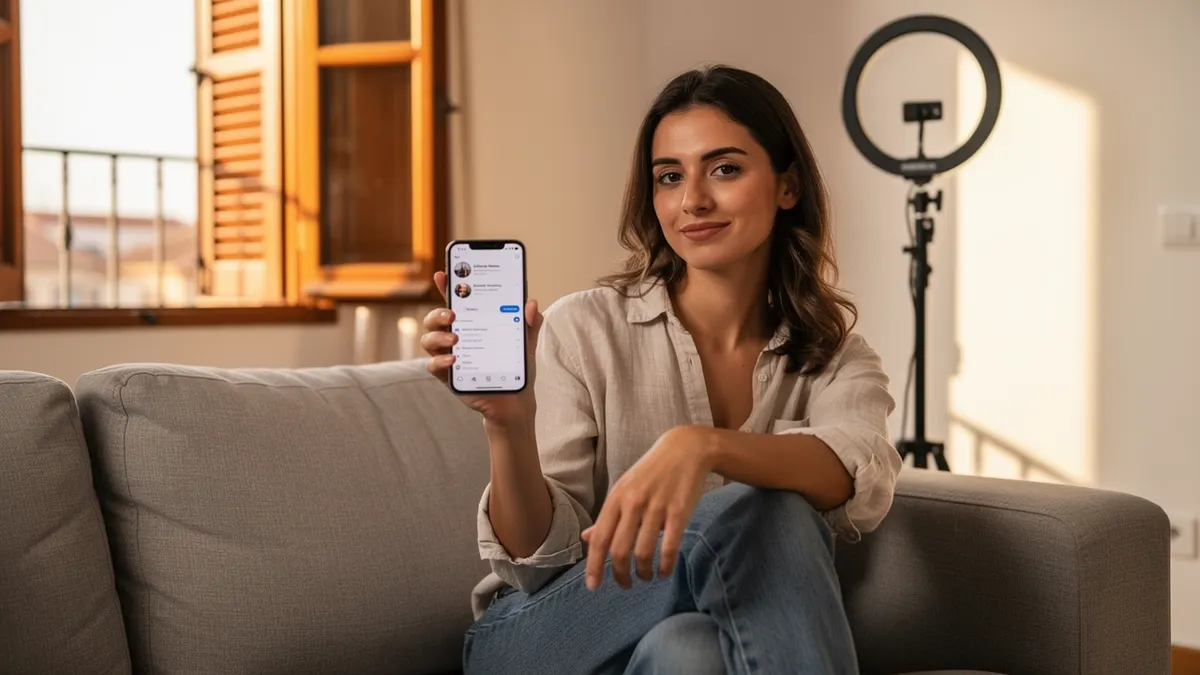
The position relative to the window, the camera height, the first line learned and a person off frame.
What the edit repairs
Hesitations, restarts, a swallowed word: all of it can be cut, provided you spoke in complete sentences.
What brands are really after
They are not looking for a professional voice over, but for someone who sounds like a customer recounting what happened to them. A hesitation, a laugh, a repeated word make the video more believable, and those takes often beat the perfectly read version.
One last exercise to find your register: film the same sentence three times, neutral, enthusiastic, then as if confiding it. One of the three will ring true, and that is the one you sell.
Sources
- Agencia Tributaria, Spanish tax authority
- Spanish Social Security, self-employed registration (RETA)
Checked on 4 September 2026. Thresholds and rates change: where this guide and the official source disagree, the official source is right.