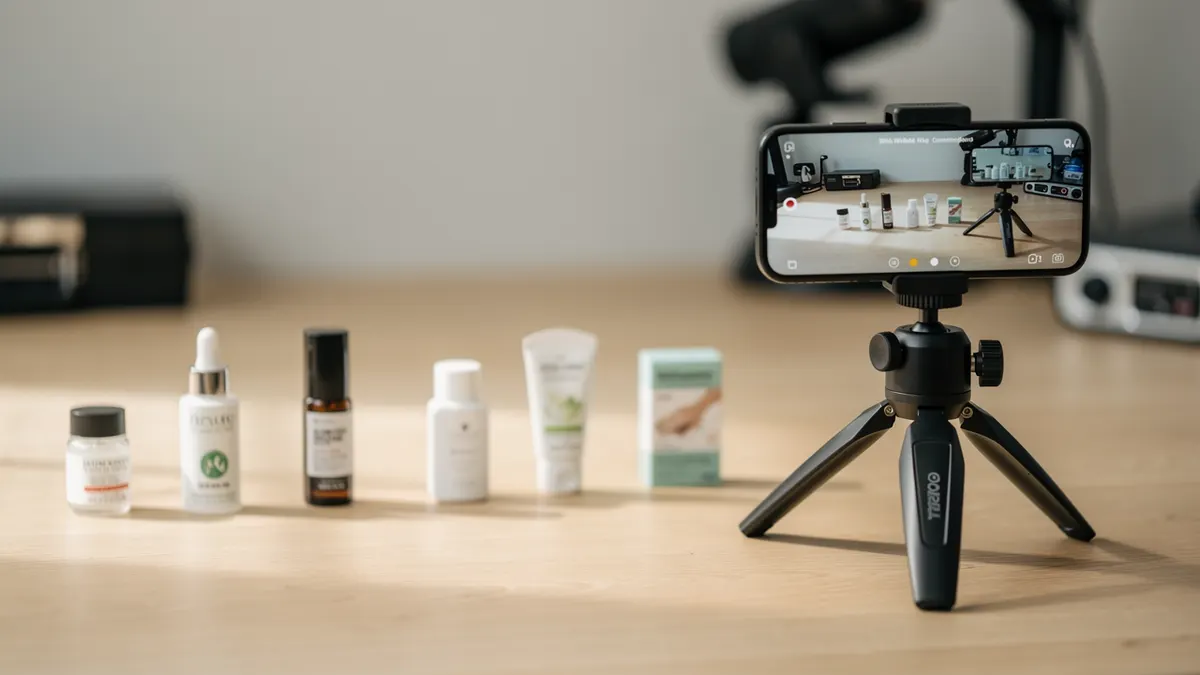
Two shoots in one day is good economics. The lighting is already set, the room is tidy, you are warmed up, and the second job costs a fraction of the first in time.
The risk is not fatigue. It is that the two videos come out looking like the same video with different products in it, and that both clients will eventually see it.
Why it matters more here than elsewhere
In a small market the two brands are more likely to know each other. They may share a distributor, follow the same accounts, or simply appear in the same city feed on the same afternoon.
A creator working in a large market can shoot four brands in one room and nobody notices. Here, someone notices, and what they notice is not a technical fault. It reads as content produced on an assembly line, which undermines the one thing a brand is buying: the impression that a real person chose to talk about their product.
The change list
It is shorter than people expect and it takes eight minutes between shoots.
What must change
The top, the background wall or corner, and the visible accessories. A different mug, a different notebook, jewellery on or off. That is enough to break the resemblance for any viewer.
What can stay
The camera position, the lighting, the trousers nobody sees, and your hair. Rebuilding a good setup twice is a waste, and the setup is not what carries the resemblance.
What must be checked twice
The background, for the other client's product. This is the mistake that only becomes visible after delivery, when someone spots a competitor's box on the shelf behind you. Clear the surface, not just the frame, because a slight camera move in the edit brings the shelf back.
| What you did in the morning | What to change by the afternoon | Why |
|---|---|---|
| Wore a light shirt | Change the top | It is the first thing a viewer registers |
| Filmed against the kitchen wall | Move to the other corner | The wall is more recognisable than your face |
| Used the wooden board as a surface | Use a plain one | Props travel between videos and are noticed |
| Had the morning product on the table | Clear the whole surface | Reframing in the edit brings it back |
| Spoke in one energy | Change the pace deliberately | Two identical deliveries feel scripted |
The last row is the one creators dismiss and clients feel. Two videos spoken at exactly the same speed with the same rhythm sound like a template, even when the words are entirely different.
Keep the files apart from the first minute
The second real risk of a double day is administrative, and it is worse than the visual one because it is discovered by the client.
Make the folder before you shoot, not after. Name it with the brand and the date. Import at the end of each shoot rather than at the end of the day, and never leave two clients' rushes in one place overnight, because the morning you confuse them is the morning you send brand A a file with brand B in the frame.
Say no to the third
Two is efficient. Three is where the day stops paying.
By the third setup, the resemblance becomes unavoidable, the surface is never fully clear, and the attention that makes a delivery good has gone. The right answer is usually to move the third to another day and charge normally for it, rather than to compress it into an afternoon and deliver something that needs revisions.