Which one reduces returns, why the answer changes by category, and how to split a small budget.
Video translates a figure into perception
That is what a photograph does not do, however carefully made.
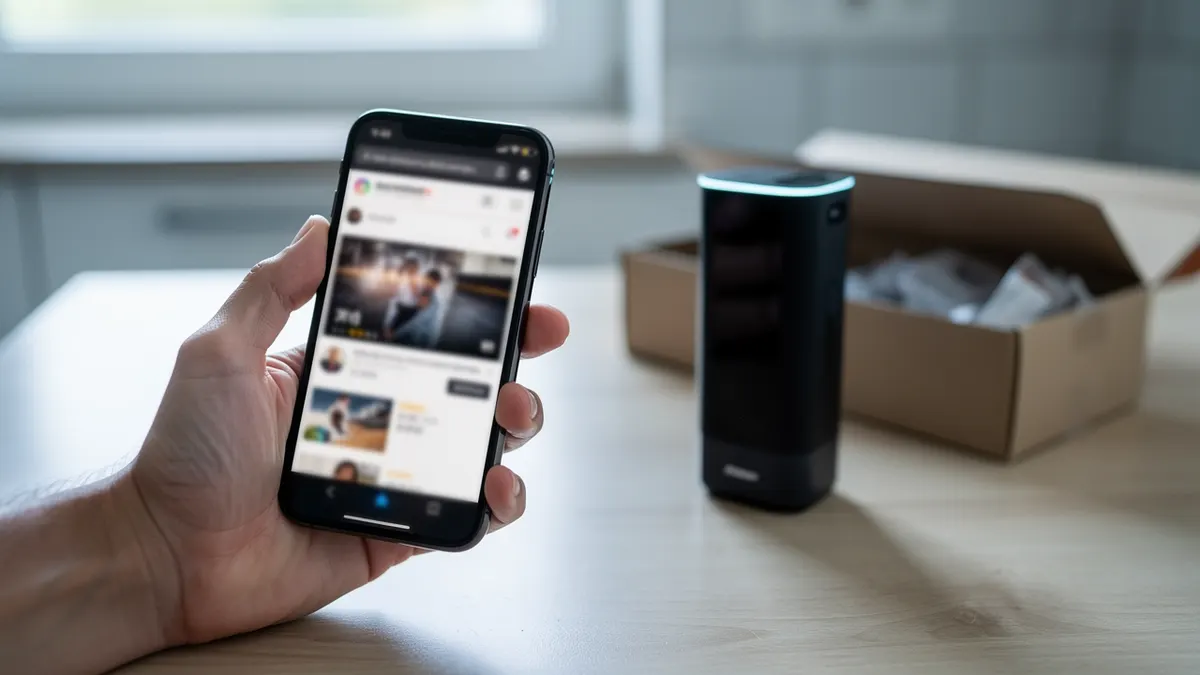
A specification sheet announces dimensions; nobody converts them in their head. A video shows the object beside a hand, a door, a cup, and the question is settled in two seconds.
Three cases where that translation decides the purchase.
Volume: what fits in a bag, in a cupboard, on a worktop.
Weight: what can be carried with one hand, what needs two people.
And time: what takes ten minutes rather than an hour.
What photography still does better
Four things, and they remain indispensable.
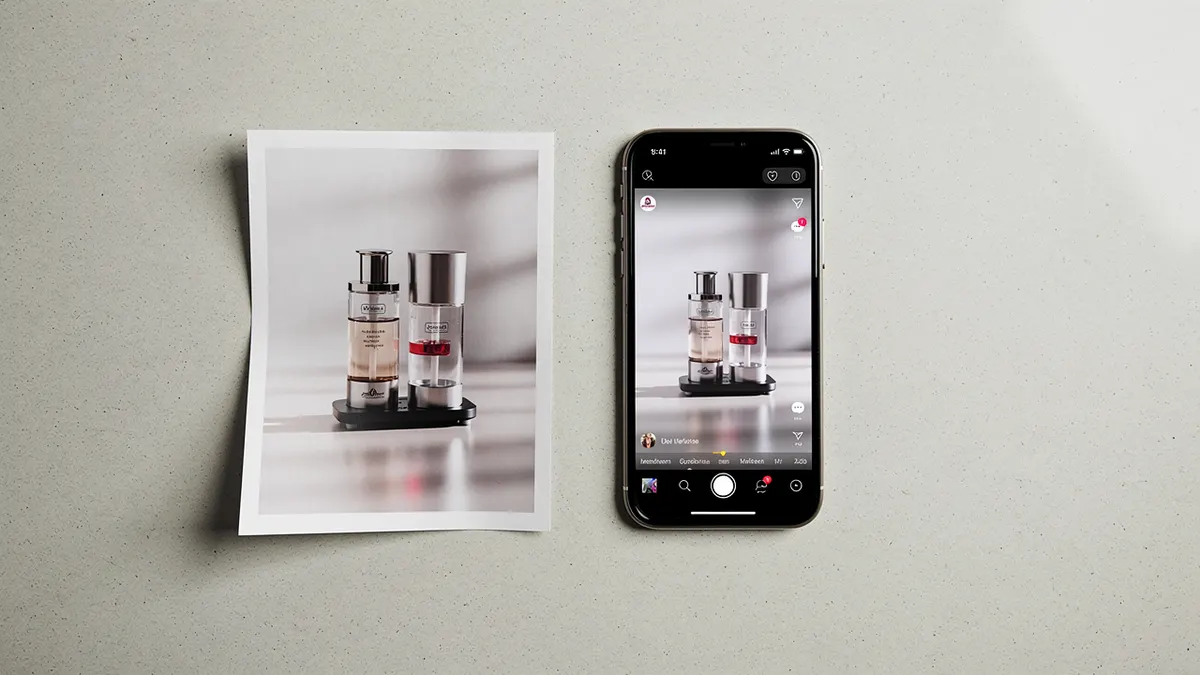
The comparison of variants, side by side, in the same conditions.
The still detail: the seam, the material, the finish, which the eye can examine with nothing moving.
The catalogue grid, where twenty references are scanned in thirty seconds.
And offline use: printing, presentation, documentation.
One practical consequence: abandoning photography to move everything to video costs more and makes the catalogue less readable.
What video alone brings
Four things, which no photograph replaces.
Movement: what opens, folds, unfolds, clicks into place.
Sound: the click of a fastening, the noise of an appliance, the silence of a mechanism.
Duration: what happens between the first minute and the tenth.
And the person: somebody resembling the customer, in a home resembling theirs.
How to split a limited budget
Three steps, in this order.
List the variants actually offered: that is the minimum number of photographs.
List the objections drawn from customer service messages and from return reasons: that is the number of videos.
And start with the three references generating the most returns, not with the best sellers.
One proportion rule working in most categories: photography occupies the listing, video occupies the decision. The two budgets do not replace each other, they complete each other.
The frequent mistake
Three versions of the same mistake.
Ordering a beautiful brand video with no demonstration: it pleases in a meeting and answers nothing.
Multiplying photographs of the same variant from different angles: it removes no doubt.
And redoing both every season when the product has not changed: what dates an image is not the product, it is the setting and the clothing.
What each format proves
| Buyer's question | The photo | The video |
|---|---|---|
| What does it look like | Enough | Enough |
| How big is it | Difficult | Immediate |
| How is it used | Impossible | The gesture shown |
| How is it assembled | Impossible | The full assembly |
What stays a photo, whatever happens
The main image of the listing. It loads instantly, reads as a thumbnail and remains the first point of contact, even when a video is available.
What is produced in the same session
Both. One set, one light, a still take for the photo and a moving take for the video. Doubling the session costs thirty minutes, not a day.
What to ask for in both cases
Five points, valid for photography as for video.
The brief drawn from customer service questions, not from a campaign idea.
The same shooting conditions for every variant, written down somewhere.
A version with no burnt-in text for videos, and an unretouched file for photographs.
The written rights: channels, duration, territory, modifications.
And the permissions of the people visible, by channel and by duration.
One last point specific to this market: what is claimed in a video or written on an image binds in the same way. The mandatory statements, claims about materials, consumption or origin, and the way a discount is announced follow precise rules, to be checked with a lawyer before going online.