A product photo is silent. It crosses the country without asking anything of anyone: the same image serves from one ocean to the other.
A video speaks. And as soon as it speaks, it chooses a language. That is the most concrete difference between the two formats in Canada, and the one that should organise the whole preparation.
Moving to video means taking a language decision
As long as you stay with photography, the question does not arise. As soon as there is a voice, a word on screen or a subtitle, it arises entirely.
You cannot dub a creator video afterwards without destroying what made it credible: a synthetic voice laid over a real face is audible, and the content loses exactly the quality it was bought for.
So this is prepared at the shoot, not in the edit.
What photography still does better
Fidelity. The exact colour of a garment, the finish of an object, the proportion: a well-lit photo renders them better than a compressed video watched in a feed.
Permanence too. A good photo serves for years on a product page, a comparison site, a catalogue, a marketplace, without dating.
And it remains the only format that works everywhere, including where video does not play.
What video brings that photography cannot
Gesture and duration. The way a zip resists the cold, a boot holds on a patch of ice, a fabric behaves under a parka.
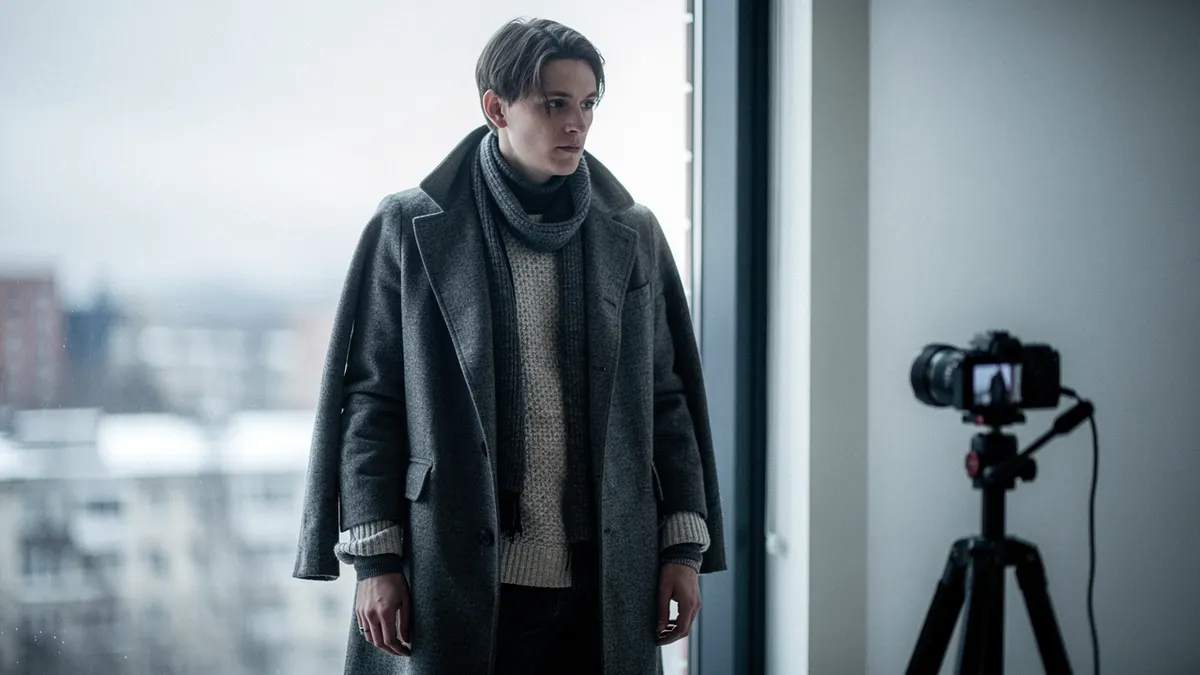
In a country where half the year requires suitable clothing, footwear and equipment, a demonstration in real conditions is not an extra, it is often the main argument, and a studio photo never carries it.
Video also brings the person: someone saying what they tried, what surprised them, what they wish they had known. No still image does that.
The season changes the calendar, not only the setting
A winter video cannot be caught up in April. A demonstration in real conditions has to be shot while those conditions exist.
That means shooting ahead, often a full season before publication. Brands that ignore it end up publishing studio images just when their audience needs to see the product outdoors.
Photography, by contrast, can be caught up: that is a real advantage, to be used for the catalogue, keeping the shoot for the moments that will not come round again for twelve months.
How to split a limited budget
Photography for identity, the catalogue and everything that must stay accurate for a long time.
Video for the moments when someone hesitates: the demonstration, the comparison, the answer to an objection, use in demanding conditions.
If you already have good photos and no video, three usage videos will return more than a new photo series, and the reverse is true if your product page is still illustrated with approximate images.
What each does better
| Need | Photo | Video |
|---|---|---|
| A site's product page | Yes, white background | As a complement |
| Showing a mechanism | No | Yes |
| Comparing two sizes | Yes | Possible |
What one session produces
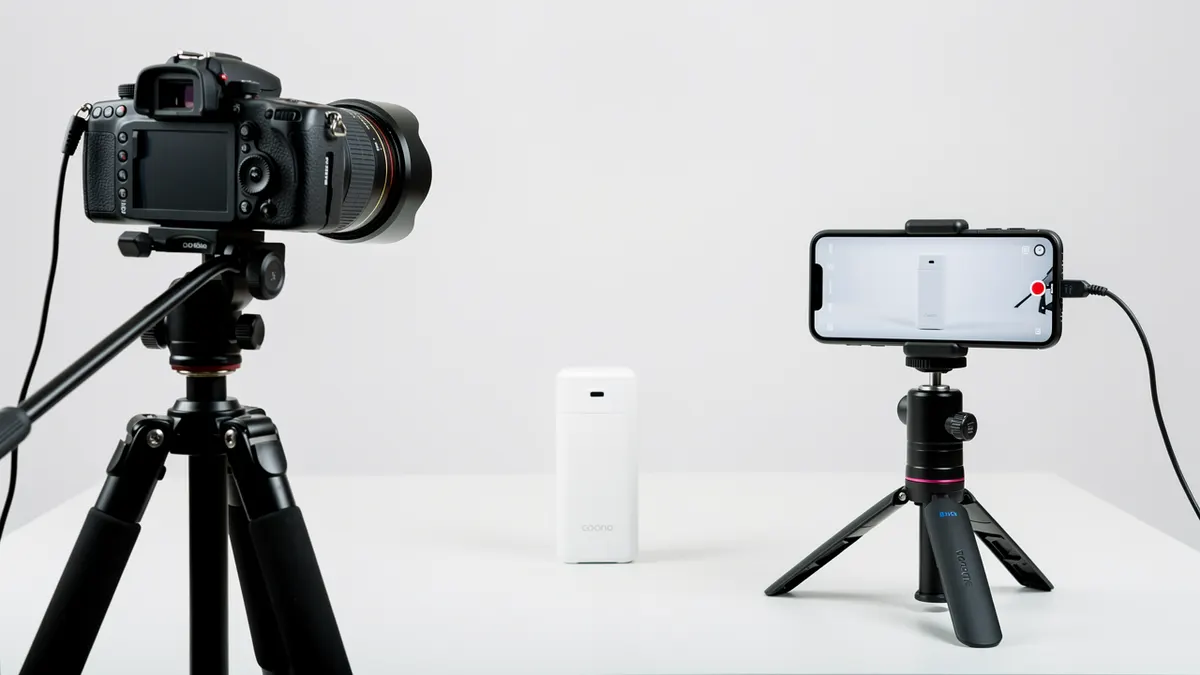
The same lighting setup gives both: film first, photograph afterwards, without moving anything.
What justifies video alone
A product that opens, unfolds, assembles or makes a sound: a photo can say nothing about it.
What to ask for so you do not pay twice
From the creator: the original file before compression, a version without burnt-in text, and both languages if your market calls for them.
That is what lets you reuse the same shoot on another platform, in another language and in another campaign, instead of buying the same video twice.