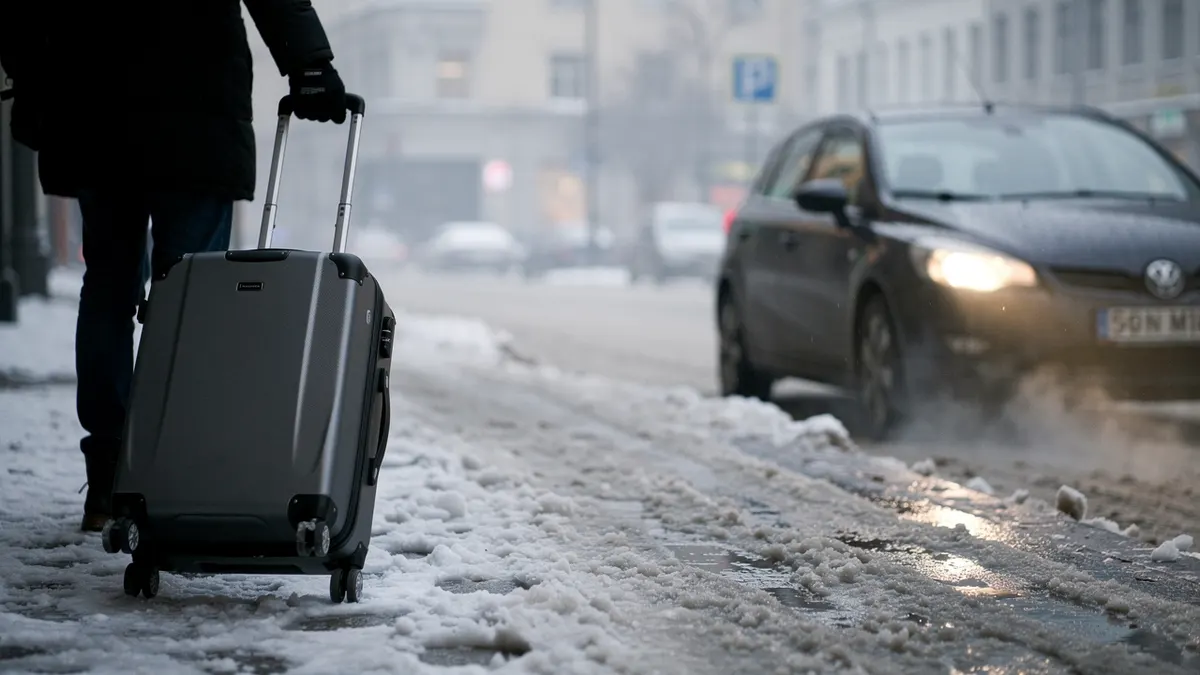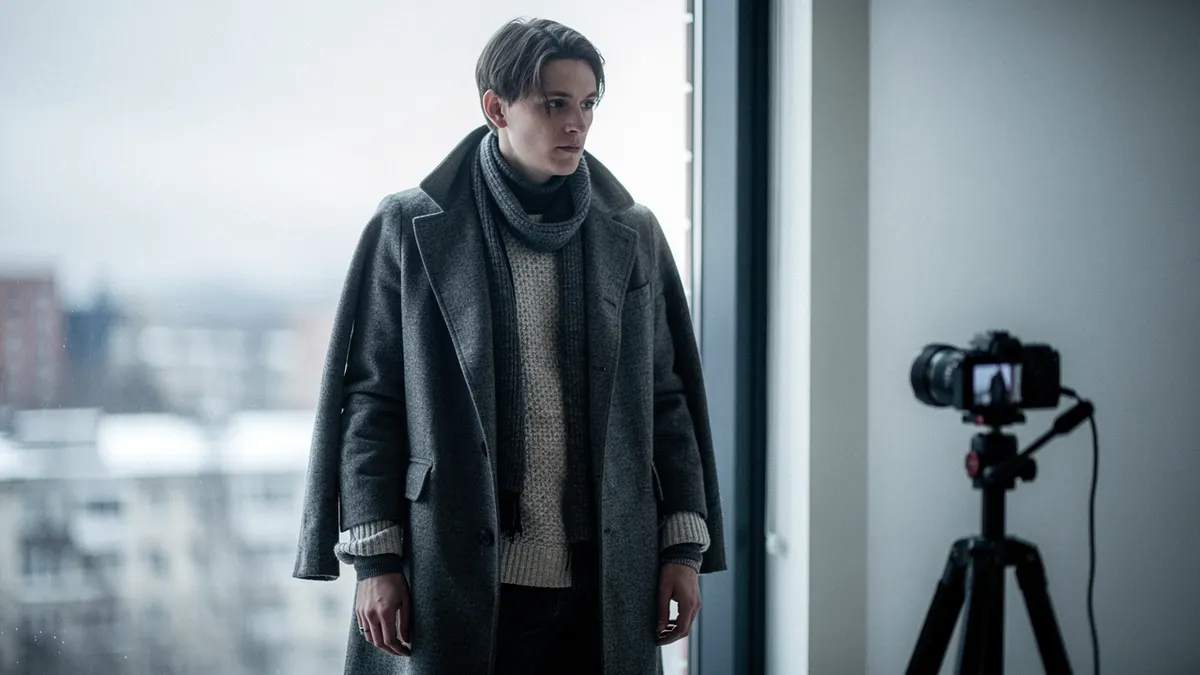
Four real seasons, sizing doubts that generate returns, and why the same garment calls for two very different videos.
Sizing is what generates returns
Five practices that lower the return rate.
The creator states their measurements and the size worn, out loud.
They say what is tight and what is loose, without softening it.
They show the garment in the positions that cause problems, including arms raised and seated.
They specify whether the cut matches local sizes or a foreign equivalence.
And they say what happens in the wash, information rarely given and often decisive.
Layering is the local vocabulary
Four consequences for the content.
A garment is judged in layers, never alone.
Thickness counts as much as cut: a jumper that will not go under a coat is an unusable jumper here.
Sleeves and collars are the critical points, because they accumulate.
And the total weight of the outfit becomes an argument, a subject almost nobody handles.
Two seasons in one shoot
Four reasons to shoot two versions in the same session.
The creators are available, the product is already there, and the setting is up.
A neutral version, with no dated element, can be re-published all year.
A seasonal version, with the layers and the outdoors, serves half the year.
And the marginal cost of the second version is almost nil.
One planning consequence: shoot the winter version in October and the light version in May, while the conditions really exist. Simulated snow is spotted immediately.
Show the garment in movement
Five shots that sell, in order.
Walking, which reveals the drape and the real length.
The act of sitting down, which shows the folds and the tension at the seams.
Putting it on and taking it off, which tells you how easy it is to use.
The garment worn on several body shapes, more convincing than ten descriptions.
And the indoor-outdoor transition, dealt with above.
The French version is not a translation
Four production rules.
The French version is shot, with somebody whose language it is.
The local clothing vocabulary differs, and an imported word is noticed immediately.
The advertising disclosures and compulsory information appear in the language of the version, and the rules applying in Quebec are checked with a lawyer.
And the two versions must be equivalent in content, not only in length.
What cannot be asserted
Four statements to set aside.
Any quantified thermal performance not appearing in supplied technical documentation.
Any unproven environmental claim, ground where the rules are strict.
Any promise of durability presented as guaranteed.
And any statement of origin or manufacture that would not be accurate for the product filmed.
What makes a fashion video useful to a brand
| Shot | What it settles | Where to shoot it |
|---|---|---|
| Walking | The drape and the movement | A clear corridor or pavement |
| The detail | The stitching, the fabric, the zip | Near a window |
| The full outfit | The overall style | A plain background |
What is planned before trying on
The order of the outfits, so you do not redo your hair three times. Grouping pieces from one range saves half the shooting time.
What is always said about size
The size worn and the matching measurements. It is the piece of information buyers reuse most and the one least often given.
What to measure
Four indicators, and one to ignore.
The return rate per item, the only figure judging a video's honesty.
The cost per usable video.
The lifespan of a creative before it wears out.
And the completion rate, which shows whether the demonstration is understood.
To ignore: the number of views, unrelated to the purchase decision in this category.
One last marker: in fashion here, the video that sells is not the one showing the finest garment, it is the one showing what it becomes at the end of an ordinary day, between two doors and two temperatures.