The deliverable is a file, so the client can be anywhere. What changes is not the way you film, it is everything around it.
Shipping the product is the real constraint
That is the slow part, and it has nothing to do with you.
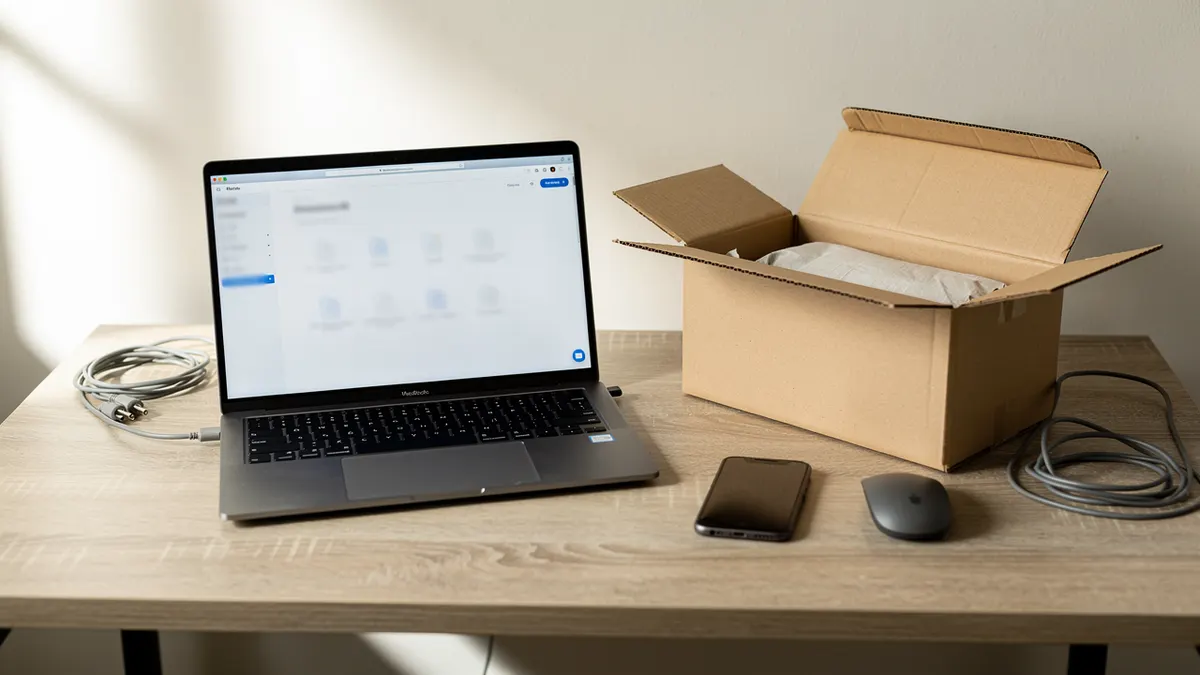
Between the order and the shoot there is a parcel, a carrier, sometimes an import formality, and an address. That delay often exceeds the production time itself.
Three habits reduce it. Ask for the real arrival date and not the dispatch date. Plan a fallback: an equivalent product bought locally, reimbursed by the brand. And group: if a client orders several videos, everything arrives in one shipment.
Finally, write in the quote that the delivery time starts on receipt of the product. Without that line, the carrier's delay becomes your delay.
What has to work instead
Four things, and none of them is creative.
A response time announced and kept, including just to say a message has been received.
A quote describing the deliverable precisely, because the client can see nothing beforehand.
A tidy delivery: clear folder, named files, one page saying what to use where.
And a correct invoice first time, because a rejected invoice takes three weeks to fix at a distance.
The time difference is an advantage
Provided you present it as one.
A large share of demand comes from a continent whose office hours largely overlap yours. You reply during their working day, which immediately sets you apart from suppliers on the other side of the world.
So write your availability hours in the client's time zone, not yours. It is a two-word line that reassures more than a paragraph.
And use the gap: a correction requested at the end of their day can be delivered before they wake up.
What replaces proximity
Three proofs, supplied without being asked.
A recent example shot with a comparable product, which beats any presentation.
A mid-point update, with an image or ten seconds of rushes. It costs two minutes and removes the worry of a client who can see nothing.
And a delivery before the promised date, at least the first time.
What replaces being there in person
| Need | The remote solution | What it requires |
|---|---|---|
| Seeing the product | A tracked postal shipment | Extra time in the schedule |
| Approving the frame | A photo of the set before shooting | Two minutes, not a meeting |
| Approving the edit | A viewing link with comments | Written feedback, not spoken |
What you fix to avoid pointless meetings
One written checkpoint per stage, a single discussion thread, and one document where the brief lives. The rest is handled in short messages.
What costs the most remotely
A product arriving damaged or late. Put the receiving date in the quote, and never announce a delivery before the parcel is in hand.
Keep a local base nonetheless
That is the advice rarely given, and it protects you.
Nearby clients pay faster, in your currency, with no transfer fees, and depend on no parcel. They fill the gaps between international jobs and they stabilise the cash.
They also serve as a testing ground: it is with them that you try a new format before offering it to a distant client.
The right balance is easy to state: foreign clients for the rate, local clients for the rhythm. Check that spread twice a year, and not at the moment an international client disappears without warning.
Sources
Checked on 4 September 2026. Thresholds and rates change: where this guide and the official source disagree, the official source is right.