Producing in two languages costs twice as much or almost nothing. The difference is not the budget: it is the moment the decision is taken.
Decision one: the same creator or two
Both options can be defended, and they do not produce the same result.
A single creator, if genuinely at ease in both languages, gives perfect visual consistency and minimal cost. Two creators give two genuinely natural versions, each addressed to its audience, and avoid the floating accent that bothers both camps.
The practical rule: if the video rests on speech, take two people. If it rests on the gesture, one is enough.
Decision two: adapt, do not translate
A faithful translation often produces a video that rings false.
References, units, expressions, humour and even sentence length do not transpose. So give the creator the points to make and the facts to respect, not a text to recite in another language.
Check the product vocabulary too: the word your team uses in one language is not always the one your customers use in the other.
Decision three: deliver without burned-in subtitles
That is the technical decision that saves the most.
Require a clean track, with no text engraved in the image, plus a separate subtitle file per language. You can then correct a mistake, change a hook, add a third language or adapt a format without ever touching the video.
A burned-in subtitle turns every correction into a new edit.
What has to go in the brief
Five lines, written before the shoot.
The two languages expected and who carries them. The facts identical in both versions. The elements that may change from one version to the other. The formats and tracks to deliver. And the file names, so nobody has to search.
Add one simple constraint: no version mixes the two languages in the same video.
What must never be dubbed
Speech to camera.
A dub is heard immediately, and it cancels the only advantage of the format: the impression that a real person is talking to somebody like them. Keep dubbing for voice-over on product shots, never for a speaking face.
Some obligations relating to the language of communication depend on the province and the type of message: they are checked before distribution.
How a two-language production is organised
| The stage | What it produces | What eats time |
|---|---|---|
| The source script | The approved message | Approval round trips |
| The adaptation | A text that sounds right | Word-for-word translation, to be redone |
| The shoot | Two complete takes | Switching language cold |
What distinguishes adaptation from translation
Rhythm. A literally translated sentence runs longer, lands off the shot and sounds foreign. Adaptation keeps the intent and changes the words to hold the duration.
What to plan so you do not shoot twice
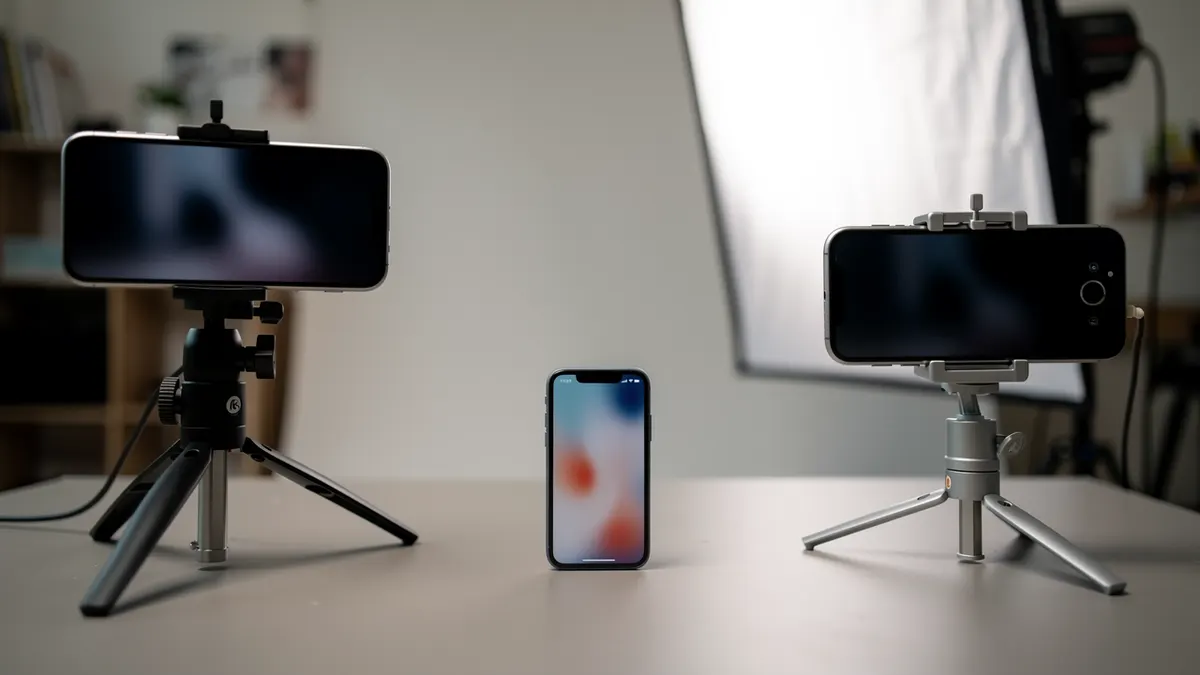
Both versions in the same session. The set, the light and the outfit are identical, which guarantees consistency and halves the time billed for a comparable result.
What it really saves
The travel, the setup, the preparation of the product, the lighting and the review, that is to say most of the cost of a shoot.
A second version decided in time costs the price of one extra take. The same version decided too late costs the price of a whole shoot, and arrives three weeks after the campaign it was meant to accompany.