Stock costs less per file and proves nothing. Here is where the line falls and how to know what a campaign needs.
What stock is really for
Four uses, all legitimate.
Cutaway shots: a road, a sky, a street, a hand pushing a door.
Settings impossible to shoot: a distant landscape, a season that is not the right one, an inaccessible place.
Abstract illustrations: time passing, a journey, an idea with no product.
And backgrounds for animated text, when no demonstration is needed.
One cost note: those four uses often represent half the images in a campaign, and there is no reason to shoot them.
The Canadian tell
That is the detail giving away a bought image on this market, and the audience spots it without thinking.
Four elements that do not lie.
The plug socket and the light switch, whose shape differs from one country to another.
Road signage, street signs and number plates.
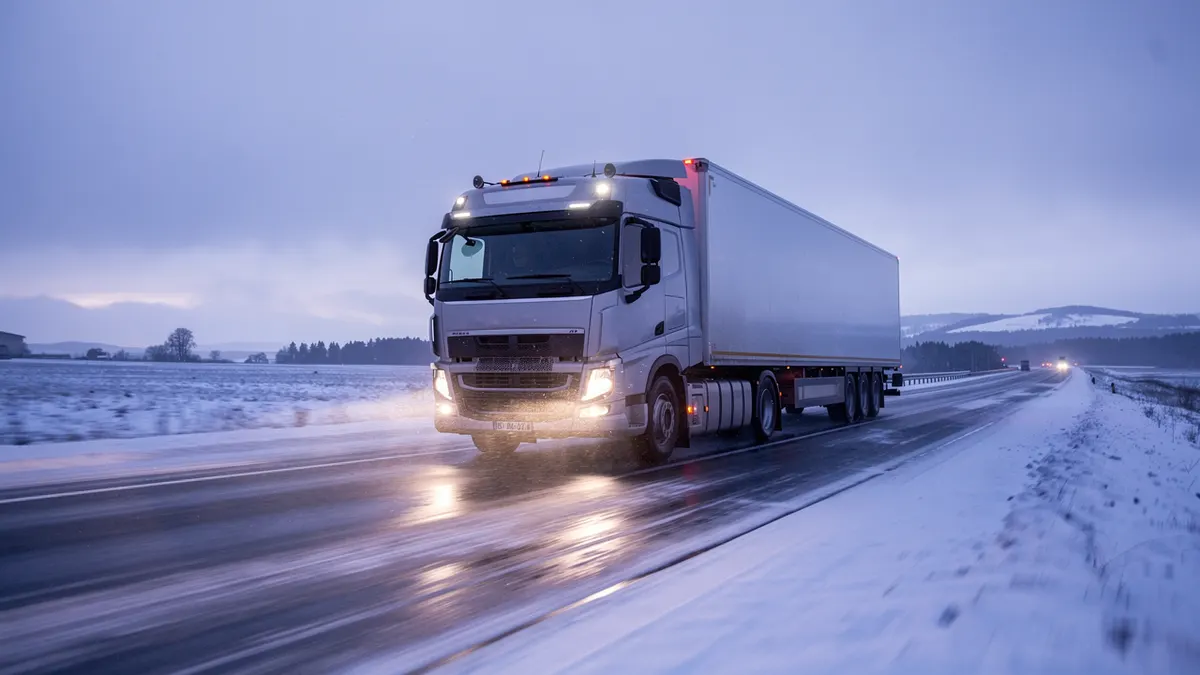
The snow, the real kind: its texture, the breath, the layered clothing, the absence of summer reflections.
And the visible bilingualism of a public space, absent from most stock libraries.
One direct consequence: a campaign claiming to speak about here with footage shot elsewhere loses its credibility on a detail nobody names but everybody sees.
The honest budget split
Three rules, easy to hold.
Proof gets filmed: demonstration, use, result, before and after, testimony.
Context gets bought: setting, transition, atmosphere, illustration.
And the face gets filmed too, as soon as it speaks about the product: a bought face cannot recommend what it has never used, and that goes beyond a question of style.
Two things to check before buying an image: what the licence actually allows, notably in paid advertising and over time, and the particular conditions applying when a person is recognisable in it. Both points are checked with a lawyer.
The test that decides in ten seconds
One question, asked in front of every shot in the edit.
Does this shot assert something somebody could dispute.
If yes, it has to be filmed with the product, in the stated conditions.
If no, it can come from stock, and the budget is better placed elsewhere.
A second test, useful for local campaigns: cut the sound and ask somebody from here whether the scene takes place here. If the answer hesitates, the image will not carry the message.
What each source really costs
| Item | Stock library | Commissioned video |
|---|---|---|
| Direct cost | A subscription or a purchase | A quote per video |
| Hidden cost | Time spent finding a shot that fits | The production lead time |
| Risk | Seeing it at a competitor's | None |
| Local fit | Rare | Immediate |
What a catalogue image can never replace
The product itself, the packaging, its size in the hand, and a person explaining why they chose it. No library holds those shots.
What combines intelligently
Mood shots come from the catalogue, product shots are filmed. Same format, same colour temperature, and the join does not show.
What it changes about the real cost
Three calculations, and the first is misleading.
The cost per file favours stock, by a wide margin.
The cost per campaign gets closer, because a filmed video serves several formats and several seasons.
And the cost per result often reverses the order: a real demonstration converts better, which lowers the amount spent per sale.
One decision method avoiding debates: list the campaign's claims before choosing the images. What remains after that sorting is exactly what has to be filmed, and everything else can be bought.
One last marker, specific to this market: for campaigns aimed at both language audiences, the shoot happens in each language with people from here, and commercial statements follow precise rules depending on the province, to be checked with a lawyer before publication.