It is a market where the buyer commits considerable sums on a technical decision, and where a poorly informed video is dismissed within ten seconds. It is also one of the best paid.
Why agriculture is a different client
Three differences, all structural.
The buyer is a professional who knows the job better than the brand. An approximate video does not seduce them, it makes them leave.
The decision is long and collective: it goes through the farmer, sometimes a son or daughter in the business, an agronomist, a dealer, a lender.
And the content serves sales as much as support: some of the most watched videos explain settings, maintenance and troubleshooting.
The calendar rules
That is the constraint agencies understand worst.
The content must exist before the decision window, which itself precedes the field season. Publishing during peaks of work means talking to people who are watching nothing.
Two practical consequences. Shoot out of season whatever can be, including technical explanations. And keep field rushes from the previous year, properly dated, to feed the period when nobody can film.
The formats that work
Five, and they do not replace each other.
The machine at work
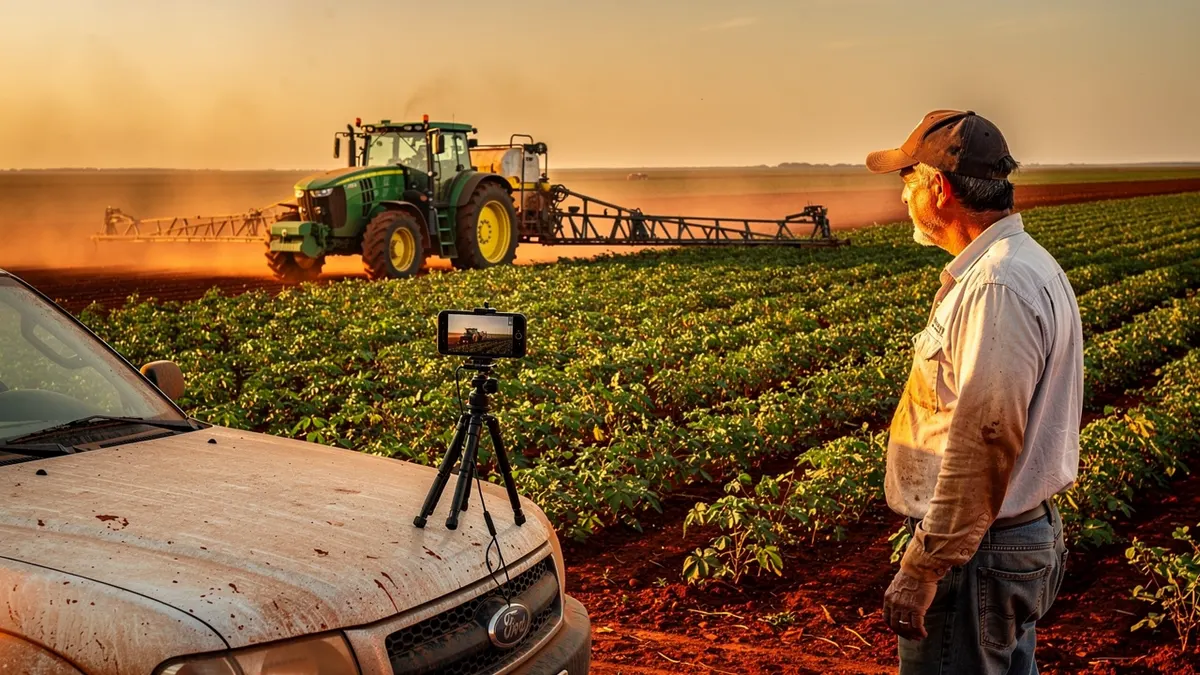
Filmed in real conditions, with the mud, the dust, the noise. A clean shot on dry ground says nothing to somebody working difficult terrain.
The result comparison
Two plots, two settings, two dates. It must state the conditions, otherwise it proves nothing.
The short technical explanation
One precise operation, filmed in a single take, with hands in shot. It is the format most shared between farmers.
The farmer's routine
Getting up, the round, the day's decisions. It establishes the credibility that makes the other formats audible.
After-sales
How a part is obtained, in how long, who comes out. In this sector that is a major selling point, and almost nobody films it.
The claims to handle with care
That is the part binding the brand and the person speaking.
Claims about yield, efficacy, compatibility, safety and the environment are regulated, and certain product categories follow specific registration and labelling rules.
A filmed demonstration must also show protective equipment and compliant use: an application shown without protection, or outside the intended conditions, can make the video unusable.
These rules depend on the product and the region, and are checked with the competent authorities and a lawyer before publication, never after.
What is filmed on a farm
| Subject | What it proves | Constraint |
|---|---|---|
| The field | The scale and the season | One window a year only |
| The technical gesture | The know-how | Safety around machinery |
| The processing | The full chain | Hygiene and required clothing |
What is agreed with the producer
The hour of real work, access to the areas, the equipment required and the consent of those filmed. A shoot fits around the work, never the reverse.
What is verified before claiming anything
A certification, an origin, a production method or a nutritional claim. Each is proven by a document, to be confirmed with the producer and a lawyer.
Practical notes for the brand
Four points that change the quality of the material.
Choose the person for their farm, not for their audience.
Pay for the shooting day, not for the video: on a farm, a shot depends on the weather and the work under way.
Plan for two people on screen: the one who decides and the one who uses, who do not have the same questions.
And keep the rushes sorted by crop, by region and by season. They will serve again for three years.