A high-value purchase paid in instalments and kept for ten years. The video sells durability and service, not features.
Durability is the argument, not the features
That is the reversal specific to this market.
An appliance is kept for a long time, often well beyond its warranty, and the question is not what more it does, it is how long it will last and what happens when it breaks down.
Four proofs worth more than a list of programmes.
The appliance after two years of real use, with its marks.
The account of somebody who had a breakdown, on what happened next.
The availability of spare parts, and their price.
And the existence of a reachable technical service, with an observed response time.
Instalments come at the start
That is the local point deciding when the purchase happens.
A large share of these purchases is settled in several payments, and the decision often depends on the terms offered rather than on the displayed price.
Two rules for the video. The creator may say where the information sits on the page and recall that paying in instalments is not a discount. They quote no rate, no number of instalments, no bank promotion: those elements change often and their mention follows precise rules, to be checked with a lawyer before publication.
A third rule, more useful than people think: mention this point early in the video, not at the end. It is the first question, and it does not wait.
Size and installation
Four pieces of information to give on screen, in the first two sequences.
The dimensions of the appliance, and those of the box, which are not the same.
The clearance space needed around it, often forgotten.
The type of connection required, showing the socket and the hose.
And the weight, with the number of people needed to move it.
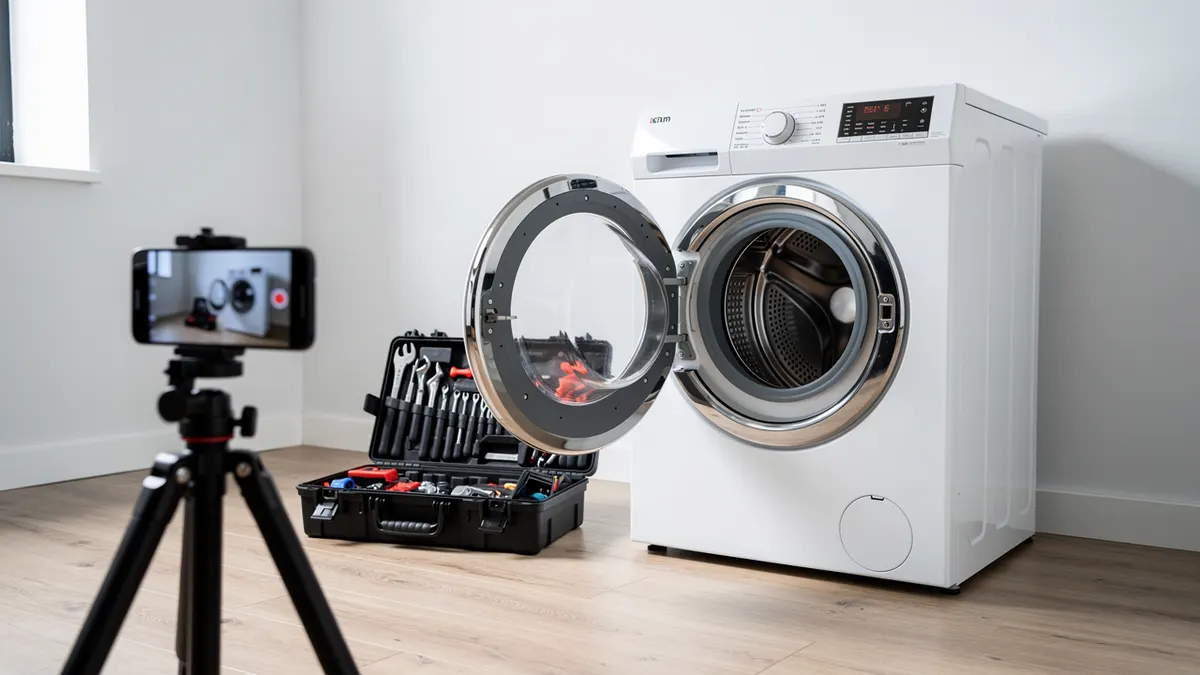
One shot worth a sale: the appliance door fully open in a narrow kitchen, to show what passage is left.
What is said and not said
Three families of claims to handle with care.
Energy and water consumption: it comes from the official label, word for word, never from an estimate.
The warranty: its duration, its scope and its exclusions are quoted from the manufacturer's document.
And comparisons: no named comparison with another brand without a documented measurement and prior approval.
Those three points are checked with a lawyer before the shoot, and the display of prices and promotions follows its own rules, to be checked with the competent authorities.
What the buyer wants to see before ordering
| Doubt | The shot that answers it | Length |
|---|---|---|
| The size in the kitchen | The appliance in place, next to the worktop | 6 s |
| The noise | A take with no music, at real level | 8 s |
| The upkeep | Dismantling and cleaning | 15 s |
What is filmed over time
The same appliance after a month of use. Marks, seals and worn controls say more than any unboxing shot.
What is not claimed without a document
A consumption figure, a noise level, a capacity or a programme duration. Those numbers come from the technical sheet, to be confirmed with the manufacturer.
When it sells
Three moments concentrate the year.
Moving house and the back-to-school months, when a home is equipped all at once.
The promotional periods, when the decision is taken within a few days.
And the breakdown, which is the most frequent and least anticipated trigger: nobody plans to buy a washing machine, it is bought because the old one stopped.
One distribution consequence: content in this category must exist permanently, not only during campaigns. A video answering the question of dimensions or installation works all year, because it is found on the day somebody needs it.
One last format, profitable and rare: the video shot on delivery day, with the unboxing, the technician's installation and the first start-up. It answers in one go what the product page never covers.