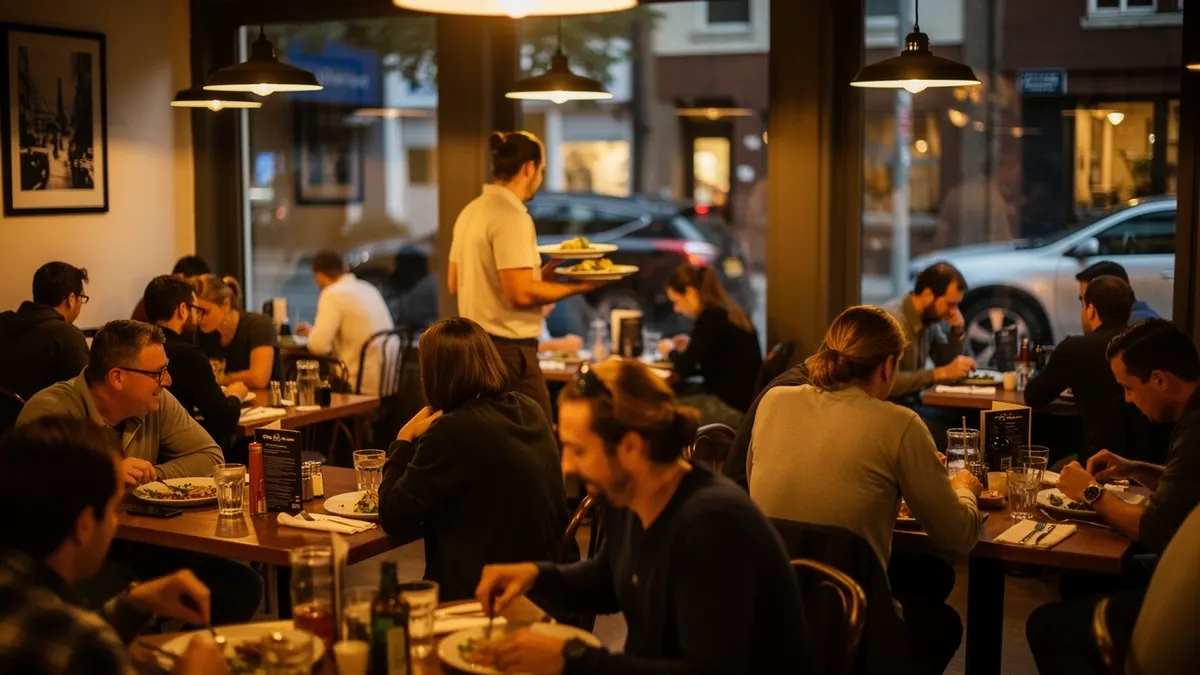
Advertising limits, a crowded shelf and a buyer deciding through the story. Here is what a creator can and cannot show.
The limits of what can be shown
This category is regulated, and the applicable rules are checked with a lawyer before every shoot.
Four principles come up everywhere, whatever the local detail.
No association with driving, work, sport or any activity requiring alertness.
No minor and no setting evoking childhood, even in the background.
No promise of effect: social success, achievement, seduction, performance, calm.
And no encouragement of quantity: the pace, the repetition and the volume shown count as much as the words.
One practical consequence for casting: the person speaking has to be visibly an adult, and has to remain so in the edit, including in the cutaways.
Tell the story, not the score
Three reasons to prefer the story to the evaluation.
Numbered scores and tasting vocabulary exclude most buyers, who do not know the codes.
The story, by contrast, sticks: who produces, where, since when, and what makes this wine different from its neighbour on the shelf.
And the story withstands the regulatory constraint, because it bears on origin and work, not on the effect of the product.
Three concrete elements make a good story: the person producing and their first name, the precise place with its altitude or its region, and the gesture setting the house apart. Those three fit in thirty seconds.
Field content is the most profitable
Four subjects, all shootable without showing consumption.
The harvest: the pace, the hands, the crates, the real tiredness.
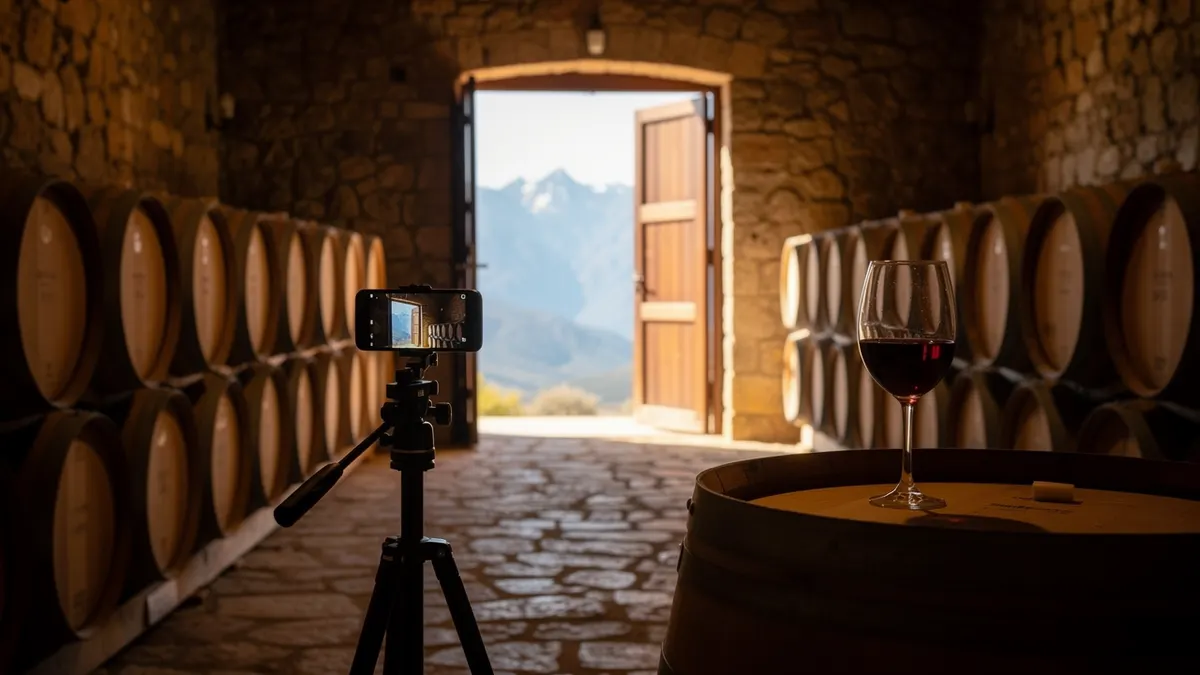
The cellar: the barrels, the temperature, the silence, time passing.
The labelling and dispatch workshop: that is the shot nobody films, and it reassures about seriousness.
And the vineyard work out of season: pruning, frost, rain. That content is produced in January as in August.
One economic note: those videos serve three times, on the product listing, on social media and as an argument for distributors. The same shoot feeds all three uses.
Wine tourism is a second business
That is often the most profitable part of the content, and it is far less constrained.
Three formats that work.
The journey: how you get there, how long it takes, what you see on the road.
The visit: what is included, how long it lasts, what has to be booked, what you take away.
And the off-season: winter light, lower prices, no crowds.
One useful clarification: as soon as a visit includes a tasting, the same advertising rules return, and the tasting part is handled with the same caution as the rest.
What the rules frame strictly
| Element | What is possible | What is not |
|---|---|---|
| The product | The bottle, the label, the origin | A festive drinking scene |
| The message | Objective elements about the product | A link to success or seduction |
| The audience | An adult public, targeting verified | Any unfiltered audience |
What must appear on every post
The advertising disclosure and the health warning required by the regulation, readable without pausing, to be confirmed with a lawyer.
What is refused even if the brand insists
A filmed tasting, a benefit claim, a prize draw open to everyone, and any release without an age filter on the platform.
Export changes the language and the frame
Three adaptations needed if the videos serve outside the country.
The language: a subtitled version rarely suffices for a distributor, who needs a voice in the language of the target market.
The disclosures: every market has its own labelling and warning obligations, and they are checked market by market with a lawyer.
And the frame: a bottle filmed with a local price or promotion becomes unusable elsewhere.
One arrangement avoiding waste: shoot the story and the fieldwork with no on-screen text, then add the disclosures per market at the edit. A single shooting session then feeds several countries, which is exactly what a house beginning to export is looking for.