Nobody decides to buy a car by watching a video. But plenty of people decide not to travel to a dealership because of a question left unanswered.
What the buyer checks before coming
Five points, and none of them is aesthetic.
The boot with real things in it: a pushchair, two suitcases, the shopping, not an empty set-up. The stated volume means nothing until you have seen what fits.
The back seat with somebody sitting in front, at their real height. That is the only way to judge legroom.
Real fuel consumption on a specific, named journey, with the starting point, the arrival and the figure shown at the end.
The interior without a filter, in daylight: the plastics, the joins, the wear on the seats of a model that has actually been driven.
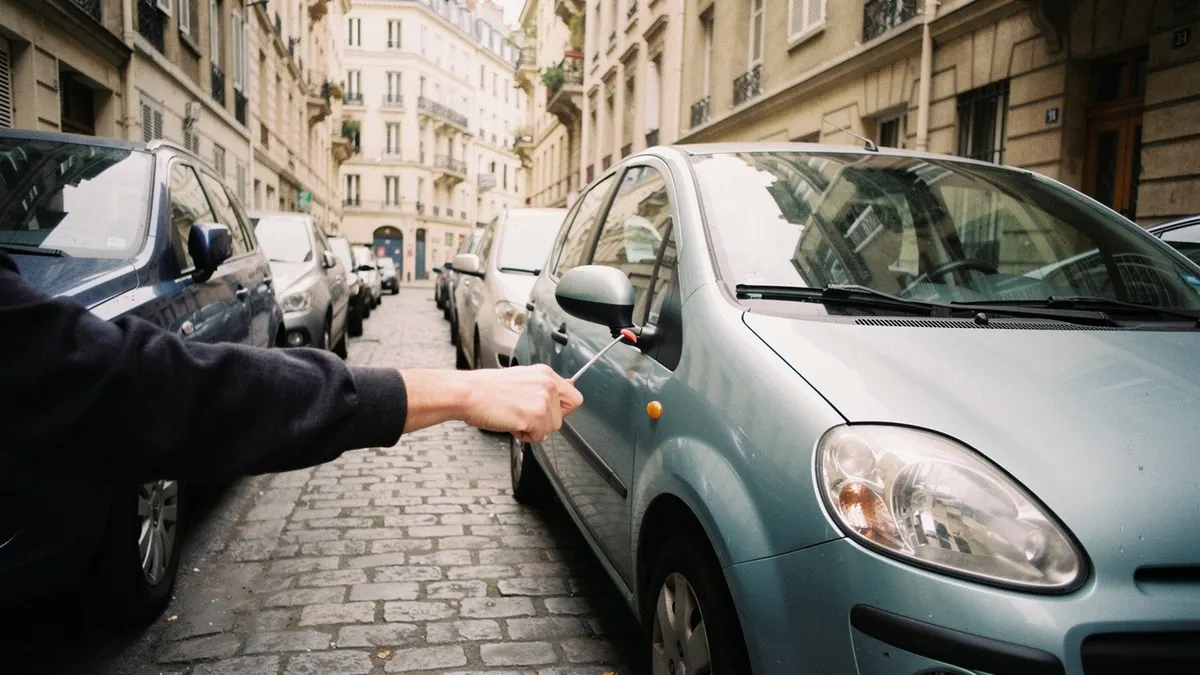
And parking, described above.
Which creators to hire
People who drive, not people who pose.
Credibility comes from the action: the way of parking, adjusting the seat, plugging in the phone, loading the boot. A creator who has never driven the model is spotted within ten seconds.
Check three things: have they ever criticised a vehicle, do they film whole journeys, do they show ordinary cars and not only exceptional models.
What may not be said and may not be filmed
This part is settled before the shoot.
Statements about consumption, emissions, driver assistance, safety, warranties, prices and financing are regulated and depend on the model and the market. The usable wording comes from the brand's approved documentation, word for word.
Those points are checked with the competent authority and with a lawyer before the shoot. A creator never presents driver assistance as delegation, films no dangerous manoeuvre, and shows no number plate and no document.
On the road, nothing is filmed while driving: camera fixed, hands on the wheel, or a passenger filming.
The format that fills the dealership
The tour of a used vehicle, not the presentation of the new one.
It is the most watched and least produced format: a model that is three years old with fifty thousand kilometres, filmed without indulgence, with what has aged and what has held. It reassures about the brand far better than a launch video.
Add the filmed workshop appointment, the test drive in real rush-hour conditions, and the trade-in explained step by step.
What may be filmed with a vehicle
Six rules that apply beforehand.
No driving that breaks traffic rules.
No stopping where it is forbidden.
No stranger's number plate in frame.
No fuel consumption claim without evidence.
No scene that invites risky behaviour.
And no shot showing another brand.
What is filmed on a vehicle
| Shot | What it proves | Constraint |
|---|---|---|
| The exterior in motion | The lines and the stability | Two people, safety first |
| The cabin at a standstill | Materials and space | Difficult light |
| The loaded boot | The real volume | A reference object |
What is prepared before filming
A clean vehicle, a masked plate, a private or authorised location, and a driver who is not the person filming. No shot justifies taking a risk.
What is never claimed without a document
A consumption figure, a range, a power output, an emission value or a delivery time. Those come from the official specification, to be confirmed with the manufacturer.
The Spanish calendar
It concentrates decisions into three moments.
The start of the year, with vehicle changes; before summer, when long journeys are being planned; and the September return. In between, demand is for servicing, tyres and accessories.
So shoot the summer journey sequences in summer, a year ahead: they serve at the moment when everybody is looking for them and nobody has any.
Sources
- Agencia Tributaria, Spanish tax authority
- Spanish Social Security, self-employed registration (RETA)
Checked on 4 September 2026. Thresholds and rates change: where this guide and the official source disagree, the official source is right.