This format arrived later here than elsewhere, which makes it still cheap to occupy. But it is not prepared at all like an advertising video.
What changes compared with an advert
Three differences, and they add up.
The hook lasts two seconds, not three: people arrive midway and leave just as fast. The offer has to be live at the moment you speak, otherwise the promise falls flat. And the price is stated, which is the exception in this trade.
That last difference has a practical consequence: social commerce content is not reusable, since it is dated by its offer. So plan, within the same shoot, a version with no price or promotion, which will serve all year.
The formats that work
Three, and they need little in the way of means.
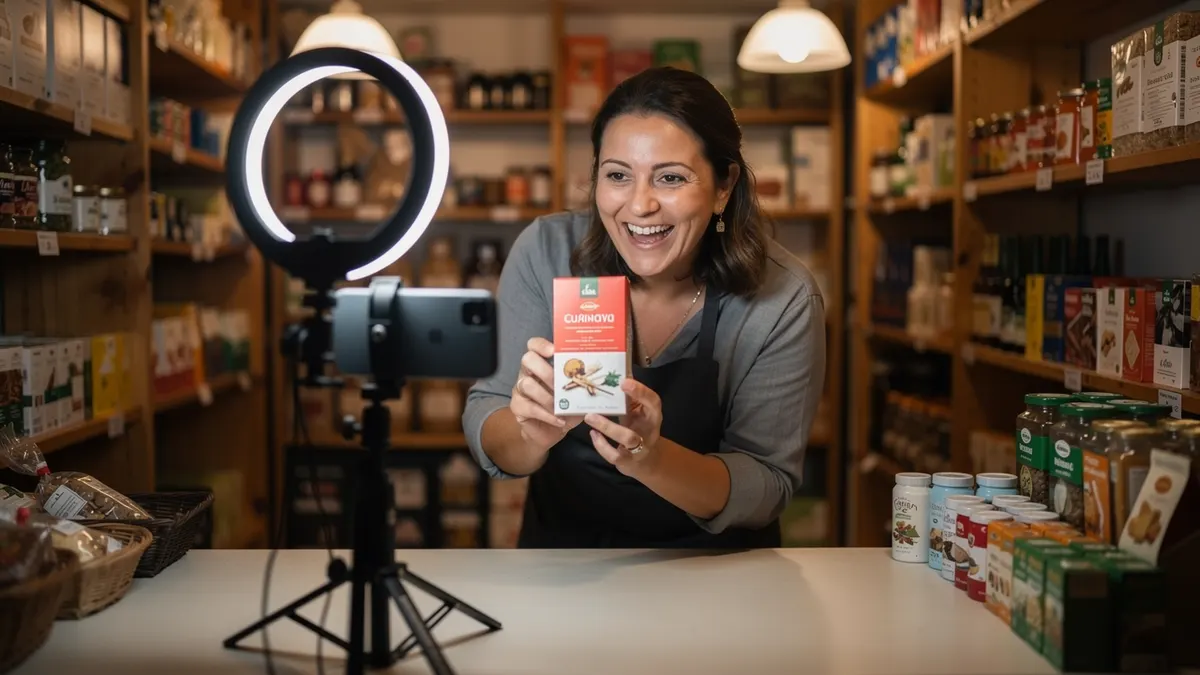
The repeated demonstration: the same action shown every ten minutes, because the audience renews itself continuously. The comparison of two similar references, which answers the most frequent question. And the live answer to an objection raised in the comments, which is the most convincing moment of the format.
What to prepare in Spain
Two points specific to this market.
The timing: connection habits shift towards the evening, later than in other countries, and a live session scheduled too early speaks to an absent audience. Test two slots before fixing the rhythm.
The tone: commercial insistence is punished faster than elsewhere. Somebody who explains, hesitates and acknowledges a limitation holds the audience better than somebody selling without pause.
Rights, again
They are more complex than in ordinary video, and nobody writes them down.
A live session produces a recording, extracts, stills, and sometimes sequences reused in advertising. Agree in advance what may be kept, cut, rerun, for how long and on which channels.
Add what becomes of the full recording, a question nobody asks and which comes back six months later.
What has to be disclosed
The commercial nature of the operation.
The transparency obligations, their form and the moment they must appear depend on the channel and the agreement. They are checked before going live, with a lawyer in case of doubt, and they also concern the extracts rerun afterwards.
Statements about stock, timescales and prices are binding too: say live only what logistics can hold.
How to start without spending too much
One hour, one product, two people.
A creator in front of the camera, somebody from the team on the comments, one product with three variants, and the answer sheet. In one session you will know whether your category suits the format, and you will already have the twenty questions that will feed all your content to come.
How to tell a video is selling
Six signs in the numbers.
A high share stays past the first three seconds.
Clicks rise without views rising.
Questions in the comments get more specific.
Returns go down.
Support receives fewer standard questions.
And the same version still runs weeks later.
What social commerce expects from a video
| The stage | What the video must do | Its length |
|---|---|---|
| Stopping the scroll | Show the product immediately | 2 seconds |
| Understanding | Say what it is for | 10 seconds |
| The decision | Remove the last doubt | 10 seconds |
What separates a selling video from a brand video
The objective. A brand video seeks to be remembered, a selling video seeks to be followed by a click, and that difference changes the hook, the pace and the ending, not just the edit.
What to prepare for selling live
Three fallback shots and a written script. A live broadcast that hesitates loses its audience in a minute, whereas a prepared sequence holds an hour without sounding recited.
What remains after the live session
Not the day's sales, the list of questions.
They give you the subjects of your next videos, the objections to address on your product pages and the answers to write into your support material. It is the most profitable part of the format, and it costs nothing extra.