Dealerships, parts and accessories: this is a category where the showroom photograph never shows what the buyer really wants to check.
Financing is the real objection
That is what blocks the decision, well before the model or the colour.
The buyer is not only asking how much the car costs: they are asking what they will pay each month, for how long, with what deposit, and what happens if they miss a payment.
The videos that help are therefore explanatory: how a monthly payment is made up, what the term changes, what the compulsory insurance covers, which documents to prepare.
Two precautions. Never quote a rate or a condition from memory: those values change, and a video burning them in becomes false. And leave the figures in the description, which is correctable, rather than in the image. The mentions applicable to financing offers follow precise rules and are checked with a lawyer before publication.
The state of the roads is part of the argument
That is the local particularity, and it decides several product categories.
Suspension, tyres, shock absorbers, protections, spare wheels, storage accessories: everything is judged on real roads, not on a smooth avenue.
So film the conditions the buyer knows: the unpaved street, the puddle, the city climb, the traffic jam, the angled parking between two vans.
Show used cars honestly
That is the segment that sells most and is most distrustful.
Three shots change everything: the odometer filmed with no cut, the underside of the vehicle, and the service history shown page by page.
Add what is wrong: a scratched bumper, a worn seat, a tyre to replace. A flaw shown is better than a flaw discovered, and it is what brings the person to the appointment.
Two precautions: never show a number plate or a personal document, and check the compulsory mentions applicable to used vehicle sales before publication.
Parts and accessories make the volume
That is the part dealerships neglect and that sells most online.
Covers, mats, roof racks, films, lighting, safety devices, routine maintenance: products bought in a few minutes, on the strength of a video.
Three formats work: the complete fitting in real time, compatibility with a specific model said out loud, and the test after three months of use.
What is filmed on a vehicle
| Shot | What it proves | Constraint |
|---|---|---|
| The exterior in motion | The lines and the stability | Two people, safety first |
| The cabin at a standstill | Materials and space | Difficult light |
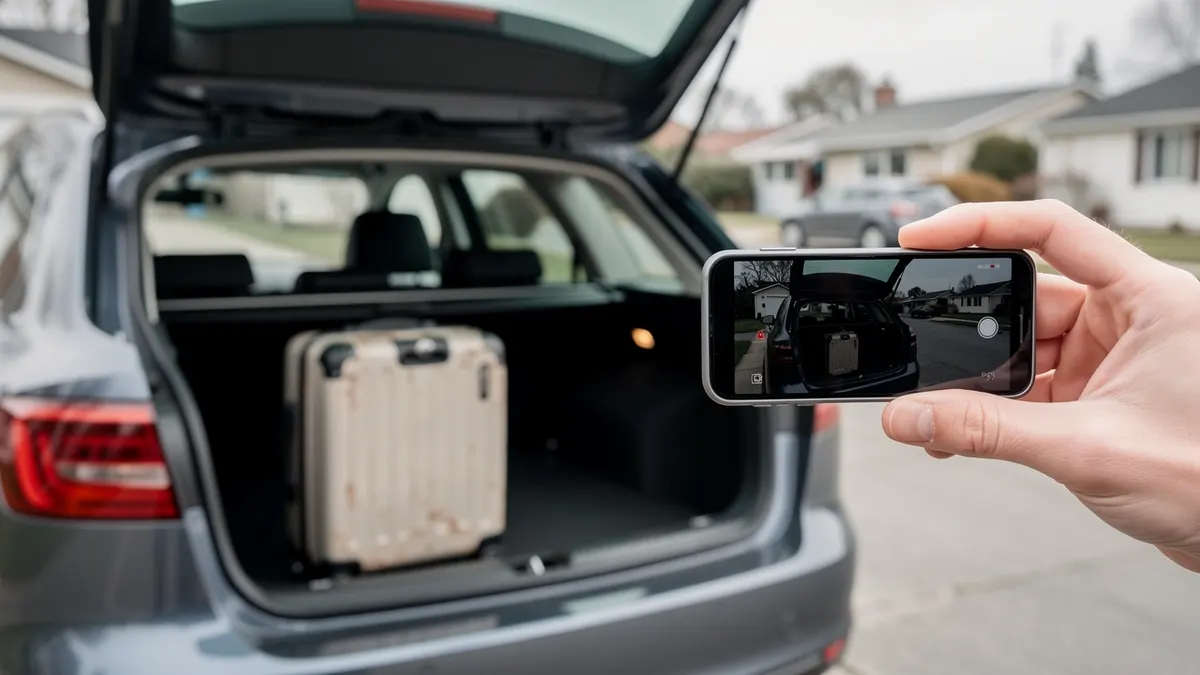
| The loaded boot | The real volume | A reference object |
What is prepared before filming
A clean vehicle, a masked plate, a private or authorised location, and a driver who is not the person filming. No shot justifies taking a risk.
What is never claimed without a document
A consumption figure, a range, a power output or a delivery time. Those numbers come from the official specification, to be confirmed with the manufacturer.
The creator to choose
Two criteria, and audience is not one of them.
Somebody who actually drives the type of vehicle concerned, in the target city, with the same parking and journey constraints.
And somebody able to film alone while driving safely: fixed camera, no handling while moving, and a passenger when the sequence requires it.
Add a non-negotiable rule: no video must show a dangerous practice or one that breaks the highway code, including for a three-second shot. One such image is enough to have a campaign pulled, and it binds the brand as much as the person at the wheel.