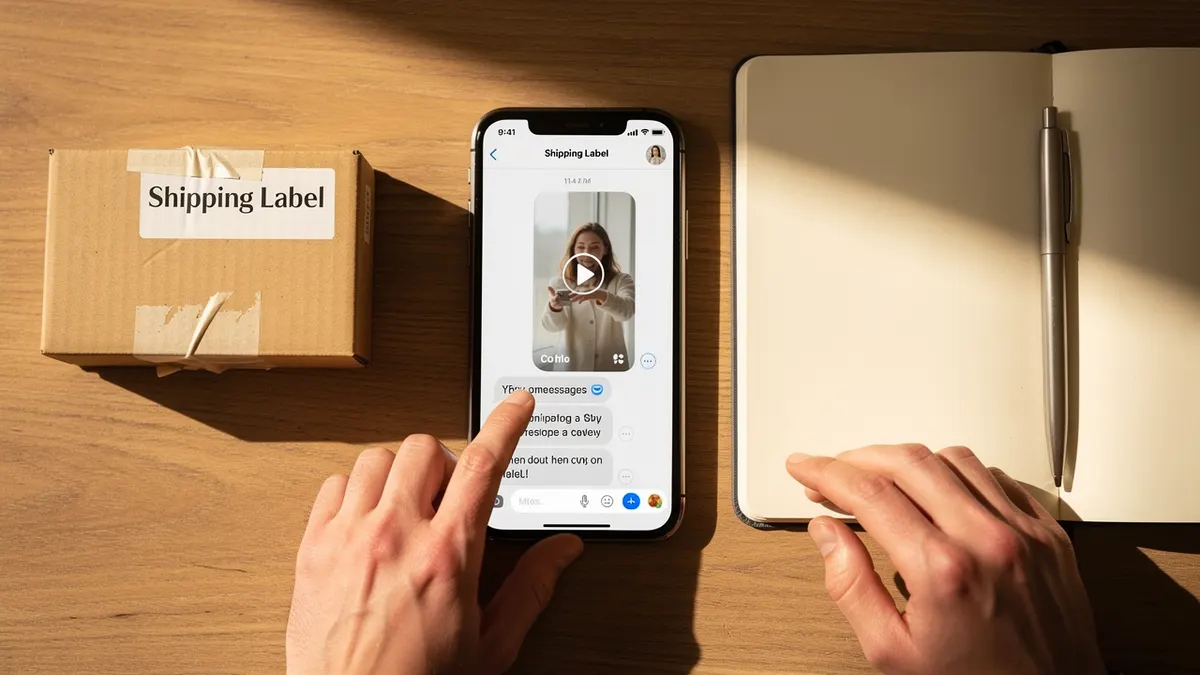
In this category, some purchases are made without a safety net. The item is not always sold locally: it arrives ordered from abroad, or in the suitcase of a relative back from a trip.
That changes everything, because there is no returning it. A product that does not suit stays in a cupboard, and the parent who paid the shipping remembers it for a long time.
The video must answer before the purchase, not after
Every question usually settled by a return has to be handled on screen: the real size, what it compares to, compatibility with what the family already has.
Film the object beside a reference everyone knows, measure on screen, show it on a child of the stated age and say that age.
Show also what does not work: from when it is too small, what does not fit, what has to be bought as well. A video that states a limit is infinitely more useful than one that states none, and it prevents the regretted purchase.
What the climate imposes
Heat and humidity decide the textile. A material that suits a temperate climate is too warm here, and a parent knows it immediately by looking.
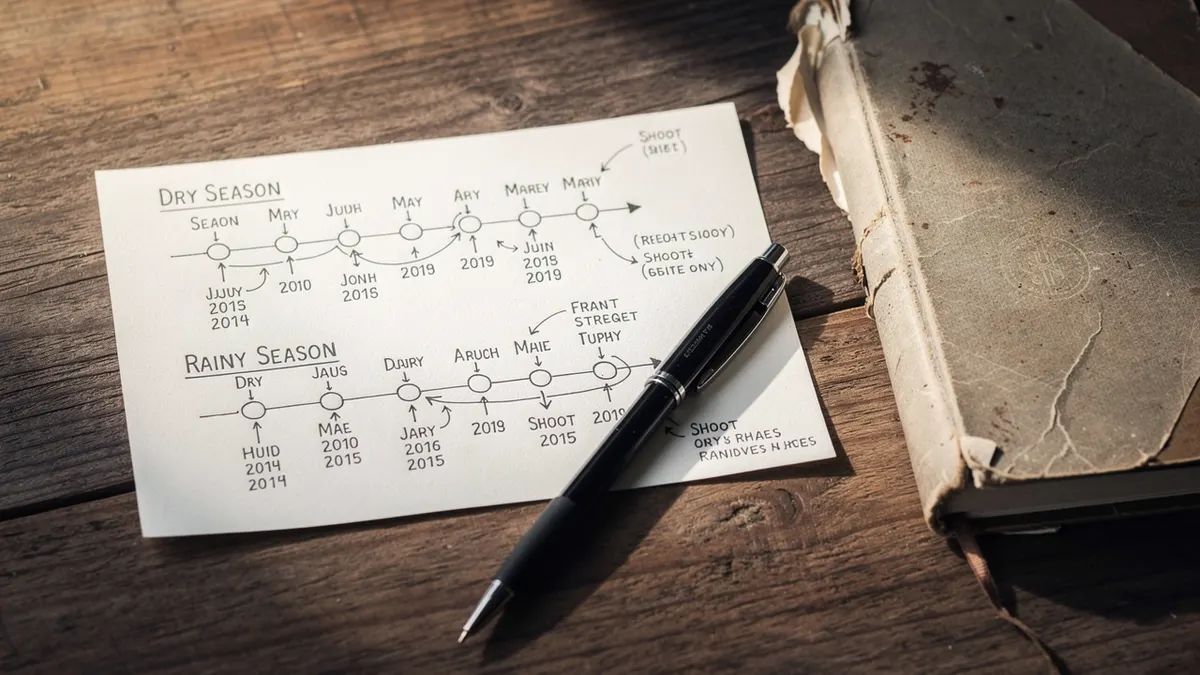
Drying is a criterion, not a detail. During the rainy season, an item that takes two days to dry is an item that goes unused. Film the washing and the real drying time, in the shade, not in the sun.
Sun and mosquitoes also shape use: what covers, what lets air through, what slips over a pushchair. These are the questions imported videos never ask.
What is not promised
No video should announce an effect on the child's health, sleep or development, nor present a protection as a guarantee. That ground is regulated, and the competent authority remains the reference for what may be claimed.
And nothing should show a non-compliant use: an approximate fitting, a loose strap, an added accessory. A video is an instruction for those watching, and that is the most serious risk in this category.
Who to film
Parents in the relevant period, with their real belongings, not a prepared set. The ordinary home is an asset here: it is the customer's.
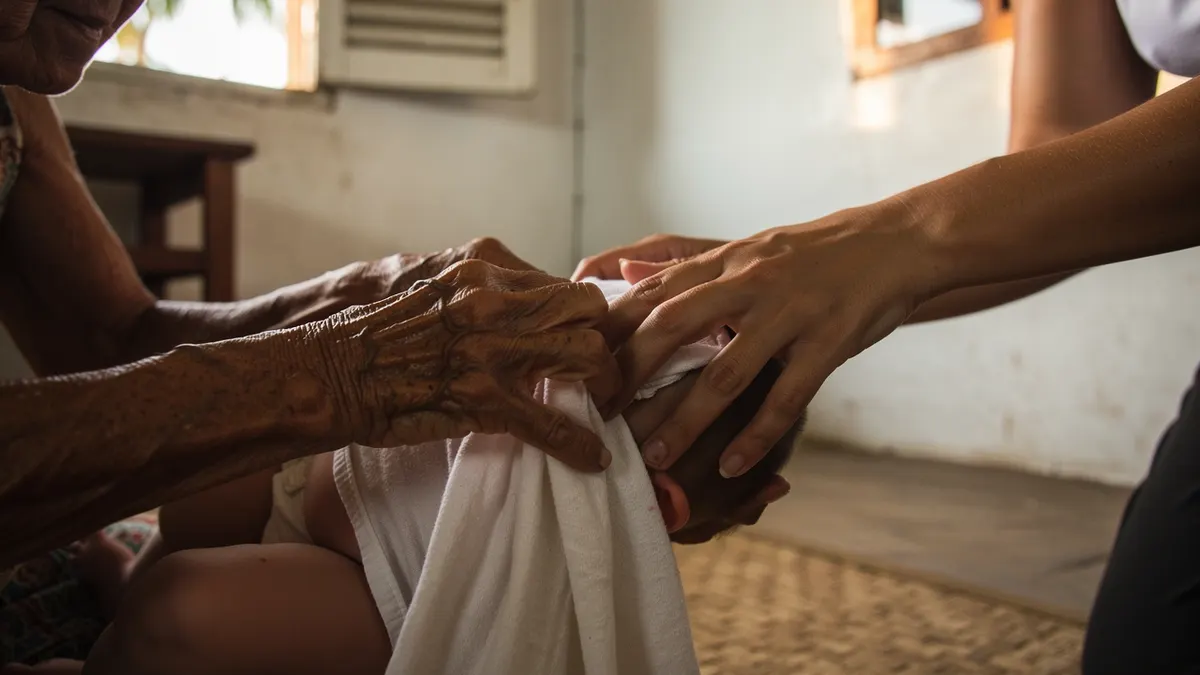
The grandparent, the aunt, the neighbour who minds the child. In many families they use the object half the time, and nobody ever films them.
And if the item was brought from abroad, say so. That is useful information for someone hesitating to do the same.
What gets filmed outdoors
A good part of life happens outside or between inside and outside. The pushchair on an uneven pavement, the carrier during a downpour, the seat in a car parked in the sun.
Those shots are hard to get right, because of the harsh light and the noise, but they are the ones that prove something. Shoot early in the morning or late in the afternoon, and listen on headphones before the take.
What is never shown with baby products
Six images that sink a delivery.
A child alone on a raised surface.
A harness fastened the wrong way.
A toy that does not match the stated age.
A sleep scene that contradicts the guidance.
A face without the parents' consent.
And any claim about health or development.
What parents check before buying
| Question | The shot that answers | Length |
|---|---|---|
| Can it be used one-handed? | Opening it with a child in the other arm | 8 s |
| Can it be washed completely? | The cover taken off then put back | 15 s |
| Is it bulky? | The item folded, set beside a door | 6 s |
What is filmed without a child
Assembly, folding, washing, storing and reading the instructions.
What requires written consent
Any appearance of a child, even partial, and any identifiable parent's voice.
The calendar
The search begins during pregnancy and well before the object arrives, especially when shipping time has to be counted.
So publish informative content far ahead, and keep usage content for the season in which it can be verified: the rain for what must dry, the heat for what must breathe.