Dry season, green season and the commercial peaks, and when to order the creatives to have them in time.
The two seasons
Two periods, with opposite content needs.
Dry season
That is the season of travel, outdoor activities and visitors.
Four categories concentrate demand: what protects from the sun, what accompanies a journey, what is consumed outdoors, and what equips an open house.
One production constraint: the light is harsh between ten in the morning and three in the afternoon. The best windows are the first hour after sunrise and the last before sunset.
Green season
That is the season of interiors, maintenance and preparation.
Four categories take over: what dries, what protects from damp, what is done at home, and what gets repaired before the next season.
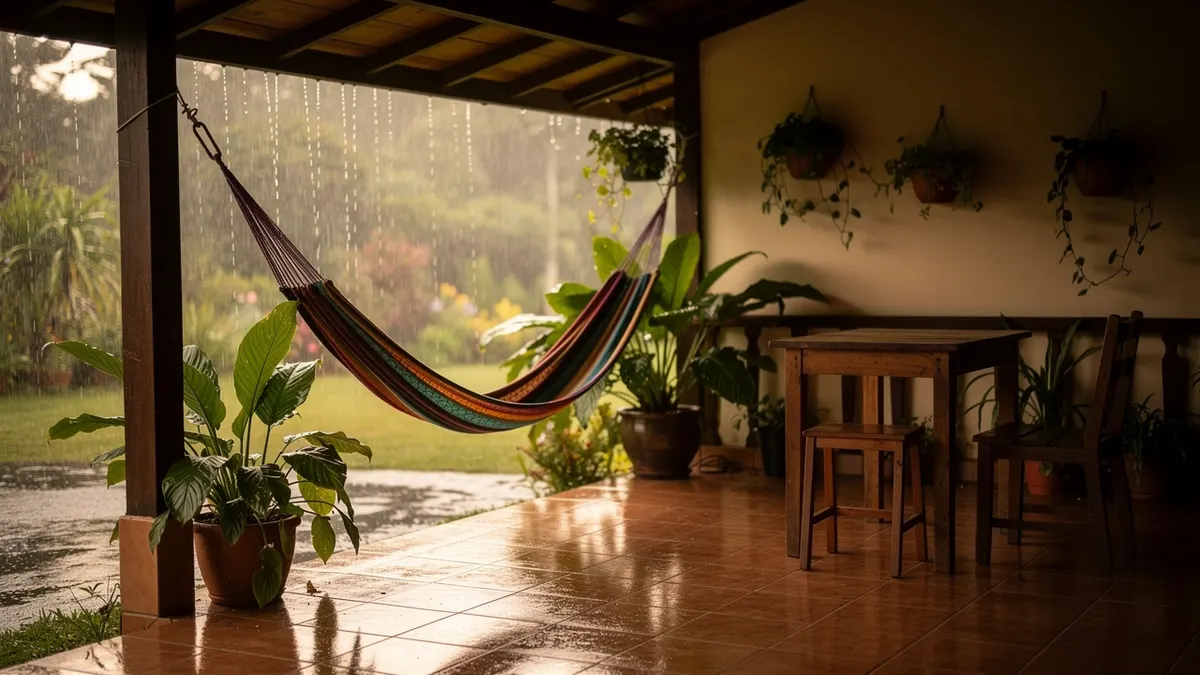
One production constraint, and an advantage: the showers are regular and often predictable within the day, which allows an outdoor shoot in the morning and an indoor shoot in the afternoon.
The six-week rule
That is the gap between the order and the distribution, and it does not compress.
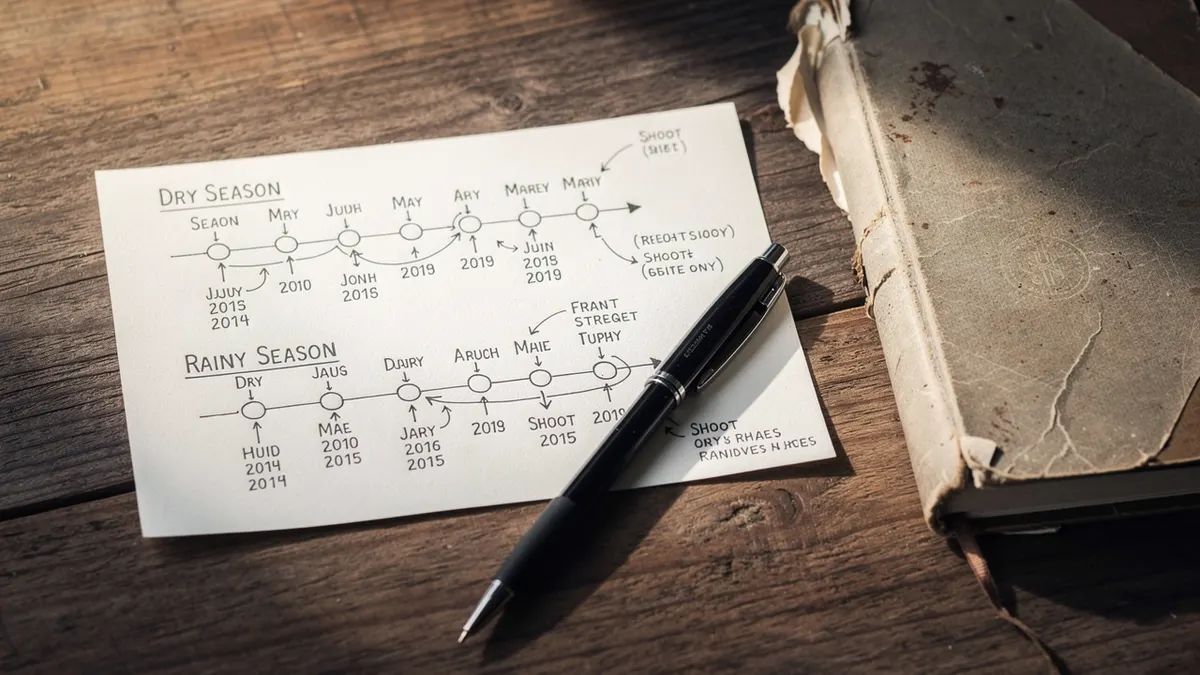
Six weeks break down like this: one week for the brief and the selection, one for sending the product, one for the shoot, one for the edit and the corrections, and two for approval and publication.
Two consequences.
What has to go out in December is ordered in October, not in November.
And anything depending on the weather requires an extra week of margin, because a shower moves an outdoor shoot by a day, sometimes two.
The commercial year
Four peaks, and they do not follow the imported calendar.
The start of the school year, which does not happen at the same time as elsewhere and which structures family purchases.
The high tourist season, which supports a large part of local trade.
The end-of-year festivities, with a buying peak concentrated in few days.
And the period that follows, quieter, when distribution prices drop and almost nobody publishes.
One methodological note: the commercial calendar imported from abroad often arrives shifted, and a campaign copied from another country's misses the local window by two to four weeks.
What to shoot in each window
Three principles, and they save half the budget.
Shoot the current season while it is happening, never reconstructed: a simulated shower shows, and so does dry-season light in the middle of the green season.
Shoot two seasons in one session when the product allows: same person, same product, two outfits, two settings, two atmospheres.
And keep a version with no seasonal reference, usable all year, serving as a backup when a schedule slips.
What is planned over twelve weeks
| Rhythm | What you produce | Time per week |
|---|---|---|
| One shooting day a month | Six to eight videos | Six hours |
| One edit a week | Two versions | Three hours |
| One outreach round a week | Ten contacts | One hour |
What is set against local seasons
The rainy season limits outdoor shoots, the tourist high season fills diaries, and the year end concentrates orders. A calendar that ignores those three facts does not hold.
What is kept in reserve
Two videos with no dated set, no weather and no price. They fill the week a client cancels, and prevent a week with nothing published.
How to plan a year in one afternoon
Four steps, in this order.
Place the four commercial peaks across twelve months, with their real dates.
Move each peak back six weeks: those are your ordering dates.
Group the shoots by season, not by product: two sessions per season are often enough.
And block those dates in a calendar shared with your creators, with the product shipments marked a week before each session.
One last point, valid for every campaign: the advertising disclosure is owed as soon as there is consideration, and claims about a food, cosmetic or tourism product follow precise rules, to be checked with a lawyer and with the competent authorities before publication.