In this category, production counts less than trust. A video shot on a phone by a mother who looks tired converts better than a polished film.
What really converts
Five formats, and they have little in common.
The difficult night testimonial
It is the most effective in the category, because it speaks of the moment when the purchase decision is really taken.
Filmed the next day, not during. Somebody recounting a complicated night and what they have changed since.
The one-handed use demonstration
It is the decisive criterion for most products in this category, and almost nobody films it.
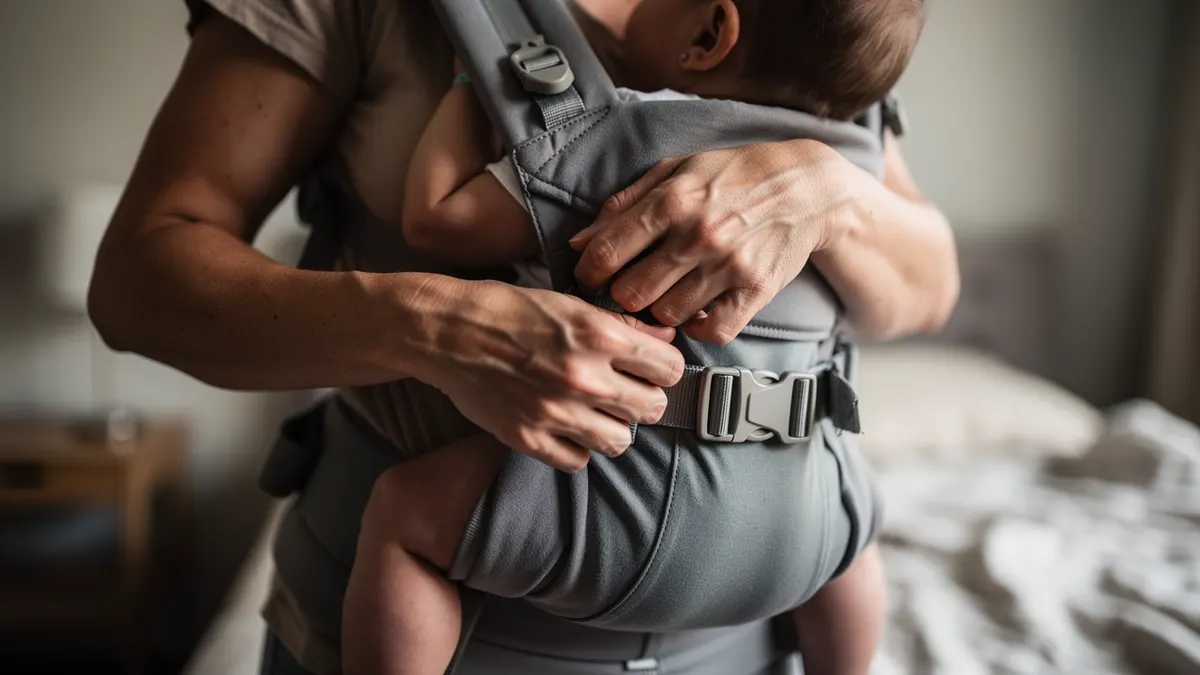
Opening, folding, measuring, fastening, carrying, with a child in the other arm. One free hand is the real specification.
The routine before and after
Not a spectacular result, but an organisation: what the bag contained before, what it contains now.
The price objection
It is handled by showing the length of use: how many months the product serves, what it replaces, what it becomes afterwards.
The three-month review
The most credible format of all, and the least produced. It is ordered in advance, at the same time as the first video.
Which creators to hire
The criterion is not the audience, it is the phase.
Somebody currently living the age concerned speaks accurately. Somebody whose children are five years older speaks from memory, and it can be heard.
So favour small accounts in the middle of parenthood, and accept a less polished result. In this category, that is an advantage.
The rules when children appear
That is the most serious part of the brief, and it is settled before the shoot.
The written authorisation of those holding parental authority, with the precise uses and the duration.
The framing: many videos work perfectly without the child's face being recognisable.
The claims: everything touching health, sleep, feeding or safety falls under precise rules, and a badly filmed demonstration can be read as an instruction.
And the product's compliance with the use shown, particularly for the stated ages and weights.
These rules depend on the product and the medium, and are checked with a lawyer before publication, never after.
The brief that produces good material
Four lines are enough, and they are counter-intuitive.
Do not give a script. Give the question the video must answer.
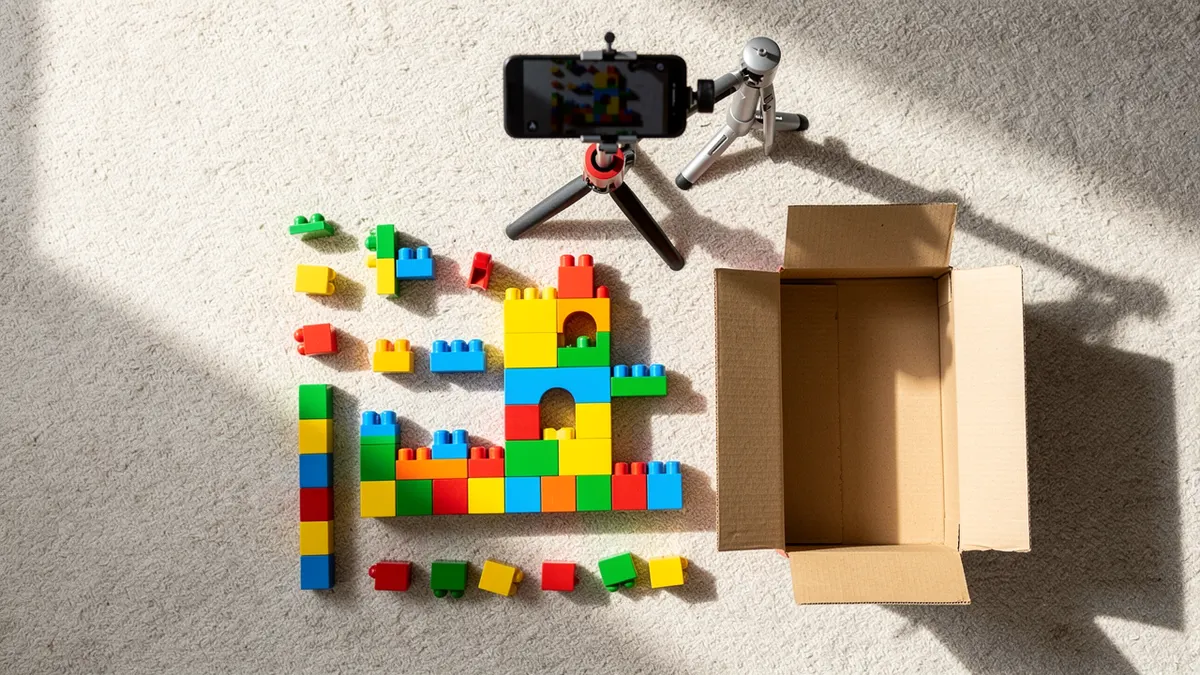
Explicitly forbid tidying the room beforehand.
Ask for the original sound, background noises included.
And ask for one failed take, deliberately kept. It is worth more than the other three.
What is shown, and at what distance
| Subject | The shot | The limit |
|---|---|---|
| A care product | The gesture on an adult's hand | No claimed effect |
| A garment | The fabric, the seam, the fastening | No face without consent |
| An item of equipment | The full assembly, in one piece | No safety shortcut |
What requires a written form before any release
Both parents' consent for any recognisable child, and the consent of every adult in frame. With nothing in writing, the video does not go out.
What is never said
A sleep promise, a health claim, medical advice or a misuse of equipment. Those subjects are referred to the health professional, to be confirmed with a lawyer.
The Spanish calendar
Two peaks, and they are not where they are expected.
The September return, which concerns nurseries and transport equipment.
And the end-of-year festive period, extended by the January gifts, which remains the first buying moment of the year for gifted products.
So shoot ahead of those two windows, not during them.