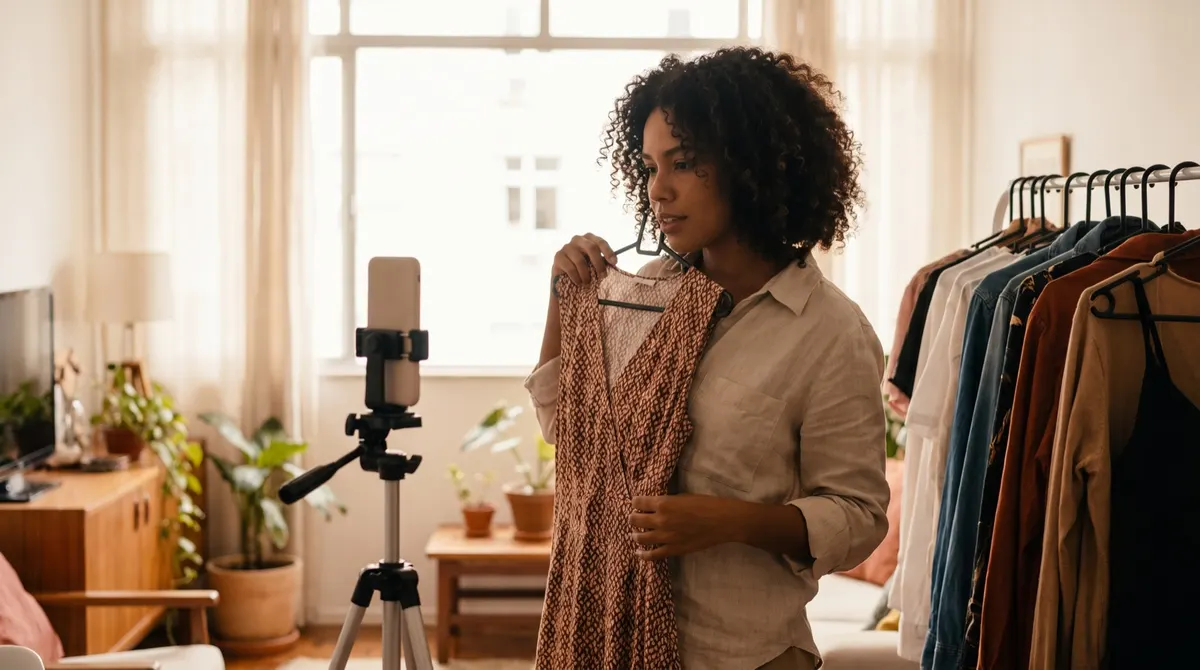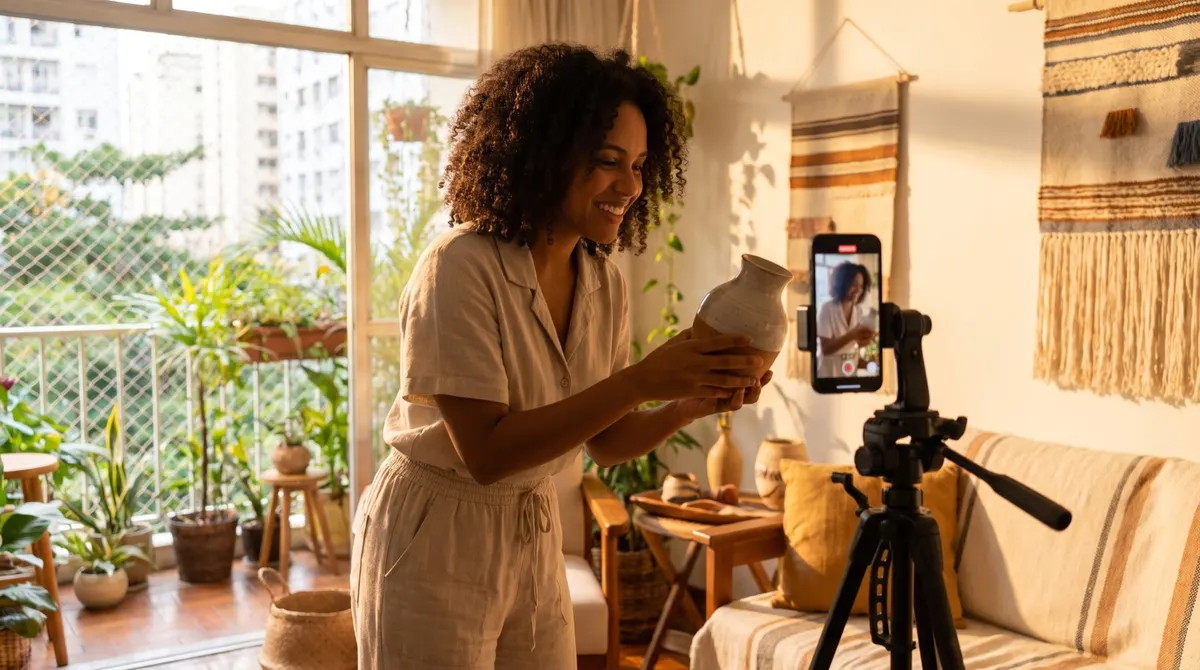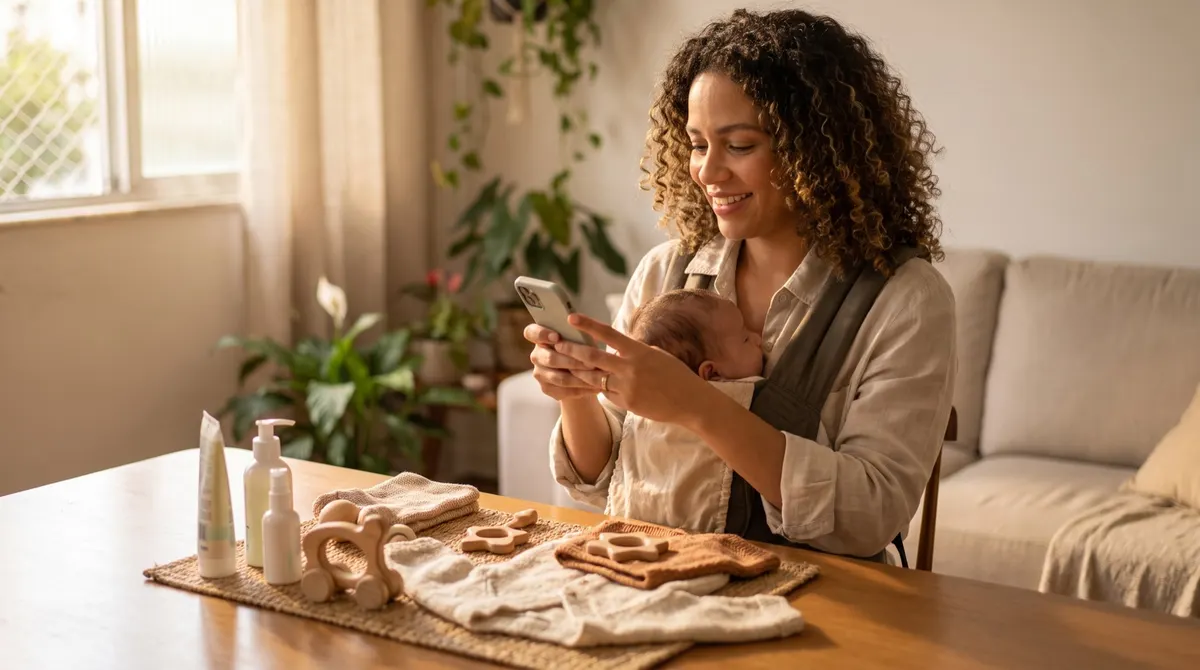
Baby and maternity as a UGC niche in Brazil, the importance of trust and how creators and brands work together.
Why baby and maternity is a natural UGC niche in Brazil
Five reasons specific to the market.
The purchase is urgent and repeated: a parent buys a lot, fast, and for several years.
Doubt is constant, because it bears on safety and not on taste.
Recommendations circulate in closed groups, where a real video travels better than an advertisement.
The categories involved are numerous: hygiene, feeding, sleep, transport, clothing, toys.
And the audience watches at all hours, particularly at night, which gives this content a reach few niches have.
Trust is the currency of parental content
Six signals that build it, and one that destroys it.
Saying how long the product has been used, never on the day it arrived.
Showing the real gesture, including when it is clumsy.
Naming what does not suit, which makes all the rest credible.
Stating the age and context of use, because a product suits one age and not another.
Systematically referring to a health professional for anything touching feeding, sleep or development.
And clearly identifying the commercial partnership.
What destroys trust in one sentence: a promise of a result on a child. No such wording should be accepted, whatever the brief.
What baby and maternity UGC looks like in practice
Six formats that work.
The assembly or installation demonstration, filmed in one take, with hands only.
The endurance test: what the product becomes after three weeks of real use.
The comparison with the previous version, when the parent has owned both.
Storage and bulk, a central question in urban housing.
The night routine, filmed in low light, a much-watched format.
And the answer to a precise objection: price, size, cleaning, safety.
How brands and creators work together
Six points to frame in the quote, before any production.
The minor's image authorisation, a distinct document, dealt with above.
The framing chosen: with or without the face, decided beforehand and not at the edit.
The closed list of authorised wordings, particularly for anything touching health.
The duration of the rights, often shorter in this niche because the child changes.
The right of withdrawal: the possibility for the parent to ask for distribution to stop, to be negotiated explicitly.
And the name of the person responsible for the review on the brand's side, with the date they review.
One remark on duration: a video showing a child stays online long after the child has grown. A twelve-month licence, with actual removal at expiry, is a healthier practice than a perpetual licence, and many brands accept it when asked.
What is filmed, and how
| Subject | The right way | What is ruled out |
|---|---|---|
| The product in use | The parent's hands, the object | The child's face in close-up |
| Storing and cleaning | The daily gesture | A recognisable interior |
| The parent's experience | A voice, off camera | Any personal data |
What protects the child
Written consent from both parents, framing that shows no identifiable face or recognisable place, and the complete absence of a first name, an exact age or a neighbourhood clue.
What is never said
Advice on sleep, feeding or safety presented as a recommendation. Those belong to a health professional, and any safety standard quoted is confirmed with the manufacturer and the competent authority.
Advice for creators wanting to enter this niche
Six decisions to take before the first order.
Choose your rule on faces, write it on your profile, and never depart from it for an order.
Refuse categories where the claim is too risky if you are not supported.
Never give advice that could pass for a professional opinion.
Film in real conditions, not staged: that is what this niche buys.
Invoice the rights separately, and propose short durations.
And keep a file of the signed authorisations, sorted by video.
One last marker: in this niche, caution is not a commercial brake, it is the selling point. A creator who protects their child's image and refuses promises reassures exactly the audience the brand is trying to convince.