In this category, words have a legal definition. A vocabulary mistake is spotted by a producers' association before a customer ever sees it.
Why the category deserves that attention
Because it has everything missing elsewhere.
A place, a gesture, a season, faces, a verifiable history: the opposite of a product filmed on a white table.
Producers rarely have any content, and their end customers are as much private individuals as resellers, cheesemongers, restaurants and markets abroad.
Add the lifespan: a production video shot today still serves in five years, provided it contains no price, no vintage and no date.
What to film
Five sequences, in order of usefulness.
The producer
The person who makes it, filmed while working, not in an interview. The repeated gesture, the hands, the tool, the material.
The place
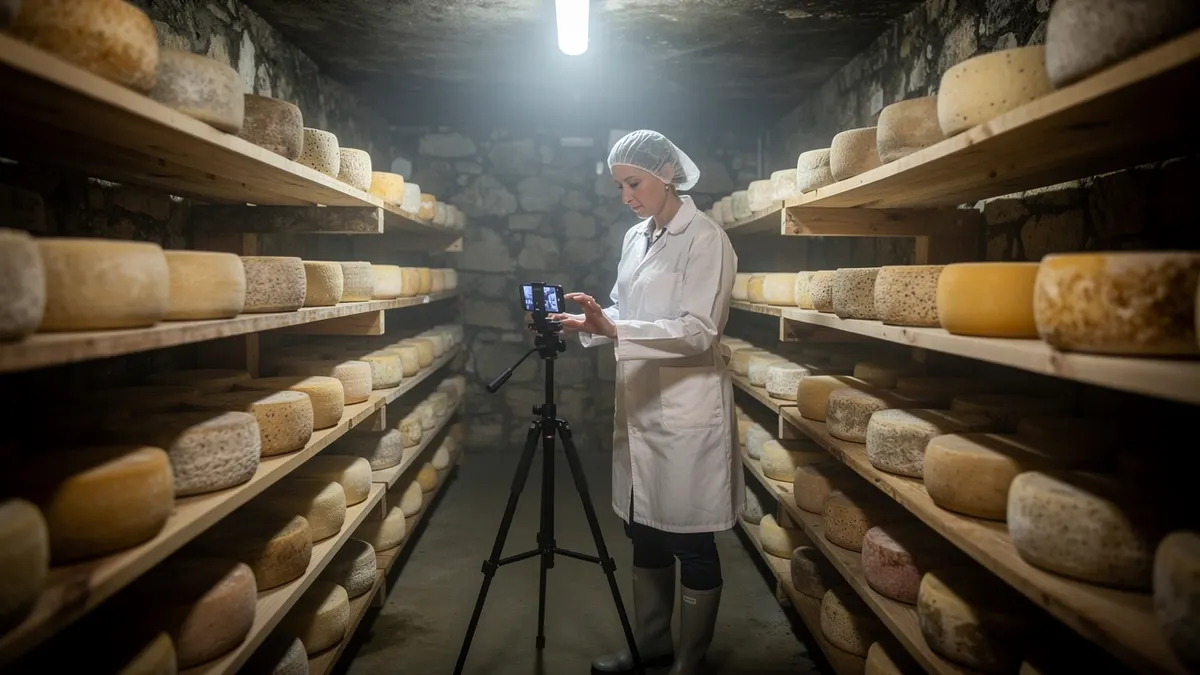
The cellar, the workshop, the barn, the meadow, the drying room. That is what sets this category apart from all the others, and what nobody can copy.
The season
What changes between winter and summer: the milk, the grass, the texture, the colour. That is the argument explaining a variation, and it prevents a complaint.
The use
How to cut it, keep it, serve it, at what temperature, with what. It is the most sought-after and least produced content.
The stall
The market, the counter, the cutting in front of the customer. A sequence useful to the producer and the reseller alike.
The claims that must be exact
Four families, to be handled with the producer.
Origin and designation, described in the box.
The production method: raw, thermised, farmhouse, artisanal, matured. Those words have precise meanings.
The maturing time and the storage conditions, which involve food safety as much as quality.
And nutritional or health claims, which are regulated and are never improvised.
In practice, ask for the official product sheet and the approved wording, and refuse to shoot without them.
Practical notes for the brand
Five points that improve the result.
Film during the real production, not during a demonstration staged for the camera. The difference shows.
Plan the hygiene constraints: clothing, access, forbidden areas. They are settled beforehand, not on the day.
Record the ambient sound: the rennet, the milk, the brush, the cellar. That is what gives the material.
Deliver a master with no burnt-in text, so the disclosures can be adapted to the country of distribution.
And buy long rights. In this category a video serves for years, and buying a licence again two years later costs more than planning for it now.
What to show to create desire
| Element | The shot | The trap |
|---|---|---|
| The texture | The knife cut, in close-up | A product taken out too cold |
| The origin | The label and the place | A confusion between designations |
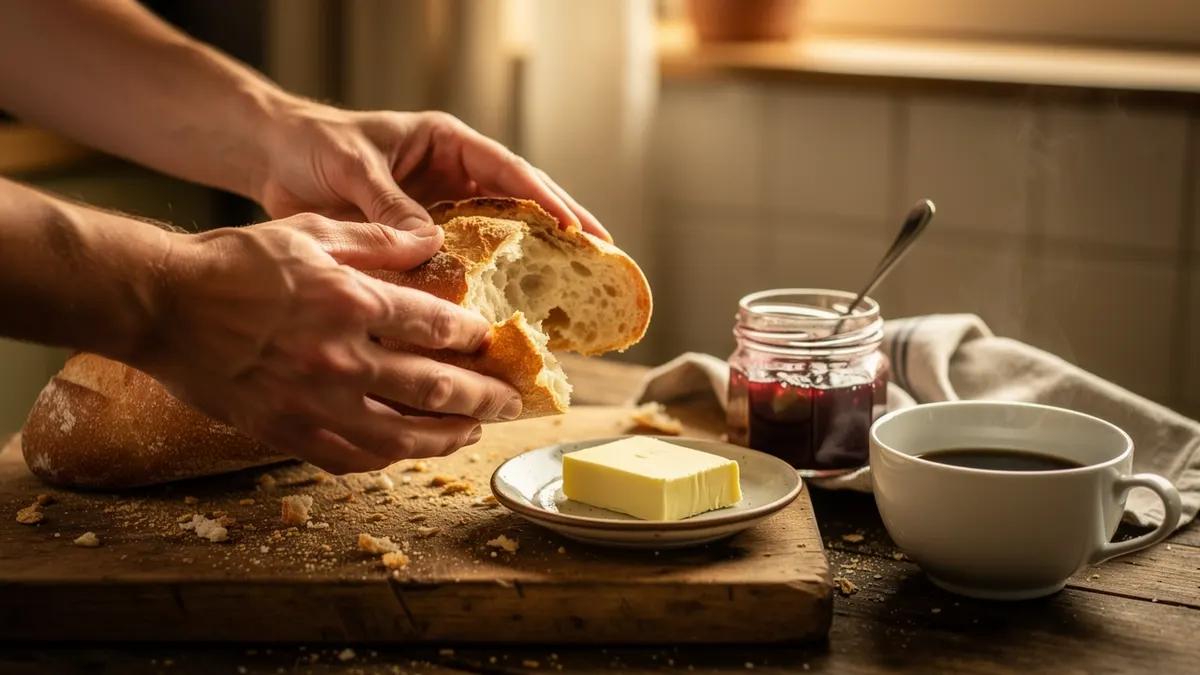
| The pairing | The bread, the glass, the table | Talking about the alcohol |
What is prepared an hour ahead
The product brought to temperature, the board wiped, the knife clean and a neutral background. A cheese filmed cold does not run, and the video falls flat.
What is checked on a designation
The exact spelling, the geographic area and what the label protects. A designation quoted wrongly is a visible mistake and a hard one to fix, to be confirmed with the producer.
The calendar
It is dictated by production, not by marketing.
The gestures can only be filmed when they happen: the milking, the making, the maturing, the seasonal selling. A missed shoot costs a year.
The consequence is simple: the content plan is built with the producer, over twelve months, and not campaign by campaign. That is also what makes the relationship last, because the creator comes back several times a year.