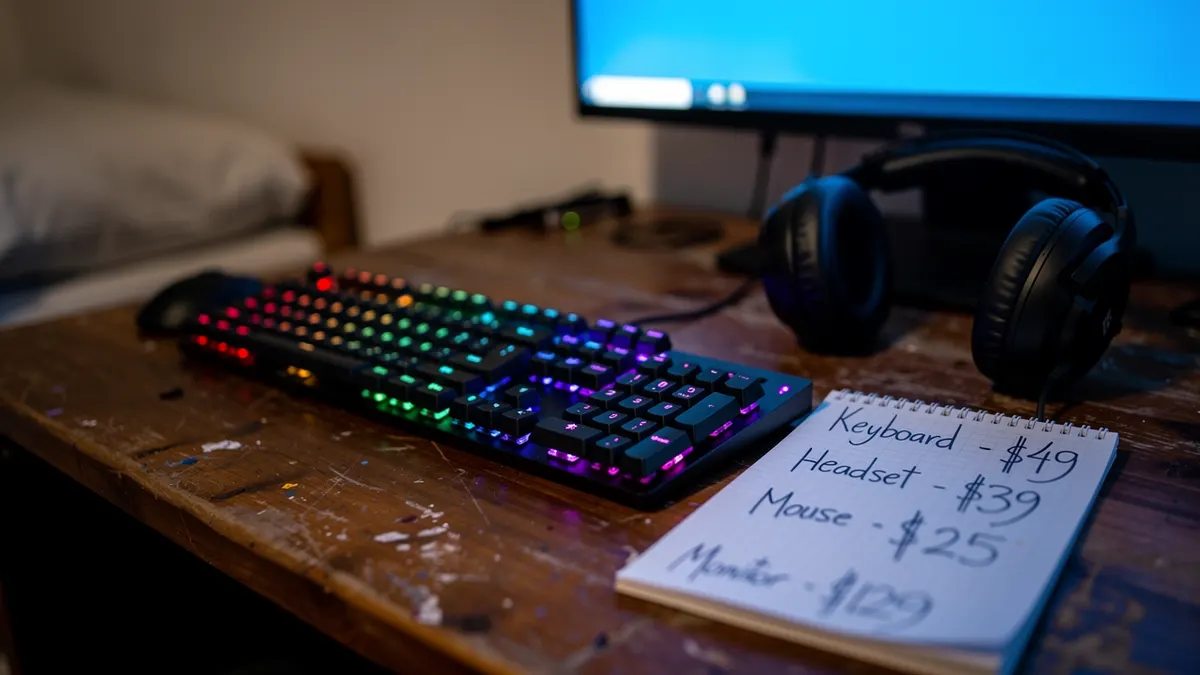
This is the most suspicious audience of all. It grew up with disguised advertising, it recognises it within seconds, and it says so in the comments.
Why this audience rejects advertising
Because it knows the subject better than the advertiser.
It spots a controller held wrong, a game that is obviously not being played, vocabulary learnt the day before, footage recorded by somebody else. One of those errors and the rest of the video is disqualified.
So you have to hire somebody who already plays, not somebody who films well. Technical skill can be caught up; credibility cannot.
What it accepts instead
Three formats, all long and all boring for an advertiser.
The full set-up, from opening the box to the first launch, not sped up. The endurance test: the same configuration after two weeks, with what heated up, what failed, what held. And the honest comparison with the model below, including when the cheaper one is enough.
That last format is the most effective and the one almost no brand dares commission.
The imported price objection
It is present in every comment in this category here.
The audience knows the hardware costs more than elsewhere, it knows the charges, it has already done the sum. Pretending the price is normal is the fastest way to lose the conversation.
So handle the objection head on: say what the price includes locally, the warranty, the after-sales service, the availability of parts, the replacement time. That is where the local value lies, not in the price itself.
Any statement about prices, warranty or availability comes from the brand's approved documentation, and the statements applicable to promotions and comparisons are checked with a lawyer before going live.
Which creators to hire
Players, with a small and engaged audience.
In this category, a community of three thousand people who comment is worth more than an audience of a hundred thousand who scroll past. Check the comments: are they precise technical questions, or emoji.
Check too that the person has already criticised a product publicly. A creator who has never criticised anything has no credibility when they recommend.
The brief that produces good material
Short, and above all permissive.
Give the product, the length of the test, the points to cover, the authorised wording for the technical characteristics, and what must not appear. Then let the person say what they think.
A brand demanding a positive opinion gets a video nobody believes, and pays to damage itself.
What a games brand orders
Six formats that keep coming back.
A reaction to the first few minutes.
A comparison of two pieces of gear.
An explanation of a feature in thirty seconds.
Evidence of the frame rate on one device.
A short cut-down for an advert.
And a video for the launch of an update.
What each format brings the brand
| Format | What it proves | Length |
|---|---|---|
| Reaction to the first minutes | The game's hook | 30 s |
| Comparison of two peripherals | The real comfort | 40 s |
| Explaining one feature | How it handles | 20 s |
What is set before recording
The capture frame rate, the chat closed, the cleared music and the approved build.
What blocks a release
A third party's handle on screen, a protected track, a scene beyond the stated rating.
The Costa Rican calendar
Two periods concentrate purchases.
The end of the year, with releases and gifts, and the return to school, when equipment is renewed. Between the two, demand is for accessories and parts.
Shoot the endurance tests out of season, when you have time to let it run for two weeks, and distribute them at the moment people are comparing.