Wine, tourism and a growing technology scene provide clients here with budget and real stories to film.
An economy of wine, tourism and technology
Six client families.
Estates and merchant houses.
Accommodation and restaurants.
Tourism and tour operators.
Technology and service companies.
Town-centre shops and craftspeople.
And schools and training bodies.
What they order
Six frequent formats.
A presentation of an estate and its tour.
Seasonal content tied to the farming work.
A venue video for receptions.
A team testimonial.
Coverage of a professional event.
And a short series for social media.
What an estate expects from a video
Seven goals behind an order.
Filling the least booked tour slots.
Bringing in an audience that does not know the region.
Presenting a reception venue to companies.
Giving a face to the people who welcome visitors.
Explaining a difference the client can no longer put into words.
Recruiting for the busy period.
And holding images usable for several years.
Wine, a regulated opportunity
Seven precautions before shooting.
Ask for the client's communication guidelines.
Have the script approved before the shoot.
Have the edit approved before release.
Check the applicable mandatory notices.
Avoid any forbidden association on screen.
Promise nothing about health or effects.
And confirm the obligations with a lawyer.
Filming the experience rather than the product
Six subjects that remain open.
The approach road and the arrival.
The building and the landscape.
The welcome and the course of a tour.
Seasonal work in the plots.
The trade of the people who work there.
And the preparation of a private event.
The questions to settle before a shoot here
Six answers that change the plan.
Whether the estate is open to visitors that day.
Whether other visitors may appear in frame.
Which parts of the site are off limits.
Whether a mandatory notice must appear on screen.
Who signs off the final edit.
And how long the content may stay online.
The technology scene
Six clients that buy regularly.
Software publishers.
Digital service companies.
Startups in a hiring phase.
Coworking spaces.
Organisers of professional meetups.
And digital schools.
How to find clients here
Six routes that work.
Wine and tourism trade fairs.
Local business networks.
Accommodation providers before their season.
Referrals from a satisfied client.
Technology companies that are hiring.
And visibility maintained on the platforms.
How to build a price here
Six lines to show.
Preparation and reading the guidelines.
The shooting time on site.
The number of approval rounds.
The number of revisions included.
The rights line, with duration and territory.
And the option of an English version.
What local demand contains
| The segment | Its order | Its season |
|---|---|---|
| Wine and spirits | The cellar, the bottle, the service | Harvest and the holidays |
| Tourism and hospitality | The place and the experience | Spring and summer |
| Retail and services | Window, product, testimonial | Regular |
What wine requires you to know
The legal framework for alcohol advertising, which varies by country of publication. A creator unaware of it exposes the client to risk, whereas one who masters it becomes a lasting partner.
What differentiates a profile in this market
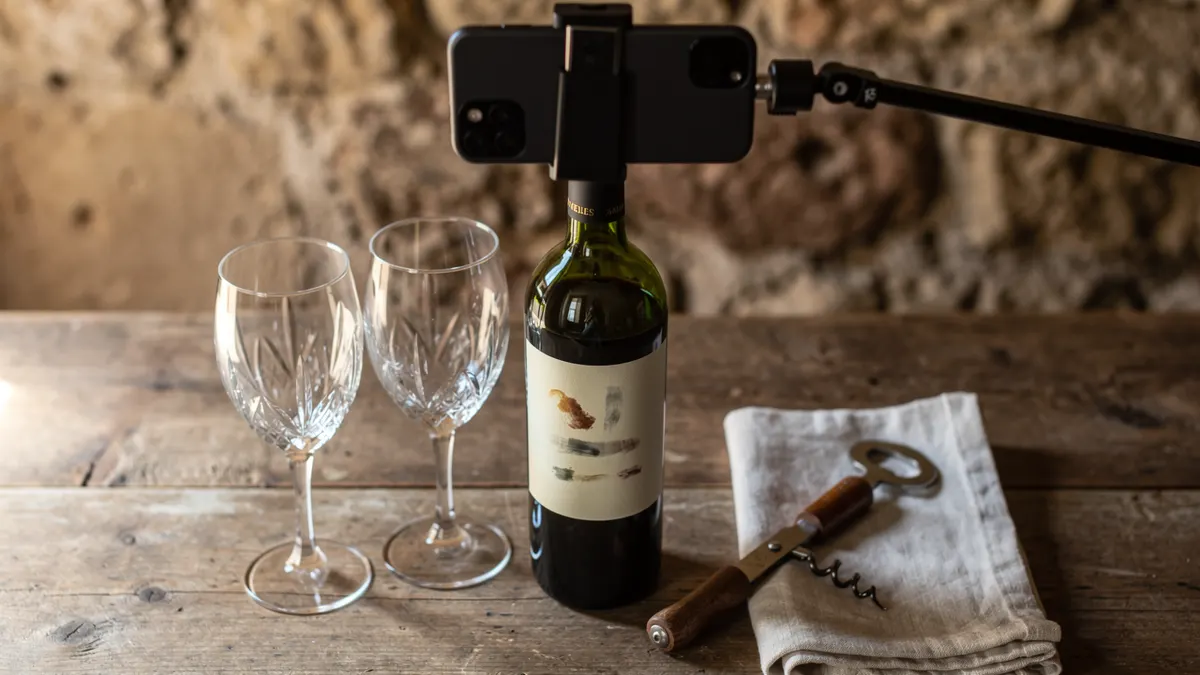
The ability to film a product behind glass. Reflections, transparency, a legible label: three genuine technical difficulties, and solving them is worth more than a rate twenty per cent lower.
What the platform brings
On UGC MATCH, joining is free and there is no subscription: you are visible by category and country, and the order keeps a record of the brief and the delivery. The brand pays at ordering, the funds are not released straight away, and payment goes out on approval. The platform retains 10% of the price on the creator side, who therefore keeps 90%, and charges the brand a 6% service fee, with a minimum of 1.50 EUR.
One last marker: the best angle here is not the bottle, it is the estate's front gate. It films freely and it fills a diary.
Sources
- Urssaf, official auto-entrepreneur portal
- Service Public, how to become a micro-entrepreneur
- Service Public, crossing the micro-entrepreneur turnover thresholds
Checked on 26 August 2026. Thresholds and rates change: where this guide and the official source disagree, the official source is right.