Setting up in a small flat, handling grey winter light and neighbours' noise, and the corner that always works.
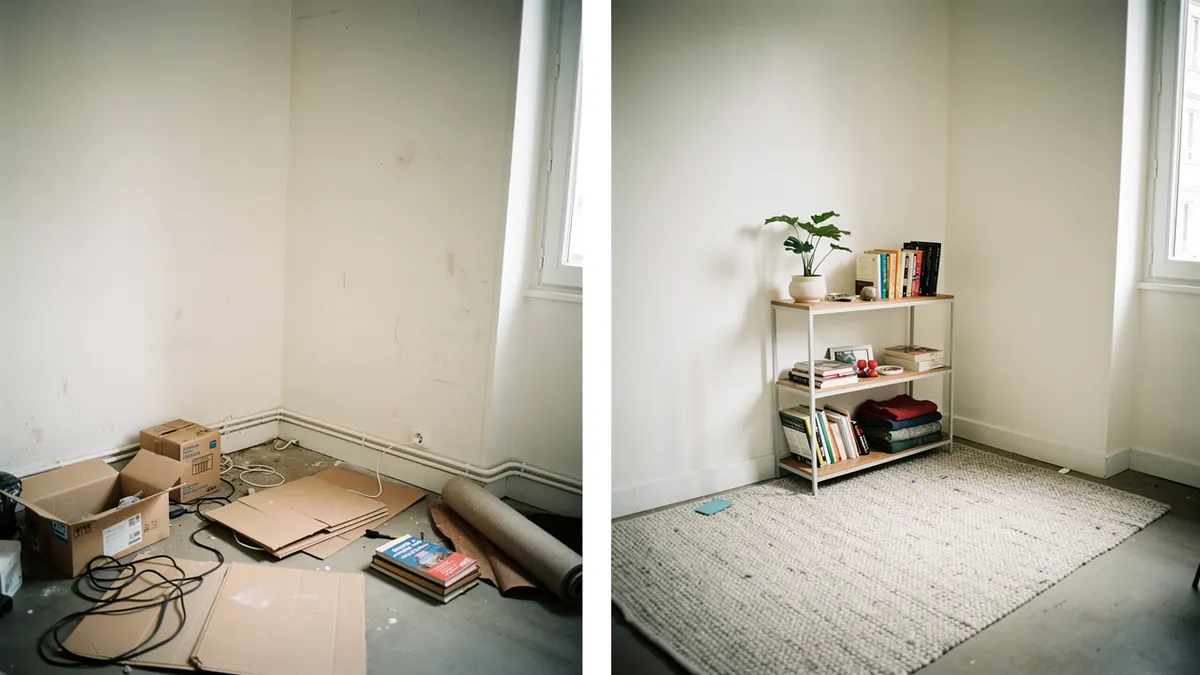
A corner that stays set up
Three reasons to fix a spot rather than reinstalling everything for each shoot.
You gain consistency, indispensable as soon as a brand orders a series.
You remove the half hour of setting up, meaning the main excuse for not filming.
And you can shoot a retake three days later without the join showing.
In practice: one square metre is enough. A clear wall, a waist-height table, the window to the side, a mark stuck to the floor.
The small flat, solved
Four constraints and their solution.
There is no room to step back: film closer, in a tight shot, and change angle rather than retreat.
The background is cluttered: do not tidy everything, clear the strip appearing behind you and leave the rest.
The table is too low: raise it with books, it is stable and invisible.
The room echoes: textiles do the work, a bed, a drawn curtain, a coat hung out of frame.
The noise of neighbours and the street
Five sources, five answers.
Roadworks: impossible to filter, they are waited out. Shoot the wordless takes during, the spoken parts after.
Traffic: it weakens early in the morning and in the early afternoon.
Neighbours: footsteps and furniture noise travel through the floor, a rug under the microphone stand reduces it.
Ventilation, fridge and boiler: switch them off during the take, put them back after, and note it so as not to forget.
And general ambient noise: bring the microphone closer, never raise the volume.
Winter, the real opponent
Four effects to anticipate.
The useful slots shrink: between November and February, the usable window sometimes holds in three hours around midday.
The light is weak and the camera compensates by raising sensitivity, which adds grain.
The temptation of the ceiling light, dealt with above.
And the light changes fast: one series shot over two hours may no longer match. Shoot the takes that go together one after the other.
One simple method: block two fixed slots a week, in broad daylight, and shoot everything that has to look alike in the same slot.
Heating, condensation and reflections
Four problems specific to the cold season.
Condensation on the lens when going from cold to warm: take the camera out ten minutes ahead, it evens out.
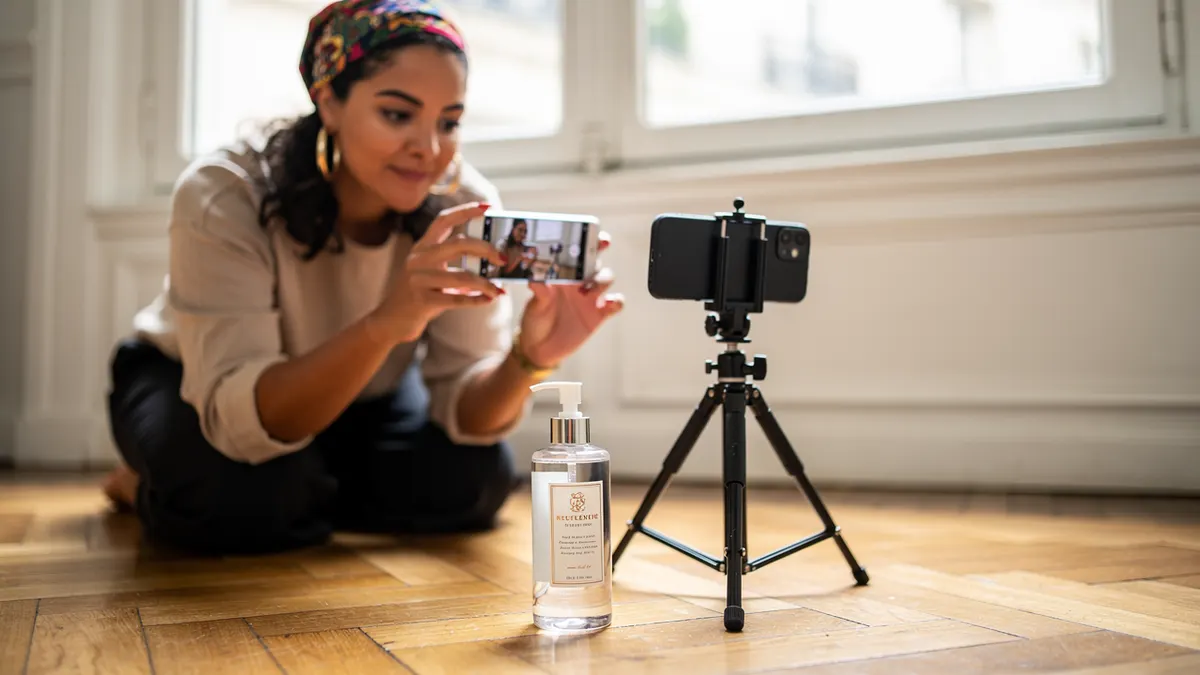
Reflections on windows and shiny products: turn the object fifteen degrees rather than move the lamp.
Dry air making clothes and hair crackle: that is heard on the lavalier microphone.
And the radiator clicking as it heats, to be switched off during spoken takes.
What you change first in a room
| Element | The common flaw | The fix |
|---|---|---|
| The light | A yellow ceiling lamp head-on | A window at 45 degrees |
| The sound | An echo off a bare wall | A rug, a curtain, a shelf |
| The background | Readable clutter | A cleared stretch of wall |
What is set once and for all
The camera at eye height, an arm's length away, and a floor mark to find the same spot again. Those three settings save ten minutes per shoot.
What is filmed last
The cutaways and the product alone. The voice is recorded while it is freshest, the rest is added afterwards, even on another day.
The real minimum kit
Five objects, and nothing more to begin.
A recent phone, amply sufficient for vertical video.
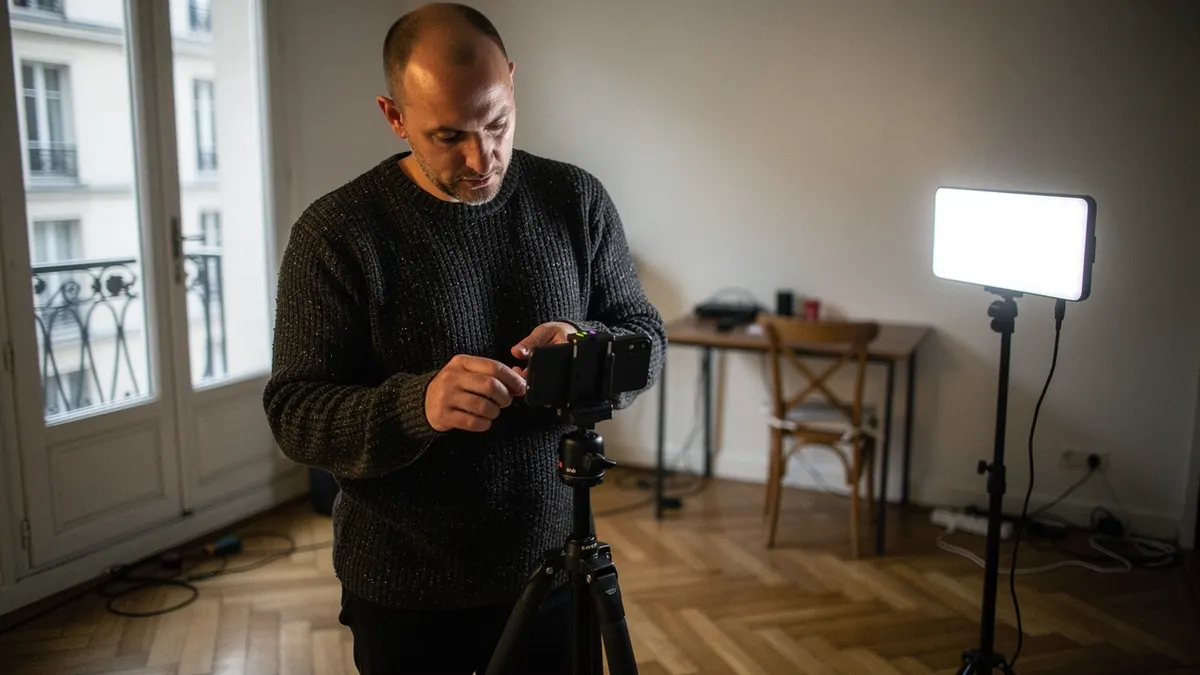
A clamp tripod, which holds on a table.
A wired lavalier microphone, the purchase that most changes perceived quality.
A lamp with adjustable temperature, indispensable for the dark period.
And a rigid white sheet, the cheapest way to fill in a face.
One last marker: what separates a video shot at home from an amateur video is neither the setting nor the camera, it is the sound and the consistency of the light. Settle those two points once and for all, the rest becomes a matter of taste.